Goodreads Book Giveaway
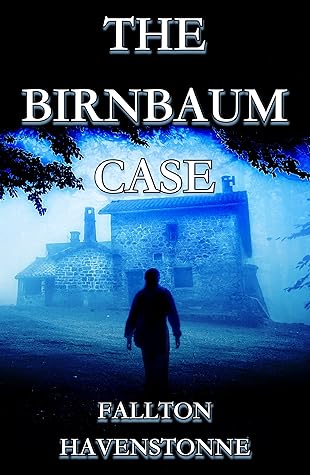
The Birnbaum Case
by Fallton Havenstonne
Giveaway ends March 23, 2020.
See the giveaway details at Goodreads. Enter Giveaway
Enter for a chance to win one ebook copy of The Birnbaum Case. The giveaway ends on March 23rd.
Giveaway ends March 23, 2020.
See the giveaway details at Goodreads. Enter Giveaway
Enter for a chance to win one ebook copy of The Birnbaum Case. The giveaway ends on March 23rd.
The characters I write give shape to the ideas of the story. The stories are about the characters and their decisions, actions, and the consequences of their actions. The most engaging aspect of a story is seeing what the characters pursue, or how they handle dilemmas/conflicts. The dialogue between characters can reveal a lot, just as much as their thoughts and actions.
I like to explore a little bit of each to understand the essence of a character.
Planning a story usually begins with an inspiring idea. I don’t write it right away. I develop it by writing down ideas and different scenarios (i.e. possible locations, characters, outcomes, etc.). Once the plot elements start to click together, that’s when I begin writing.
But throughout the writing process, I continue to plan and develop the story–work out all the finer details and plot elements. I sometimes catch the story going in the wrong direction or something that’s missing from it.
And when I get stuck, I look at what needs to change in the outline. Maybe there are elements that don’t click together. I focus on revising those parts, and when the problems are solved, then I continue writing.
But I catch more errors. It feels like planning a story never really ends until the draft is finished.
And when you get to the editing stage, you might discover plot holes and inconsistencies you didn’t see before. You rework those parts, planning yet again . . .
My new mystery novel, The Birnbaum Case, will be released on 3 – 21 – 20. It is available on Amazon for preorder.
Getting into the writing zone is when you are steeped in the story. It’s one of the most satisfying and rewarding aspects about writing. Whether you’re writing fiction or nonfiction, it’s that experience when all the ideas flow and integrate seamlessly. It feels like the words just roll off your fingertips.
For a novel, I often plan out the scenes and events before I begin writing. I’ll make an outline of the plot (though tentative) so that I know where the story is headed. This helps me to frame the plot so that I know how to tie in various elements and ideas so that they remain consistent throughout the story. But as the story evolves, I discover new things to add (or subtract), new ideas or characters that are necessary for the narrative.
I’m building the world. It’s taking shape–having a life of its own. Writing in the zone gets easier, and I find that I know what the characters are supposed to say, how they’re supposed to react, and what decisions they should make.
For me, it’s important to sketch the plot first, to know what’s ahead. But as the story evolves, I find that the outline was just a guide, not a rule. It becomes a road map, but along the way, I discover new things I couldn’t have known at the start.
And as the path becomes clearer, I find that I am often writing in the zone.
There was a time when I’d read nonfiction books voraciously, especially history, science, and mathematics. It was during a time when I felt I needed to learn as much as I possible.
One trend I noticed about all the nonfiction books I enjoyed was that I learned the most when they were told in the form of a narrative. The subject of history lends itself to this because each major event builds upon a chain of events . . . a series of decisions, actions, or inactions.
Science can be engrossing if written in the same way. To read about the struggles of scientists, the experiments they developed to test their ideas, the challenges they faced, this is much more fascinating and fun to read than to just have the facts given to you.
When we approach a work of nonfiction, we can have the facts, dates, and names given to us, or we can read how ideas or people shaped the events that have happened. I find I learn a lot more this way rather than just remembering the facts.
There are so many ways to approach reading nonfiction. You could read it educate yourself, to catch up on the news, or to simply digest information that’s useful.
The best nonfiction books I’ve read not only educate me on a subject matter, but inspire me to think about the world. They address ideas I haven’t considered, and even if I don’t agree with them, I find that in the process of questioning those ideas, I refine my own.
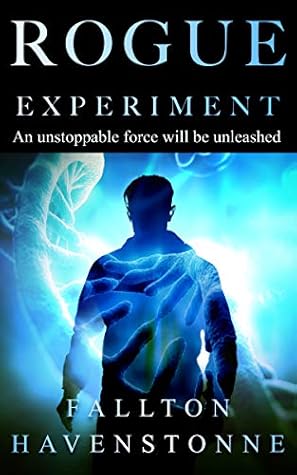
Giveaway ends March 01, 2020.
See the giveaway details at Goodreads. Enter Giveaway
Rogue Experiment will be available on 2-28-20. Make sure you get yourself a copy. Thank you for the support. Enjoy the novel.
Writing is a process that takes multiple revisions to improve the quality of the draft. The first draft often looks basic and rudimentary, but with revisions, it becomes clearer, polished, and solid. But it all begins with the first draft. Sometimes it’s starting that is the most difficult part. But once we put words down, we can revise and elevate our original ideas into something more.
 Fallton Havenstonne