Book Review: The Horse and His Boy

The Horse and His Boy, by C.S. Lewis, is the third book of the Chronicles of Narnia series. The story takes place in the world of Narnia and is about a boy named Shasta, who runs away with a horse named Bree (since Shasta was about to be sold). He meets a girl named Aravis, and her talking horse, Hwin, and they set off to Tashbaan, where Shasta bears a striking resemblance to the prince there (Prince Corin).

Shasta leaves Tashbaan before he is caught, and Aravis overhears the plan of a prince named Rabadash, who wants to invade Narnia and take Queen Susan to be his wife. From here on, Aravis and Shasta ride on horseback to Narnia to warn the Kingdom of the coming invasion.

Whereas the first two books of the series were full of mystery and wonder, (establishing the world of Narnia), this story is more like an adventure in the world of Narnia. Like The Lion, the Witch, and the Wardrobe, there is an epic battle at the end between the armies of Rabadash and Narnia.

The story has humorous parts to it, especially at the end with what befalls Rabadash. I did like the twist at the end with Shasta, and enjoyed the second half of the book more than the first half. The first half of the book focused primarily on exposition, establishing what was going on and who the characters were, as well as Rabadash’s plot to invade Narnia. The second half was more action packed, and it was great to see Aslan (the lion) make an appearance as well.
Editing Short Stories vs. Novels

I’m almost finished with editing the 10 short stories. I’m finding that editing a collection of short stories is a lot different compared to editing a novel. With a novel, you’re focusing on the progression of the events from one chapter to the next. You’re making sure that the narrative ties together by the conclusion of the story. With a short story, you’re focusing on the cohesiveness of the plot itself. You’re checking to see if you’ve conveyed what you needed to in a short amount of time/space.

With each short story, I felt like I was exploring a new scenario. A good analogy would be like visiting different rooms/galleries of a museum.

Because the short stories are linear, I had to plan the sequence of events as I would with a novel. The interesting thing about this collection is that it feels like a series of vignettes while something larger is happening. It’s definitely a neat experience.

10 out of 10

I completed my 10th short story over the weekend, and it felt great when I typed THE END. With each story, the tension builds, and I hope that by the conclusion of the book, the reader is left surprised by the ending.

I’m now in the process of editing the short stories. Given that they take place in the same world, I’m paying attention to the details, making sure that they’re consistent and that they interconnect.

Writing 10 short stories back to back was a challenge. With a novel, I can just continue the storyline and keep moving forward with the same characters, but with 10 different stories, I’m creating a new storyline and a new set of characters each time. Most of the stories in the collection take place in the same town, with some of the characters appearing in other stories.

It’s been a goal of mine to create a short story collection, since I’ve been a fan of reading short stories for years. I remember reading Isaac Asimov’s Robot Visions years ago, and being hooked by each story, which delved into the laws of robotics–putting the laws to the test.

I’m also a fan of Shirley Jackson, who is well known for her short story The Lottery, amongst other stories. Her short stories take you to a different state of mind where things are out of kilter. Kurt Vonnegut, Ray Bradbury and Richard Matheson are other writers whose short stories I enjoy. It’s amazing how short stories can take you to a different place and time–the impression they can leave on you.

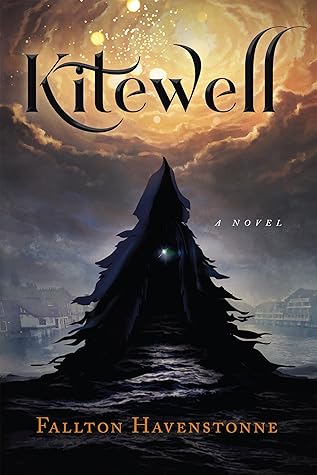
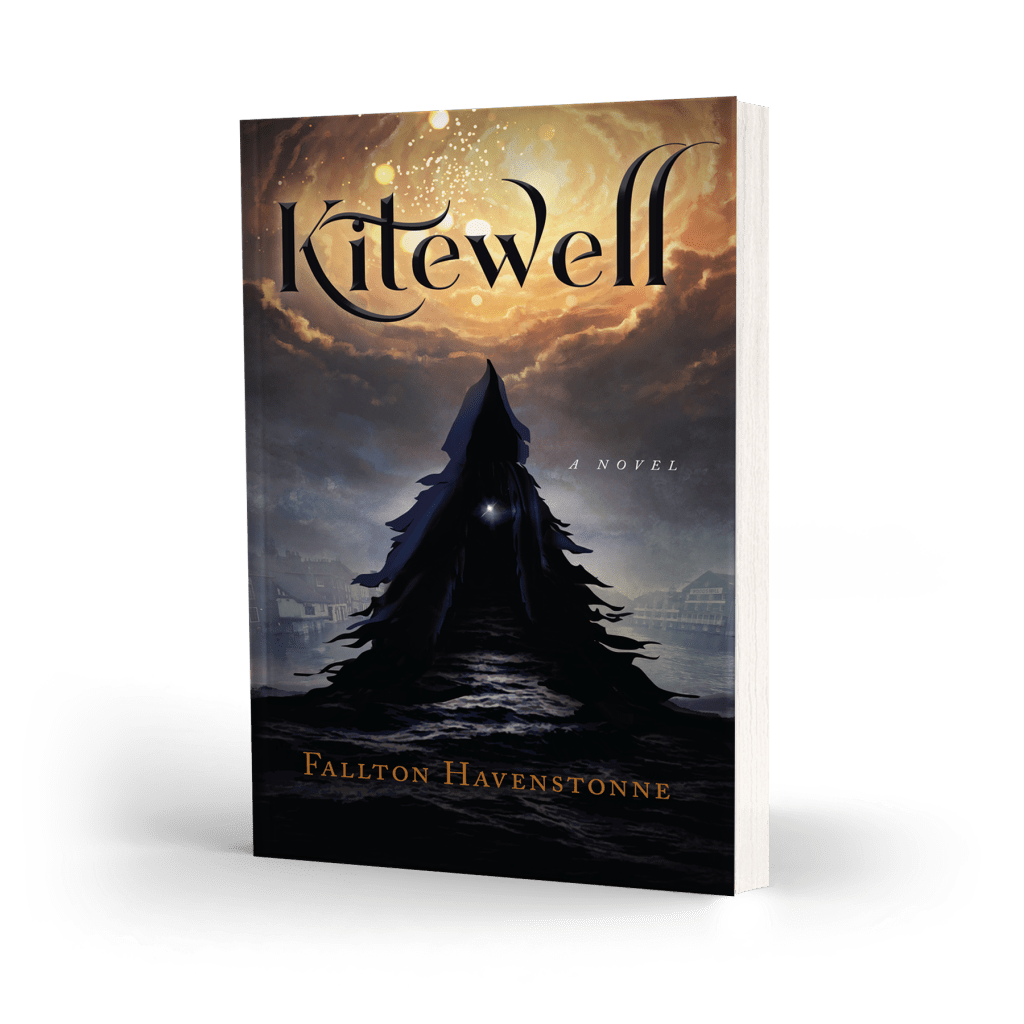
In other news, if you haven’t pre-ordered Kitewell yet, you can do so at Amazon. I’m excited to release it on Saturday, May 30th, 2020. Although it is a YA story, all readers can enjoy the story.

I plan on releasing the paperback version around the same time as the ebook. I’m very happy with how everything turned out with the book. In the Afterword of Kitewell, I describe my struggles writing the book, and how I eventually came to complete it.

8 out of 10

As I work on my 10 short story collection, I recently finished the 8th story. The stories are interconnected, so I’ve been keeping track of details to keep them consistent and tied together. The overall storyline is linear, and although most of the stories involve a new set of characters, the background scenario has an influence on each story.

It’s been quite a challenge to plot and finish each story, since it is kind of like writing mini-episodes for a series. But I do like how each story gives you a facet of what’s going on and how the larger picture is affecting the characters. The story becomes more apocalyptic toward the end, but it is hopeful as well.

Coming Soon – Kitewell

Kitewell will be released on May 30th. It’s available now for preorder on Amazon.

My newest novel, Kitewell, is about magic, courage, and hope. It takes place in a town called Kitewell where two girls meet their mysterious neighbor, Mrs. Kantor, who tells them a ghost story about the town’s dark past.

Mrs. Kantor also tells them about an evil wizard, Malik, who wants to take over Kitewell and the world. The girls must use the magic they’ve learned to defeat Malik, but will face many trials along the way.

The story is a fun adventure filled with magic and mystery. There are twists and turns along the way with a lot at stake.

At the end of the novel, I’ve included an Afterword about my journey in writing the novel.

Writing Short Stories

I’m working on a collection of short stories right now. I’ve completed 3 of them so far, and my goal is to finish 10. They’ve been a lot of fun to write. The approach to writing short stories is a lot different than novels.

With writing novels, I’m eager to expand the world, to create layers of intrigue and suspense. It’s exciting to build the sequence of events, to add twists and turns in the narrative. There’s so much to explore in a novel, so many things that could happen.

With short stories, the approach is more like exploring an idea through a limited number of scenes. The twists and turns arrive much quicker, but one must be careful not to let them happen too fast or else it’ll spoil the surprise.

Instead of including a plethora of details as I would in a novel, I’m capturing the essence of the scenes, of the characters. When everything comes together, it feels as if it needn’t be long at all.

Just About Finished

I’ve completed editing my newest novel, which I plan to release either in May or June of this year. It is a YA novel with plenty of magic in it. It was a 3 year journey to complete, and in the book, I have included an afterword that explains the process.

I’ve started another project which will be a collection of short stories. It’s more in the vein of The Outer Limits and The Twilight Zone–stories about the bizarre, with strange twists and turns. I’ve started one story already and am wrapping it up.

I’ve been wanting to write a collection of short stories for awhile. But instead of having distinct stories with no relation to each other, these stories will interconnect, though they will only be related because of a worldly event that has occurred.

Chapter Numbers

When I write a story, I try to have a certain number of chapters in it. I like even numbers such as 10, 20, etc., but if I had 17 or 19 chapters, it doesn’t seem right to me. If there are 19 chapters, it seems like there should be 20 chapters. Or if the last chapter is on 31, it should end at chapter 32.

But certain numbers like 7 or 11, etc., seem right to me. A lot of associations can be tied to those numbers. Perhaps this is just a feeling I have and it doesn’t really matter how many chapters a book has as long as it’s a great story.

But the one benefit I found to this approach is that I’ll write a new chapter (i.e. if it ends on chapter 19) just to make it fit a certain amount of chapters, and sometimes it ends up being really great.

Book Review – The Lion, the Witch, and the Wardrobe

The Lion, the Witch, and the Wardrobe, by C.S. Lewis, is a fun and engaging ride through the world of Narnia as seen through the eyes of its characters. The story is about four kids: Lucy, Edmund, Susan, and Peter, who are staying in a house of a professor in England during the air raids of WWII.

While playing hide and seek, Lucy hides in a wardrobe. As she reaches into the recesses of the wardrobe, she discovers a world of snow and forest. She meets a faun, Tumnus, who takes her to his place for some rest. But later, Tumnus admits that he kept there so that the white witch could find her. He also tells her that the witch has made it winter in Narnia, but Christmas never arrives.

Tumnus decides to help Lucy escape before the witch finds her. When Lucy returns to her world, she realizes that hardly any time has elapsed since she was gone. When she tells the other kids what she saw, no one believes her.

Later in the story, she and Edmund enter Narnia separately. He encounters the white witch, and she offers him Turkish Delights to win him to her side. He has aspirations of becoming a king there, but only if he brings the other kids to the witch.

After they leave Narnia, Edmund tells the other kids that Lucy made all of this up. But they end up going to Narnia altogether, meeting Mr. and Mrs. Beaver, Father Christmas, Aslan, and other characters.

The story is a fun and fast read. There is lots of adventure with gripping tension as we discover how the witch is using Edmund. Like The Magician’s Nephew, the story is humorous and has great illustrations by Pauline Baynes.