Wuthering Heights – Book Review

Wuthering Heights, written by Emily Bronte, published in 1847, is an engrossing novel about revenge and passion, which explores how these can not only cause great turmoil, but tarnish the very soul of the person who cannot let go of the past. The story begins with a man named Mr. Lockwood, who visits Wuthering Heights, and meets the residences there. As he dines with the family, he is taken aback by how solemn everyone is. Later, he returns to where he stayed, and learns their family history, as recounted by a servant named Ellen Dean, who had been with the family for decades and seen all that had transpired hitherto.

We learn that Mr. Earnshaw had adopted a boy, who he named Heathcliff, and the father has two children of his own: Hindley and Catherine. Nearby, there is an estate called the Grange (Thrushcross Grange), where therein lives two siblings: Isabella and Edgar. After Mr. Earnshaw passes away, Hindley becomes the heir of the estate, and therein sets a rivalry between him and Heathcliff, in which the latter tends to the manual labor of the estate while Hindley lives as the head of the estate. Catherine later marries Edgar Linton (who lives at the Grange), and when Heathcliff returns to Wuthering Heights after being away . . . let’s just say ruin comes upon them all.

The first half of the book gives us an introduction to the lives of these characters and their personalities and goals. As Ellen Dean recounts what happened, she often tells the events in segments, since Mr. Lockwood becomes all the more fascinated as he hears more. The second half of the book picks up with Hindley’s son, Hareton Earnshaw, Isabella’s son, Linton, and Catherine’s daughter, Catherine. With Heathcliff now in charge of Wuthering Heights, he schemes to ruin them all and take control of the Grange–all in pursuit of revenge due to the past and he he felt wronged.

I won’t go into details of the third act, as it’s unavoidable to tell what happens without revealing spoilers, but suffice it to say that there are a lot of twists and turns, especially at the end, where we learn the fate of the characters and how things worked themselves out. There are a number of gripping scenes throughout the novel that held my attention, and the characters are really well done, taking on a life of their own. It’s a novel that explores the longings of the human heart, and how it can either lead to redemption or one’s downfall.

Reading the Classics

One thing I really enjoy about reading the classics is that you really get a sense of what life was like in a different era, and the things that they were concerned with at the time. Let’s not forget the immense array of vocabulary you come across such as “hitherto” or “presentiment,” words which we don’t see often today, which can sound erudite, as well as the way they use words in painterly, expressive ways.

I’ve reviewed several classics already, including The Picture of Dorian Gray, The Hunchback of Notre Dame, and The Brothers Karamazov, which feel like they are set in different worlds. With all the digital technology at our disposal, I can only imagine how the events would’ve in those stories would’ve changed if the characters could correspond via email or cellphones, and not through letters, notes, or by word of mouth. But these limitations forced the characters to either wonder or reflect what someone else was thinking, and what course of action they should take next.

But aside from the technological aspect, it’s the themes that feel universal in classic works. Themes about the human condition, including happiness, the soul, good and evil, and the consequences of certain modes of thinking. Not only do the authors give us insights into the minds and attitudes of the characters, but their longings, and how their past affected them. In The Picture of Dorian Gray, it showed what happens when someone rejects their moral conscience; in The Hunchback of Notre Dame, it showed what it feels like to be an outcast in society; and in The Brothers Karamazov, it showed different beliefs and value systems, and their implications on the characters’ lives.

Although I do enjoy reading modern literature, especially science fiction books, there is something about the books written one hundred plus years ago that wow differently. They’re not only a time capsule of the attitudes and beliefs of the people of that time, but they carry messages that still resonate with us today: all the challenges and obstacles, tragedies and misfortunes, lest I forget joys and triumphs, of being alive.

Reading Habit

I’ve made it a habit to read multiple books at once, and have found a rule to keep myself from not losing interest in one book or another. As a rule, I will read one book for a few minutes a day, while in the other book, I will read at great length (the main book), which I plan to finish sooner than the other. In the past, I would read one book at a time, but there were books that did not hold my interest, and as a result, I would read less and less until I slowly quit reading altogether.

Because I had lost interest in that book, I lost the habit of reading (consistently, that is), and when I picked up reading again, it would take me awhile to build up my concentrative stamina again. Not only that, but there were times when other things would come up, impacting the time I had to read. But by setting aside one book to read for just a few minutes a day (i.e. 5 – 10 minutes), while having another book to read at leisure (i.e. 30 minutes or longer), it has helped me to develop a good habit of reading each day, regardless of the day’s events.

Of course, the more you read, the easier it will be to immerse yourself into the story–quicker, that is. There have been times where other things were on my mind and it would take a few pages before I could fully concentrate on the book. But with practice, this delay of immersion started to reduce–to the point where I was already wondering what would happen next (in the story) before I read.

Warriors 4: Rising Storm – Book Review

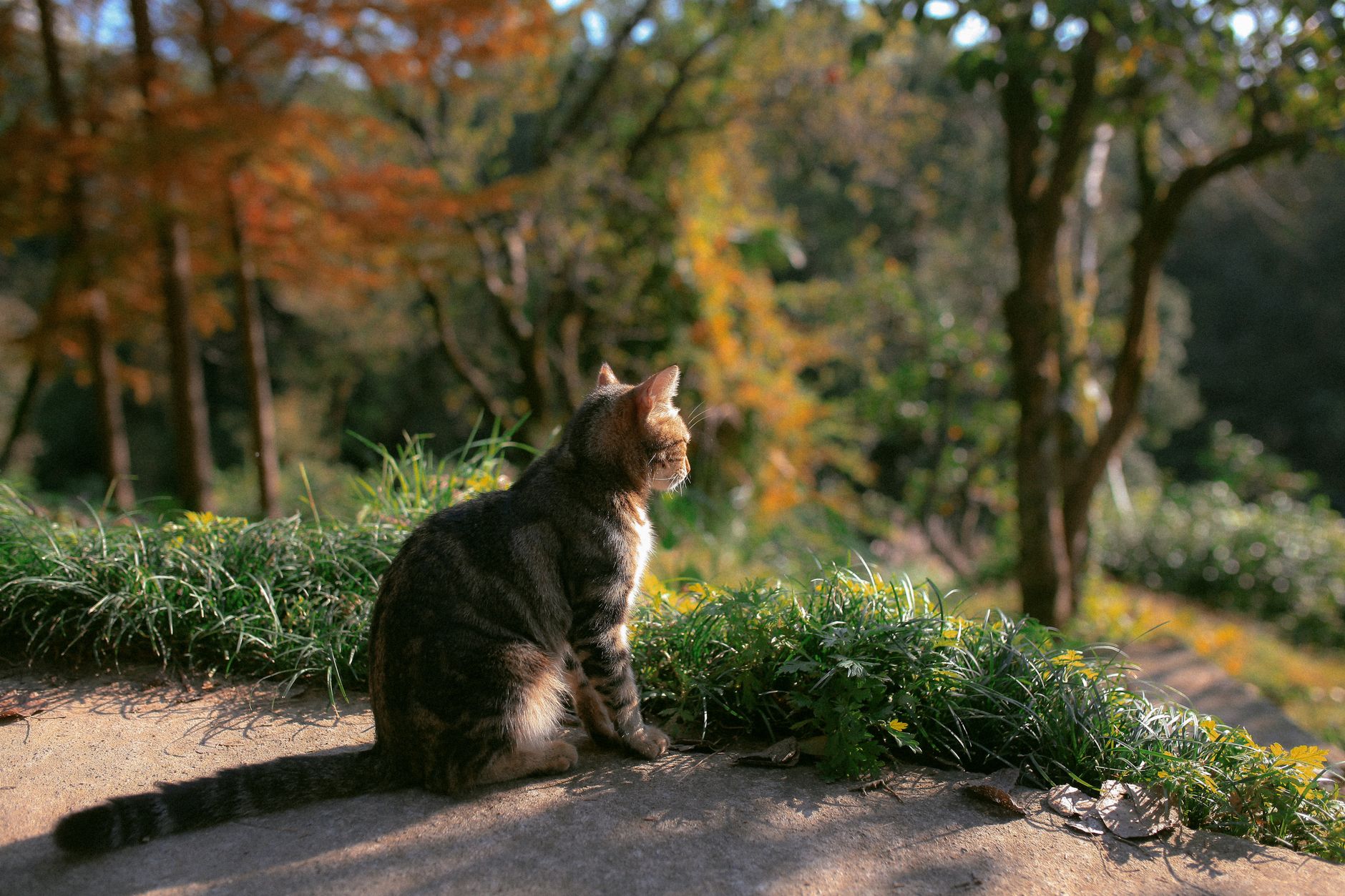
Cat.
Photo by Nukri Bolkvadze on Pexels.com

Warriors 4: Rising Storm (The Prophecies Begin), by Erin Hunter, published in 2004, is a fun and thrilling adventure into the world of cats who survive in the wild. Book one followed the journey of a house cat named Rusty, who meets cats in the wild, organized into clans. Now his name is Fireheart, and he has taken on the role of deputy of ThunderClan, ever since Tigerclaw has been ousted (as told in book 3).

In Rising Storm, the first act of the book takes us through the lives of the cats in ThunderClan ever since Tigerclaw’s betrayal was uncovered. Bluestar, the head of ThunderClan, is morose and sullen after her trusted deputy was found to be untrustworthy. Cloudpaw, Fireheart’s nephew, has become his apprentice, though he is discovered venturing back into twolegs (humans) territory, which is against the rules. Yellowfang, the head medicine cat, is training Cinderpelt (Fireheart’s last apprentice before she injured her leg on Thunderpath–the road where cars and trucks are driven). And then there is Darkstripe, who is ever so suspicious of Fireheart ever since he has taken Tigerclaw’s place as deputy.

And with Tigerclaw on the prowl with other rogue cats, Fireheart must stay vigilant at all times, with the other cats on alert. He also wants to check on Graystripe–his best friend who is now living with RiverClan–but the risk of venturing there will leave the clan at risk. And when a pair of ShadowClan cats arrive to their territory sick, helped by none other than Cinderpelt (the apprentice medicine cat), Fireheart must weigh the consequences of helping them or betraying his clan.

Without revealing what happens in the last act, a catastrophic event changes everything for ThunderClan, including the fate of some characters. Warriors 4: Rising Storm is a gripping story that takes the series in a new direction. As the characters evolve, Fireheart must learn to be a leader, while balancing the safety of the other cats with the warrior codes.

Pax – Book Review

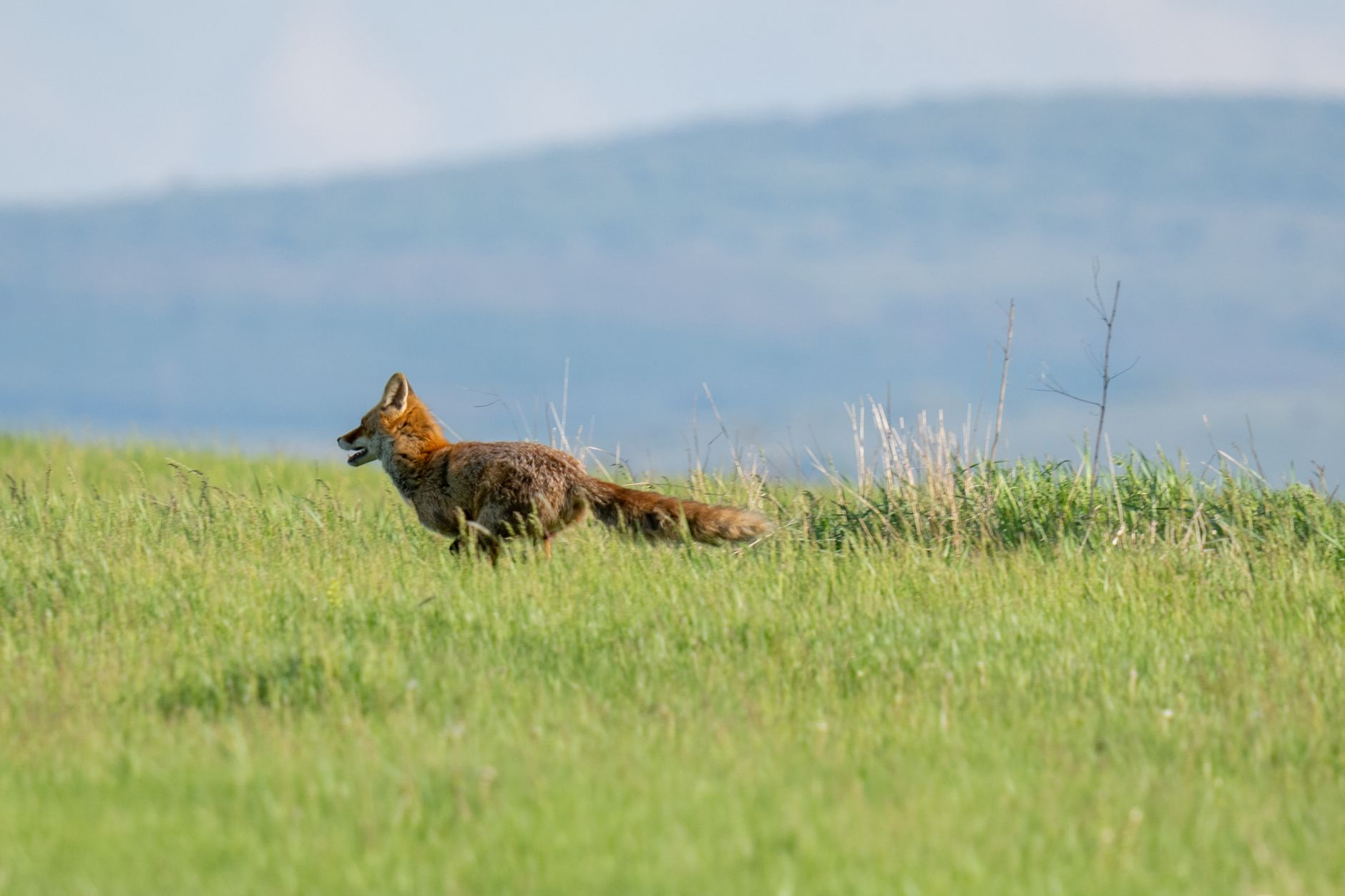
Fox.
Photo by Kiril Gruev on Pexels.com

Pax, written by Sara Pennypacker, published in 2016, is a heartwarming story about a boy who is searching for his pet fox amidst the outbreak of war. The story begins with Peter riding in the car with his father when the latter pulls over to the side of the road. With a green army toy in his hand, Peter throws it into the woods, and his pet fox, Pax, chases after it. But unbeknownst to Pax, the car drives off, leaving him stranded in the woods.

Since Pax had been raised by Peter ever since he was a pup, he doesn’t know how to survive in the wild on his own. Soon after, Peter’s father joins the army, leaving Peter to stay with his grandfather some 300 miles away from where Pax was released. But Peter begins to worry, and he sets off on his own to find Pax at the place where he had last seen him. During his hike, he injures his foot, and unable to travel much farther, he is helped by a woman named Vola, who lives on a farm.

A veteran of the army, Vola survives off grid and without electricity–teaching Peter lessons about perseverance and how to survive with the resources he has. Meanwhile, Pax meets a pair of sibling foxes: Bristle and Runt, who are both cautious of humans after losing their parents to them. Pax struggles to catch food, but with the siblings’ help, he manages to survive in the wilderness. An older wolf named Gray decides to join Pax to find Peter, and so they set off on a journey across the wilderness into army territory.

What’s fascinating about the book is how these two storylines parallel each other until they coincide toward the end. In Peter’s case, he learns to walk on crutches as his foot heals, while Pax is met with obstacles when he finds a camp of soldiers laying wires in the ground in the forest, which poses a threat to anyone or anything that crosses it.

The juxtaposition of the two storylines becomes more tense as the distance between them closes. In both cases, Peter and Pax begin to grow in ways that are unique: Pax becomes more adapted to living in the wild, and Peter becomes wiser about the realities of life. Toward the end, Peter and Pax are no longer the same, and as they’ve impacted and helped those around them, the novel leaves us with this question: are they better off on their separate paths?

Ethan Frome – Book Review

Photo by Mikhail Peace on Pexels.com

Ethan Frome, written by Edith Wharton, published in 1911, tells the story of a man named Ethan Frome, who works on his family’s farm (which was passed on to him) in a village called Starkfield, New England. One day, when his wife’s cousin, Mattie, arrives to help around the house, given his wife’s poor health (Zeena), the dynamics in the household slowly begin to change.

Ethan becomes smitten by Mattie, who is full of life and enthusiasm, whereas Zeena, who at one point took care of his ailing mother (before they became married), is now ailing herself. The story is told in hindsight, some twenty years later, through the eyes of a visitor who visits Starkfield. The story slowly unfolds through quiet moments, for example, when Ethan and Mattie are walking through snowy roads, when they are having dinner, when they are riding on the wagon, or when he is working on the farm with the help of a worker named Jotham.

After Zeena returns home one day after seeing a doctor about her health, she reveals that she has hired someone new to take care of things around the house. But on this note, her cousin, Mattie, must leave before the new person arrives. This comes as a shock to both Ethan and Mattie, and he feels embittered by it. As a result, he begins to draw up plans to leave (i.e. finding a place to go, what to do with the farm, etc.), but given the impoverishment of his circumstance, he begins to question if this is even possible.

In the final act, while Ethan is still figuring out what to do, we, the reader, are left wondering what his decision will be. And this makes the ending all the more gripping as he becomes more certain of his decision. Will the outcome be hopeful or tragic, I will not reveal. Ultimately, Ethan Frome is a story that uncovers the depths of the heart, and how, in a tragic sense, the circumstances of reality can often shake its dreams.

The Jungle Book – Book Review

Jungle.
Photo by Quang Nguyen Vinh on Pexels.com

The Jungle Book, by Rudyard Kipling, published in 1894, is a collection of stories, though its primary focus is on the life of Mowgli (the boy raised by wolves). The first half of the book explores Mowgli as he befriends various animals, include Bagheera, the panther, and Baloo, the bear, who teaches him the ropes of the jungle (namely, the Law(s) of the Jungle). We learn of their nemesis, Shere Khan, the tiger, in which, toward the end of the story, there is a tense scene where Mowgli, who now lives with humans in a village, mobilizes a herd of buffaloes against Shere Khan.

The story has a surreal yet fantastical tone to it, since Mowgli can understand and speak with the other animals, who can speak with each other (i.e. the bear with the panther, and both to the wolves, etc.). The plot and pace is quick as well, with the scenes flying by as Mowgli starts to wonder where his place is in the world, either in the jungle or with civilization.

The other stories in this book are great as well. My favorite is the story The White Seal, in which we follow the journey of Kotick who searches for a place uninhabited by humans where he can lead the other seals there to safety. He travels far and wide until he meets a whale that shows him the way to an island where boats and ships cannot cross. The other stories include a mongoose who defends a family against snakes after they (the family) rescues him, the life of an elephant who is ridden through the jungle to catch other elephants, and a conversation amongst animals (a mule, a horse, an elephant, etc.) who discuss their roles in the army–led by soldiers.

Altogether, the stories draw upon the imagination of the reader to see the world through the eyes of animals and their relationship to humans. Though the story with Mowgli is one of nature vs. society, the others put us into the minds of animals as they partake in different adventures, either seeking coexistence with humans, or a retreat back into nature.

Where the Red Fern Grows – Book Review

Dogs.
Photo by Pixabay on Pexels.com

Where the Red Fern Grows, written by Wilson Rawls, published in 1961, is a story about a boy, Billy Colman, who–after two years–buys two hound dogs, and the bond he forms with them in Ozark, Oklahoma. The story is told in the first person point of view (in hindsight–when Billy is older) as he takes us through his years living in the wooded area of Ozark, which is teeming with wildlife, including raccoons, bobcats, and mountain lions.

Set in the 1920s, it takes Billy two years to save up $50 to buy two hound dogs that he finds in an ad, purchased with the help of his grandfather, who owns a local store. Billy lives with his parents (Papa and Mama), and his two sisters in a cabin-like home in the woods, and often, he must walk to places, whether across the rivers, mountains, or hills, to get where he needs to go.

After purchasing the two hound dogs as puppies, he raises them to go hunting in the woods with him. We then follow his adventures as he hunts with Old Dan and Little Ann, the names of the sibling hound dogs, where Old Dan will bawl and chase, whereas Little Ann will bide her time to outsmart the prey.

Later in the story, there is a hunting competition, and that’s when Billy, his father, and grandfather, go together on a horse-drawn cart to where the competition is being held, hoping to win the gold cup. There is a tense scene where, as the three, and a judge, are looking for the dogs in the woods, the snow begins to fall heavily, leaving them to decide whether to keep looking or to go back to camp.

The book also explores how Billy’s mother wishes to move out of the wooded area, given the financial straits they are in, to give her children a better education. Set in the 1920s, the story really puts you in that period where nature, and the unpredictability of circumstances, is predominant in impacting the characters’ lives. It’s a story that illustrates the strong bonds that can form between family, as well as pets, and the perseverance to achieve ones goals.

Call of the Wild – Book Review

Dog.
Photo by Katerina on Pexels.com

Call of the Wild, written by Jack London, published in 1903, is a harrowing journey of a dog named by Buck (a St. Bernard mix), who, despite all odds, adapts and survives during the gold rush in the arctic. The story begins with Buck’s quiet and domestic life in California with his owner, Judge Miller, when he is taken by a worker of the family’s gardener and sold to a man gathering sled dogs for the arctic gold rush.

From there, Buck senses that things are off, as he is crated and then transported, only to be sold again. Jack London doesn’t hold back when he describes the brutality of what Buck endures and experiences, not to mention what other sled dogs must face. Since the story is told from Buck’s point of view, we see how strange and unforgiving this new, cold environment is, and how the sled dogs must run for hours on end, sometimes 40 miles a day, through the arctic snow.

Amongst the other dogs, including Sol-leks, Curly, Pike, etc., they embody different traits and personalities, but key among them is Spitz, who is the pack leader that Buck competes with to led the sled dogs. At this point, Buck has been bought by Francios and Perrault, and later he is sold to a mail carrier, where the trek is more grueling given the heavy load that the dogs must carry. Like Black Beauty, this novel depicts the drudgery the dogs face as they are worn down through exhaustion, hunger, and injuries.

It isn’t until Buck meets his last owner (his fourth in the arctic), John Thornton, where he is shown kindness and warmth. John Thornton nurses Buck to health given his poor and ill-treated condition, and provides shelter and food for his recovery. There is a great scene toward the end where John Thornton meets a man who makes a bet that Buck can’t pull a sled with a thousand pounds on it. The bet is on, and it is in this scene where despite all odds, Buck proves to everyone just how powerful he is.

Call of the Wild not only explores how animals are used and treated by humans (like Black Beauty), but also how they can bond with humans as well, as in the example with John Thornton. It also explores Buck’s determination to survive and, ultimately, thrive, against all odds, as toward the end of the book, he begins to meet with a wolf pack.

I won’t reveal the end, but will say that the novel is incredibly fast-paced, gripping, and truly puts you in the eyes of Buck as he learns to adapt to these newfound conditions in the arctic, and hears a whisper that could be described as a call of the wild.

The Screwtape Letters – Book Review

Photo by Markus Winkler on Pexels.com

The Screwtape Letters, written by C.S. Lewis, published in 1942, is a book told in the form of letters by an evil spirit named Screwtape to his nephew, Wormwood (a tempter), on how to cause his “Patient” to err by having him make blunders, errors, and mistakes, leading him down the path to where all fallen spirits are. It’s not a conventional book in which there is a clear beginning, middle, end, and for readers expecting that structure, it will take some getting used to, since it is written like a series of short essays where each chapter focuses on a particular theme such as truth, virtue, and the prayer life of the “Patient.”

One must also get used to how everything is framed, since heaven is where Screwtape doesn’t want Wormwood’s Patient to end up. One must think in terms of opposites as one reads this, because Screwtape views everything from the side of evil. Toward the end of the book, though we don’t read any of Wormwood’s letters, we get a sense of what he wrote based on Screwtape’s responses regarding the war in Europe (World War II, undoubtedly), and how fear, courage, etc., are like spiritual battlegrounds for the “Patient.”

Once I got used to the format of this book, I began to appreciate each chapter for the theme it tackled, and later in the book, the “Patient” seemed to be evading Wormwood’s deceptions and tactics, which Screwtape started getting annoyed with. It is clear that the “Patient” isn’t aware of Wormwood at all, since he is an evil spirit, and the way the story is framed is as if Screwtape and Wormwood worked in some unseen office building where they would come and go and then report back to after meddling with the world.

The Screwtape Letters isn’t a fantasy or narrative book in the traditional sense, but for readers interested in C.S. Lewis’s work, it covers moral themes that are addressed in a kind of satirical way about how an evil spirit might think if it were to convince its “Patient” toward a fallen path.