

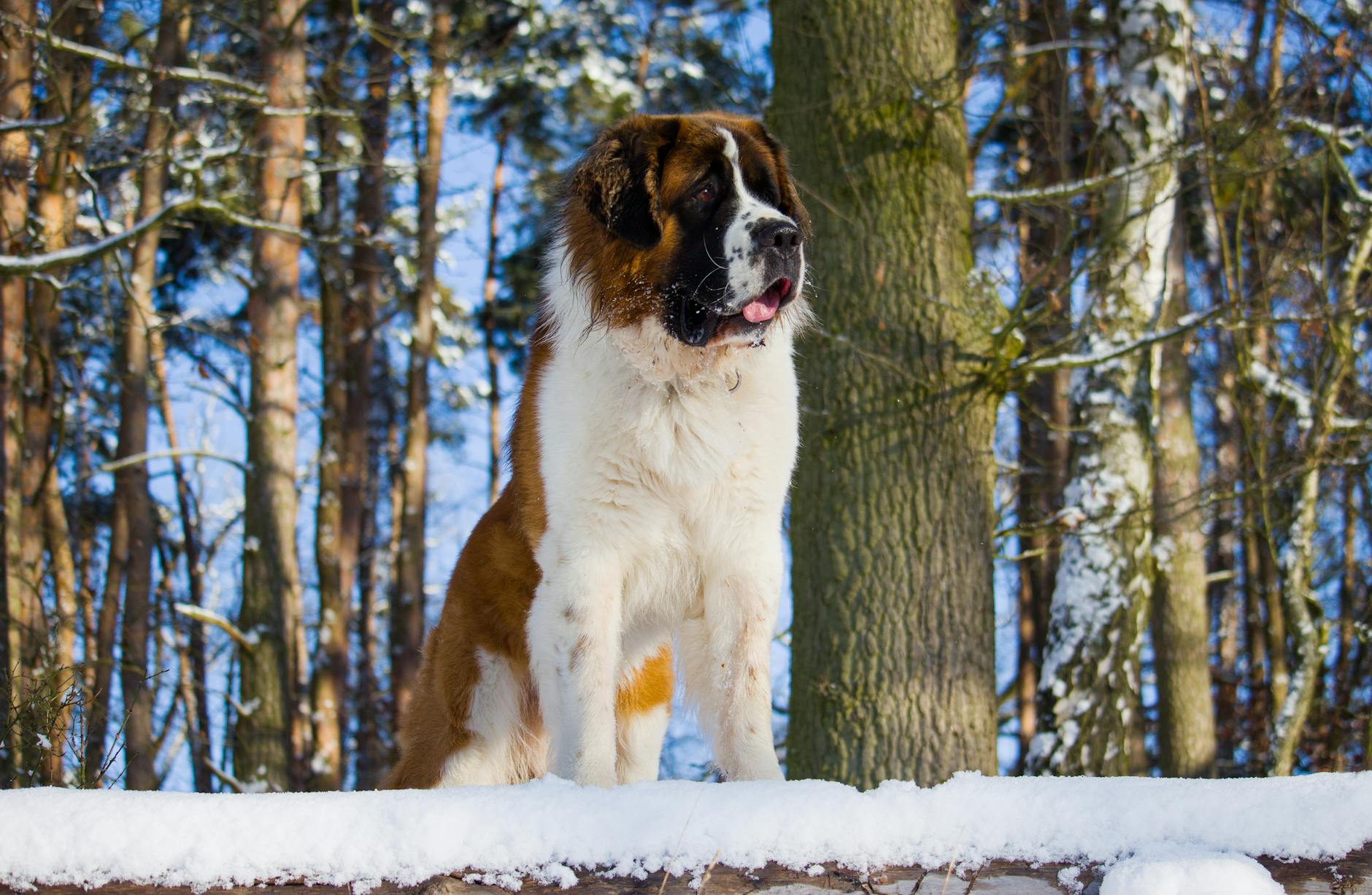
Call of the Wild, written by Jack London, published in 1903, is a harrowing journey of a dog named by Buck (a St. Bernard mix), who, despite all odds, adapts and survives during the gold rush in the arctic. The story begins with Buck’s quiet and domestic life in California with his owner, Judge Miller, when he is taken by a worker of the family’s gardener and sold to a man gathering sled dogs for the arctic gold rush.
From there, Buck senses that things are off, as he is crated and then transported, only to be sold again. Jack London doesn’t hold back when he describes the brutality of what Buck endures and experiences, not to mention what other sled dogs must face. Since the story is told from Buck’s point of view, we see how strange and unforgiving this new, cold environment is, and how the sled dogs must run for hours on end, sometimes 40 miles a day, through the arctic snow.
Amongst the other dogs, including Sol-leks, Curly, Pike, etc., they embody different traits and personalities, but key among them is Spitz, who is the pack leader that Buck competes with to led the sled dogs. At this point, Buck has been bought by Francios and Perrault, and later he is sold to a mail carrier, where the trek is more grueling given the heavy load that the dogs must carry. Like Black Beauty, this novel depicts the drudgery the dogs face as they are worn down through exhaustion, hunger, and injuries.
It isn’t until Buck meets his last owner (his fourth in the arctic), John Thornton, where he is shown kindness and warmth. John Thornton nurses Buck to health given his poor and ill-treated condition, and provides shelter and food for his recovery. There is a great scene toward the end where John Thornton meets a man who makes a bet that Buck can’t pull a sled with a thousand pounds on it. The bet is on, and it is in this scene where despite all odds, Buck proves to everyone just how powerful he is.
Call of the Wild not only explores how animals are used and treated by humans (like Black Beauty), but also how they can bond with humans as well, as in the example with John Thornton. It also explores Buck’s determination to survive and, ultimately, thrive, against all odds, as toward the end of the book, he begins to meet with a wolf pack.
I won’t reveal the end, but will say that the novel is incredibly fast-paced, gripping, and truly puts you in the eyes of Buck as he learns to adapt to these newfound conditions in the arctic, and hears a whisper that could be described as a call of the wild.


