Imagination

Photo by Heather McKeen on Pexels.com

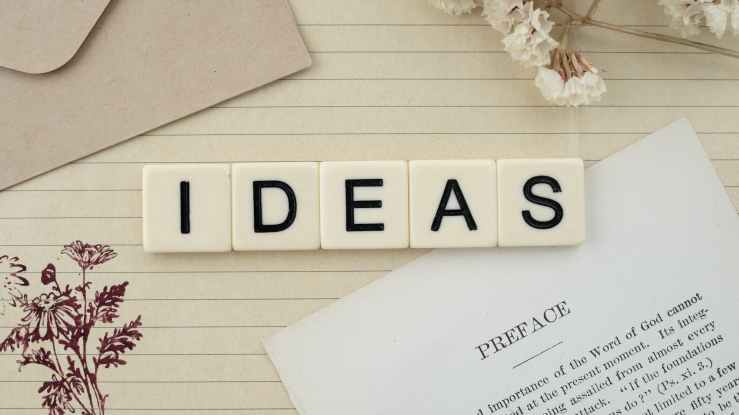
Even though writing a story is a conscious process, the values and ideas within a story come from the unconscious. The characters, landscapes, ideas, and scenes can come from dreams, sudden insights, random thoughts, visions, or be inspired through a movie or book or song. No matter how much we deliberate on the particular of a story, shaping them into a linear three part act, their content rests within the imagination, which sprouts from the deepest recesses of the mind.

Posted in Art

Re-editing

Re-editing a story can go on for weeks, months, years, and even after it’s been edited five or ten times, we’ll find something else that can be fixed even though it already has been. It’s like working on a painting, and no matter how much detail and improvements are made to it, it can always be revamped if our eye catches something off.

The finished manuscript contains all the essentials and more: the plot is complete, the readability is smooth, and the spelling, grammar and punctuation are, for the most part, ironed out. But when we go back to read it weeks or months later, we’ll find things to change/add, such as the wording, dialogue, or we could decide on a completely new direction for the story. It never feels like it’s finished, even though it has to be at some point, since the purpose of all those countless hours of editing was to finish the story.

Besides, there is a finite amount of time that we can spend working on any one project. And then there are the countless other projects, which are bouncing around in our minds, that want to be told–put down on paper (or the computer). The final edit is the one that we decide is complete because if we spend anymore time on it, we’d never be done.

Final Product

Photo by Pixabay on Pexels.com

When a novel or a work of art is finished, people only see the final product. They don’t see the work that went into it, such as the drafts, revisions, edits, and countless hours that went into each and every detail. It’s just the final product they see, and their perception of it can last a few seconds, or even be a glance.

But to the writer and artist, it’s not merely a final product, but a cumulation of a vast array of ideas and experiences that have been harmonized as one. It’s a reflection of who they are, and what their imagination wishes to share. It embodies not only the skill and labor they put into it, but the careful selection of ideas, images, and sounds, meticulously brought together to form a vision of something new.

Posted in Art

Staying on Pace

When falling behind on something, it has to do with not catching up, or staying on pace, with the expected timeline. It could be there being too much work to do, or not having enough time to do it, or not having the resources or know-how to do it. But not staying on pace can be indicative that some things can’t be rushed, since quality matters more than quantity in certain cases.

Of course, some projects/assignments are time-dependent, because they’re based on a fixed/rigid schedule, or the sheer volume of tasks that have to be completed. But other things, like works of art, stories, scientific research, etc., can require months or years to complete. Sure, it can be rushed to completion, but it wouldn’t be the same–and not to the same calibre–if it had progressed at the pace it needed to become more than just a box to check off.

Finding Lost Items

There are times when you go through an old box, storage bin, bag, etc., and you find something that you thought you had lost. When you find that item after months or years, it makes you wonder what else is lying dormant, hidden from sight, waiting to be found.

It could be a hat, flashlight, tools, or some note that you thought you had thrown away. It brings back memories, but it also makes you question why you had put it where you did. In the time since, you had replaced that tool or item (i.e. hat, shirt, shoe, etc.), and maybe you don’t need that found item anymore.

Now what do you do with it? You have two of a kind now (it, and its replacement). The found item functions as a backup, or else, you can store it away. But if you do, you won’t make the same mistake; you’ll put it somewhere where you know you’ll find it. That is until things get shuffled around, and you forgot where you put it.

Free Time

Free time decreases the busier we are. But when there is an abundance of it, we look for ways to spend it. Free time has to be converted into time for something else. It could be reading, writing, watching TV, playing video games, finishing chores, running errands, working on a project, etc.

In this sense, free time is like currency. With the allotment we have, we have to choose what to spend it on. As soon as we drive home from work, free time starts to tick as the minutes and hours go by. Free time gets eaten up faster than we can use it. Making dinner. Cleaning the dishes. Folding laundry. Watching the news. Surfing the web. By the time it’s 10 P.M. or later, there’s no free time left. It was just pocket change.

However, free time can be converted into something worthwhile, something meaningful, even if it was spent on a challenging or arduous goal, much like work. When we invest it into something that not only brings us joy, but that improves our knowledge, skills, or is the product of our imagination, such as a painting or story, it can fulfill a need to express or discover something about ourselves or the world. Whether it’s art or music or a DIY project, once it’s completed, we can look back at it and say that it was time well spent.

Finishing a Story

One of the challenges when writing a story is finishing it. It’s like a marathon where taking a break can result in losing or not finishing the race at all. Sometimes things get in the way, such as unexpected events, or other pressing matters. It requires persistence to finish a story, to keep going when the ideas and the momentum falters.

But in the end, when the story is finished, it is exhilarating, a weight off one’s shoulders. The reward is unlike any other, since it’s like reaching the destination of a long road trip after countless hours of driving and getting lost. And unlike those wins in sports where the whole team cheers, or the crowd cheers, it’s a private and quiet victory. No one else knows about it, since it’s not noticeable, and you reward yourself with something nice, like a day off from work, or a nice meal at a nice restaurant.

Thought Provoking

When you don’t know what to make of something, you either give it time to let it sink in your mind, or you come up with some label that partially describes it. It’s like watching a movie that is nebulous and nonlinear and doesn’t have a clear ending, or like reading a story that has many subplots and tangents that you’re trying to piece together, but you’re not sure how they do.

You know the work is something that you haven’t seen/read before, and you can’t quite compare it with anything to memory. You’re not sure if that’s a good or a bad thing either. All you know is that you don’t know what to make of it.

But after a time, you realize that whether it’s good or bad, or something you liked or not, it stayed with you, made you think about it. And maybe that was the point.

Revisiting a Book

Photo by Heather McKeen on Pexels.com

In my previous post about reading a book halfway through, I mentioned how I would move on to the next book before finishing the one I had started. But weeks or months after putting that book down, I’d finally return to it, discovering it anew like a forgotten story I had once read.

At first, it’s like being flung into a scene where the characters are in a heated debate. You know not what’s going on, but you can’t help but finish the chapter given how tense it is. And as you turn the pages, the characters from chapter 1, 2, etc., slowly return to mind, and all the details and plot elements begin to take shape as you reconnect all the dots.

It’s kind of like reading a short story, even if you’re at the middle of the book you took a break from. For a short story can drop you in the middle of the action/scene, and as you read, you slowly catch up (and see) what’s going on.

As the book ultimately reaches its conclusion, it’s too late to put the book down and read something else. With the end in sight, to stop and read something else now would spoil the impact of the last pages. Besides, wouldn’t you want to know what happened at the end?

Theory

Photo by Kathy Jones on Pexels.com

When we have a theory about something, it’s essentially an understanding of how we believe something is supposed to work, or what its true nature is. It’s like an organized system with a network of branches that connect to different parts that permeate from larger categories to smaller ones in a harmonic way. These categories help to explain, what seem to be, random and unorganized events, using a methodical and holistic approach. In other words, a theory is supposed to be a predicator of varying events/outcomes using an algorithm like a flow chart, or a system of unbroken links like a mind map. When those predictions are verified repeatedly across different situations and or environments, the theory itself becomes more grounded, more real, until it becomes so undistinguishable from reality that it evolves into a formula or a scientific law, rather than just a strong conviction we have.

But a theory has to start from somewhere. It starts off as a question, which evolves into a hypothesis, because as we encounter events that are, on the surface, random and causeless, we try to rationalize and answer the “why” to know and understand what’s happening around us and in the world. But a theory can collapse if it doesn’t align with the predicted outcomes–the world–or with what it’s trying to explain. When that happens, we have to go back to the drawing board and see what didn’t work, why it didn’t stand up to the truth.

In the realm of science, the checks and balances of verifying theories is clearcut, because there are practical consequences if the laws of nature aren’t obeyed, or if the wrong processes or materials are used in the construction of structures or products, such as cars, buildings, airplanes, roads, bridges, etc. A car won’t operate, a building won’t stand, an airplane won’t take off, a road will crack or cave in, and bridges won’t stay up for long if the laws of nature are contradicted or if the materials or if the construction process is faulty.

But in our own lives, affirming or denying a theory is a bit more tricky. Although a theory will play out it in our choices and in their results, it’s up to us as to analyze it, modify it, and ultimately, to decide whether to keep or discard said theory. Furthermore, a theory could be interpreted differently from person to person based on how that theory interacts with the other theories they already hold, in addition to its compatibility with them.

Unlike the realm of science, the social realm is much more dynamic, since it involves people and the complex interaction of their choices with others given everyones’ experiences and values. We can read books and theorize about human psychology and human behavior to approximate what people’s choices will be. The same could be said regarding theories about how to go about achieving success or to be happy. But even if two or more people hold the same theory, it can play out differently for them, since the world is invariably complex, and often times, mysterious. That’s why we ponder after a life changing event, if it was chance, coincidence, luck, destiny, or the divine that caused it. And given that gray area of the unknown, a theory is more like a framework, a guide, since life isn’t just a theory, but an experience that has to be lived in order for us to grow from it.