
A Tale of Two Cities – Book Review

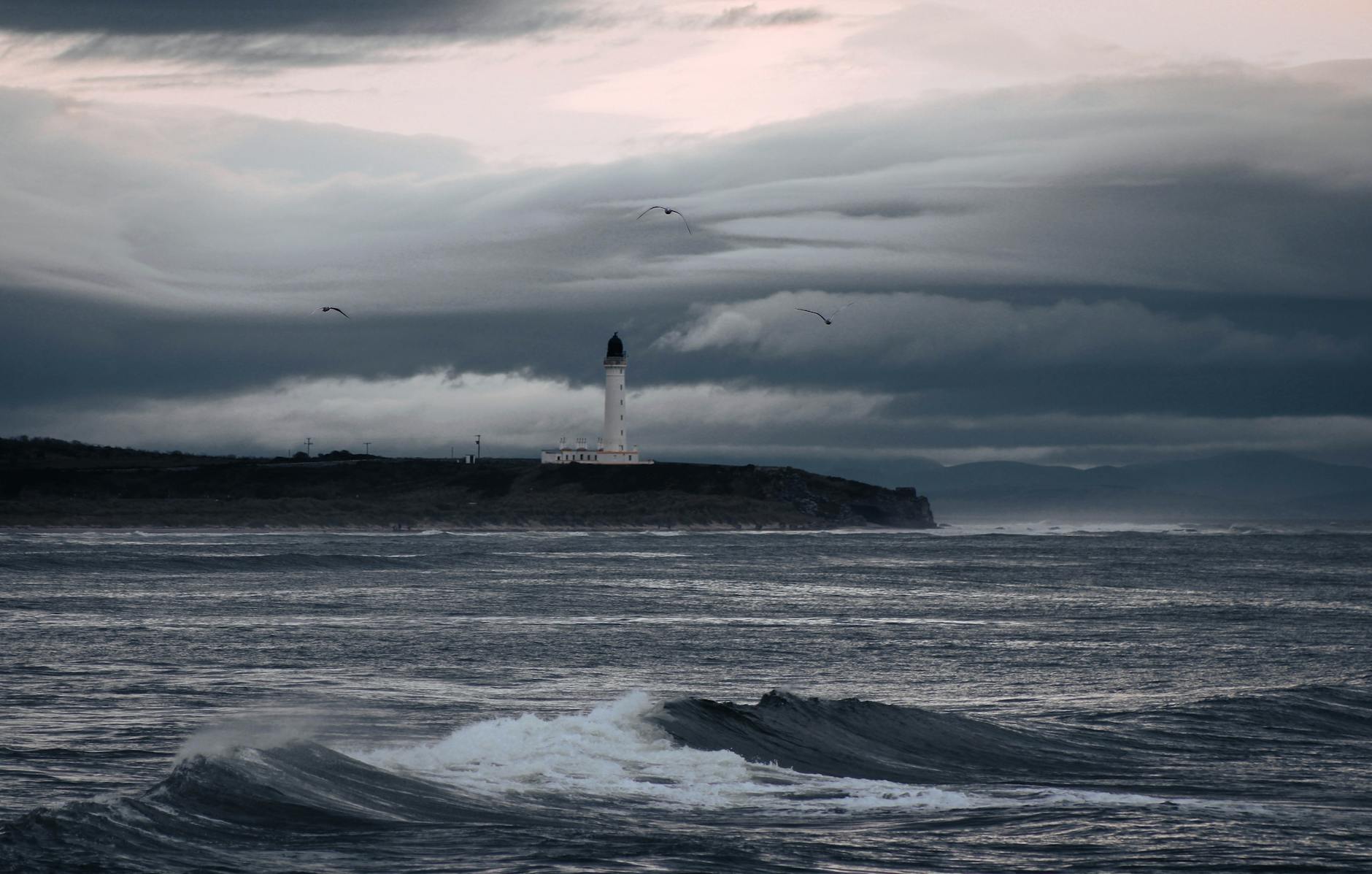
Photo by Toms Laurence on Pexels.com

A Tale of Two Cities, written by Charles Dickens, published in 1859, is a masterwork of storytelling, an intense historical novel set during the onset of the French Revolution that sheds light on the dangers of unbridled revolt. The story begins with an introduction to a vast array of characters including Mr. Lorry, Doctor Manette, his daughter, Lucie, Charles Darnay, Sydney Carton, Mr. Cruncher, Mr. and Mrs. Defarge, etc., which sets the stage for the relentlessly paced second half of the novel.

The two cities in the title, if you’re wondering, refer to London and Paris–two locations in which the main characters: Doctor Manette, his daughter, Lucie, Charles Darney, Mr. Lorry, etc., travel to and from during the French Revolution. The story begins with Mr. Lorry, in his coach, receiving a message which reads “Recalled to Life.” At first, you might be perplexed by it (as I was), but as the story takes shape, you learn that Mr. Lorry works for a bank called Tellson, and he is the ward of Lucie, whose mother had passed away, and whose father was recently discovered in Paris after it was assumed he had perished.

Mr. Lorry and Lucie go to Paris, and sneak Doctor Manette out of the top floor of the wine-shop that belongs to Defarge. Because Doctor Manette had been imprisoned for ten years in Bastille, something there (or prior) had traumatized him to the effect where he isn’t fully cognizant of what’s going on. Later, after his rescue, we meet Sydney Carton, a lawyer with misgivings about his own life, who defends a man named Charles Darney, a frenchman accused of being a spy against England.

Therein sets in motion the story (at least the first half) where Lucie falls in love with Charles Darnay, they marry, and Mr. Lorry and Ms. Pross help mend Doctor Manette’s past trauma (in which he copes by shoemaking), whereas in France, the Defarges carefully and secretly plot their revolt against the aristocracy with the peoples of Saint Antione, who have been crushed under the aristocracy’s oppression (shown in one particular scene, where a nobleman named Marquis St. Evremonde runs over a victim with his carriage and throws a gold coin out as if that were consolation).

In the second half of the story, years have past, and the French Revolution has taken off with the guillotine (“La Guillotine” in the novel), which is used mercilessly against anyone who opposes the Republic. Since Charles Darnay, who is now a French teacher in England, is the nephew of Marquis St. Evremonde (aforementioned), and the château which he inherited is now burned down, with its custodian, the servant, Gabelle, taken into prison (La Force), Gabelle writes to him, beseeching that he come to France and clear his name.

But with Charles Darnay now living a quiet life with his wife, Lucie, and their young child (also named Lucie), he is reluctant to return to France (especially to the prison where Gabelle is kept), but feeling an obligation to save an innocent man’s life, he surreptitiously departs. After stealthily riding to the place where Gabelle is kept, he is found out, and is arrested on the spot, since he has ties to the aristocracy (due to his uncle, who is now deceased).

This sets in motion what can be called a rescue mission to free Charles Darnay from prison before he becomes the next victim of the guillotine under the leadership of the Defarges. Doctor Manette, his daughter, Ms. Pross (their housekeeper), Mr. Lorry, etc. all arrive in France, hiding from the vengeful mob as countless people are arrested, charged, and tried for execution under the guillotine.

The second half of the novel is so riveting and grim that is a far cry from the warmth and charm of A Christmas Carol, also by the same author. Without revealing any spoilers, this book is a masterpiece, whose story bridges all the characters together in nuanced ways, touching on numerous themes about friendship, revenge, oppression, sacrifice, etc., so much so, that it well deserves the label masterpiece. It is a cautionary tale of the extremes of revolutionary fervor and how far it can be carried out, sweeping up innocent people in its midst. It’s a story whose messages resonate deeply throughout, with characters that portray virtues as well as flaws, that by the end, the last lines will echo in your mind like sage advice to live by and remember.


The Power and the Glory – Book Review

Photo by Ricardo Velazquez on Pexels.com

The Power and the Glory, by Graham Greene, published in 1940, is a thought-provoking tale about the last priest in Southern Mexico, hiding from the authorities, trying to make it to his hometown: Vera Cruz. The story takes place in Mexico during the 1930s, where the authorities are severing the southern region of its catholic roots. Priests are arrested and executed, Mass is banned, and so are the sacraments, including baptism, confession, communion, etc.

The story follows a priest with a disreputable past, going from town to town as he heads north. But wherever he goes, the villagers plead for him to stay and perform the sacraments, such as confession or baptism. Despite the risks that this poses on them (as well as on himself), he does so, then moves on. With a merciless lieutenant pursuing him, his soldiers have started taking hostages from the villages, while also pursuing an American who has committed crimes elsewhere.

As the story unfolds, we see it from various points of views, including the perspective of the Fellows family (who are from England), a mother reading to her children about a saint, a dentist (also from England), the lieutenant who is hunting the priest, and the priest himself, as he rides a mule across the forest regions of Mexico.

As we discover more about the priest’s past, we see the inner struggle he faces (wondering if he is even a worthy ambassador of the faith), but despite wanting to flee north, he feels obligated to perform the sacraments. In some cases, he does so begrudgingly, as in one scene where he listens to confession, but not just from one person, but the whole village. There is also a man who follows him, sent by the authorities, since there is a reward for turning the priest over to the lieutenant.

With lots of close calls and moments where danger is always lurking, the suspense never lets up. Everything boils down to the last act where the priest must decide–being so close to freedom–whether to do what his conscience tells him to or to head north.

The prose of the book is stunningly stark yet poetic. The imagery is vivid, and there is an uneasy tension throughout that held my attention from start to finish. Even though the story can be grim at times, it is ultimately about hope and salvation in the end.

A Wizard of Earthsea – Book Review

Photo by Pixabay on Pexels.com

A Wizard of Earthsea, by Ursula K. Le Guin, published in 1968, is a captivating story that explores the hero’s journey of a wizard as he develops great magical powers, while at the same time, confronting the very thing that haunts him. The story follows Ged (also called Sparrowhawk), who in the beginning of the story, saves the Village of Ront from Kargish invaders by casting a spell of mist (which he had learned from the village sorceress). The spell confuses the invaders, causing great confusion amongst them in battle, leading many to go astray and fall back. After the invaders flee, Ged becomes a hero for saving the village.

From there, Ged becomes the apprentice of a mage named Ogion, who once calmed an earthquake from destroying a city, and is respected by the people. But because of how slow Ged’s training is under his mentorship, Ged wishes to go to the Isle of Roke to learn magic at a school for wizards.

From there, he befriends Vetch, and walks around with an otak (a mouse-like creature) that rides on his shoulder. But things don’t go well for him when Jasper, a fellow student, taunts and jeers him to see who can outdo the other in sorcery. At the Isle of Roke, the students learn how to cast spells of illusion (such is making water spring from the earth), control the weather (i.e. wind), and learn the true name of things to command them at will. But one day, Ged and Jasper’s rivalry take a turn for the worse when Ged summons an entity from the Shadow realm: an evil spirit which he cannot command, and thus, it will haunt him for the rest of this tale.

As a result, Ged falls ill, and is bedridden for months while his classmates continue their studies and advance to graduate with their staffs (later to become sorceries of islands to protect people). Ged is stricken with guilt, however, since the archmage (the head of the school), Nemmerle, perished after driving the evil spirit away. Before he passed away, he cast a spell to protect the isle, although the evil spirit is still out there.

After leaving the school, Ged goes on different quests where he faces off against dragons, the Shadow (aforementioned), and an entity inside a tower that can answer any question, all while haunted by the spirit he had released.

A Wizard of Earthsea is a well-crafted story that is remarkably profound in the way it studies the inner conflict of its protagonist. It contains a rich world full of archipelago islands with their own histories, and fascinating villages and sailors that Ged meets along the way who teach him the ropes of the sea. It’s a great story that reveals how it is not just wizardry and magic that makes an individual great, but the choices they make.

Perelandra – Book Review

Photo by Pixabay on Pexels.com

Perelandra, by C.S. Lewis, published in 1943, is the sequel to Out of the Silent Planet (1938), with its protagonist, Ransom, crossing space again, but this time, to the planet Perelandra (i.e. Venus). When the professor/philologist arrives there, he knows not what life inhabits the planet, nor what his mission is, having been sent at the request of an Eldila (Eldil are celestial beings who are the guardians of planets).

Ransom finds himself on a planet that is mostly covered in water, and when he makes it ashore on an island, he meets a woman, named the Green Lady, who lives on a floating island. He discovers that she can command the creatures, including a dragon, as well as the birds, and that she has been waiting for the King to return.

That’s how the story begins, but things take a drastic turn when a space-ship arrives on the planet, with Weston, a professor and scientist, holding Ransom against his will (once again!). I won’t reveal any spoilers in this review, but will say that it becomes a battle of wits between Ransom and Weston as they debate to see who will decide the fate of this planet, since it all rests on a placed called the “Fixed Land.”

C.S. Lewis paints a world with colorful imagery and fantastic dialogue that holds your attention throughout the novel. I found myself engrossed in the debates between Ransom and Weston with the tension never letting up, as it felt like Ransom might lose unless he figures out a way to get the upper hand in the debate. But the story is not just about winning a debate (which centers on the will of Maleldil–the creator of the planets), as there is something grave at stake, in which all of life on Perelandra lies in the hands of Ransom, and if he could save it from catastrophe.

Out of the Silent Planet – Book Review

Photo by Pixabay on Pexels.com

Out of the Silent Planet, written by C.S. Lewis, published in 1938, is a thrilling and exciting adventure that takes the reader to another world full of life and wonder. The planet that the protagonist, Ransom, discovers, is one with a rich history involving three hierarchal creatures which are symbiotic, each having a unique role on the planet, with their own mythology and culture.

The story begins with Ransom walking along a road to find a place to stay for the night when, through a series of events, he happens upon a house where he meets an old acquaintance, Dr. Devine. From there, the two men at the house, Dr. Devine and Weston, take him against his will across space to a planet called Malacandra. There, Ransom escapes after they encounter some strange creatures near a lake, and soon, Ransom meets a creature called a hrossa.

Since Ransom is a philologist, he can pick up on the language of the hrossa, which are a mix between seals and otters, and learns of their culture, language, and the different types of creatures on the planet. He soon learns that each planet has a type of guardian called a Oyarsa, and that something happened on earth before it was formed that caused it to be disconnected from the other worlds.

I won’t reveal any spoilers in this review, but will say it is a fun and fascinating journey with unique creatures and habitats, with a unique perspective on space travel and life on other planets.

The Picture of Dorian Gray – Book Review

Photo by Pixabay on Pexels.com

The Picture of Dorian Gray, written by Oscar Wilde, published in 1890, is a fascinating tale about a man who makes a bargain with his soul. The protagonist, Dorian Gray, has his portrait painted by a friend, Basil, who introduces him to Lord Henry, an aristocratic man whose quips and epigrams are enough to fill a book. Dorian ends up keeping the painting for himself, and makes a wish that he will not age in years.

One night he brings his friends with him to see a play at the theatre where his betroth, Sibyl, plays a part in a Shakespearean play. But mid-way through, his friends are disappointed by it and end up leaving early. As a result, Dorian breaks off his engagement with her, and without spoiling what happens next, he discovers subtle changes in his portrait. In fact, each time he falls into wrongdoing, the portrait takes the brunt of it, turning more grim and unsightly overtime.

And with the influence of his friend Lord Henry, Dorian embraces a life where he casts aside all responsibility for the sake of his own happiness. No matter the imprudence or what wrongs he does, he bears none of the consequences, since the portrait is affected instead. But it isn’t long before he goes too far, leading him to look over his shoulder at all times.

The Picture of Dorian Gray is a remarkable novel not only thematically, but in prose, style, and plot. It’s a story that explores the psychological depths of a person who casts aside all responsibility for the sake of his own ego. The novel is a careful character study of an individual who bargains wit his soul, and it contains great suspense and tension throughout as others become affected by his wrongdoings, leading to a dissolution of his world and social circle.

The Secret Garden – Book Review

Photo by Pixabay on Pexels.com

The Secret Garden, by Francis Hodgson Burnett, published in 1911, is a story about a girl named Mary Lennox, who leaves her home in India after an outbreak of cholera (which her parents did not recover from), and is sent to her uncle’s estate in England. There, she explores a mysterious mansion, watched and tended by Mrs. Medlock, and the groundskeeper, Ben Weatherstaff, where rooms are forbidden and shut, and a ‘secret garden’ is closed off, with seemingly no entryway.

It is a story with many twists and turns, as Mary peels away the layers of the mystery of her uncle’s life (Mr. Craven), the mansion, the grounds, the ‘secret garden,’ and why it has been kept hidden. While she explores the estate, she befriends the family neighbors (the Sowerbys) who introduce her to the beauty of nature and gardening, and those other secrets which her uncle has kept hidden inside the mansion (no spoilers in this review).

The first half of the book has the reader exploring the mansion with Mary as she becomes familiar with the grounds, and learns about the other characters, as well as her family’s history. By the second half, as the mystery of her uncle’s past unravels, Mary begins to learn, through the restoring of the secret garden, how life can either be hindered, or it can flourish, when the old schemas of doubt and fear are cast away, and an outlook of hope and aspiration take shape.

When I first began reading The Secret Garden, I wasn’t sure how the story would unfold, but as a I read, it was like piecing together clues to a mystery that revealed why the characters in the mansion were so gloomy and despondent. By the end, it became clear how powerful certain beliefs can sour pessimism in our outlook, and that the only way to move forward is to face the sorrow and grief with courage and hope of the future.

To the Lighthouse – Book Review

Photo by Timothy Reid on Pexels.com

To the Lighthouse, written by Virginia Wolfe, published in 1927, is a story that explores the family dynamics within the Ramsey household at their residence on an island in Scotland. A book that explores the thoughts and feelings of its characters, including Mr. and Mrs. Ramsey, their eight children, the guests of their house: Mr. Bankes, Ms. Briscoe, Mr. Tansley, Mr. Carmichael, Paul, etc., and the tensions that stir quietly in their minds.

For example, Mr. Ramsey is always pondering whether his books will be remembered, and Mrs. Ramsey wanting to go to the lighthouse despite opposition from her husband, and their guests view of them and everything else. It’s a novel that seems fleeting in the way it passes from one character’s thoughts to another. It upends that writer’s rule where authors are told to restrict a point of view to one character. Instead, the author leaps from one to the next as, for example, a scene during a meal where Minta mentions losing her grandmother’s brooch at the beach, and while she’s preoccupied with wanting to find it with Paul, Mr. Ramsey is fixated on himself, and the others on one thing or another.

The second part of the book is my favorite where it shows the passing of time through the personification of the house. How after it is abandoned, time erodes its walls and floors, and we discover what had become of the characters (especially with the onset of World War 1). The final act has some of the main characters returning to the house with a scene that juxtaposes Ms. Briscoe working on a painting, while Mr. Ramsey and two of his children make their way to the lighthouse by rowboat, with a dynamic that is far tenser than the first act.

If one is expecting to read this novel hoping for a plot-driven narrative with something dire at stake, this is not it. Rather, it is a novel that is introspective in fascinating ways, and through poetic prose, explores thoughts as if they were like paint on canvas moving through rivers of emotions and dreams.

Lordins of Fire

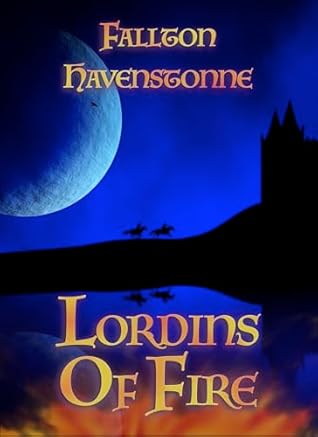
On August 13th, 2025, my newest novel, Lordins of Fire, will be released on Amazon. It will be available on both Kindle and paperback.

Lordins of Fire is a fantasy novel set in a world in which sorcerers, called Lordins, have conquered most of the lands, and the sapients (humans), are trying to stop them from seizing the last two kingdoms. The story begins with a knight named Ryder, and his team of allies, who are part of the Royal Guard. Their mission is to protect the royal family, but soon, things take a turn for the worse, and Ryder must venture off into treacherous territory to survive.

Lordins of Fire is filled with adventure where the characters are faced with various obstacles to overcome, including powerful enemies and harsh landscapes.

I had a lot of fun writing Lordins of Fire, especially with the world-building aspect, and developing the characters and kingdoms. It was also exciting to see how the characters would handle certain situations, and how they evolved throughout the course of the story.

I have also created a Goodreads Giveaway for the book, and have included the link below.

Goodreads Book Giveaway

Lordins of Fire by Fallton Havenstonne

Lordins of Fire

by Fallton Havenstonne

Giveaway ends August 13, 2025.

Enter Giveaway

I hope you enjoy the novel. Happy Reading!

Finishing Books

Photo by Heather McKeen on Pexels.com

One of the challenges with reading a book is finishing it. When starting a book, it’s fun and exciting to explore the world brought to life by the pages. But as the days pass and we try to progress, things can get in the way. Chores, obligations, work, tiredness, etc. Then when we return to that book, it’s all that more challenging to finish.

I try to stick to a rule where I read a certain number of pages/chapter(s) a day. If I find myself unable to meet the goal, I will adjust the page/chapter count to make it more manageable. Using a book app that measures your reading progress can be helpful, as well. After you’ve reached your goal, you can either keep reading or stop. I find this helpful as a way not just to measure my progress, but to encourage me to read each day.