A Bit of Quiet

Photo by Ekrulila on Pexels.com

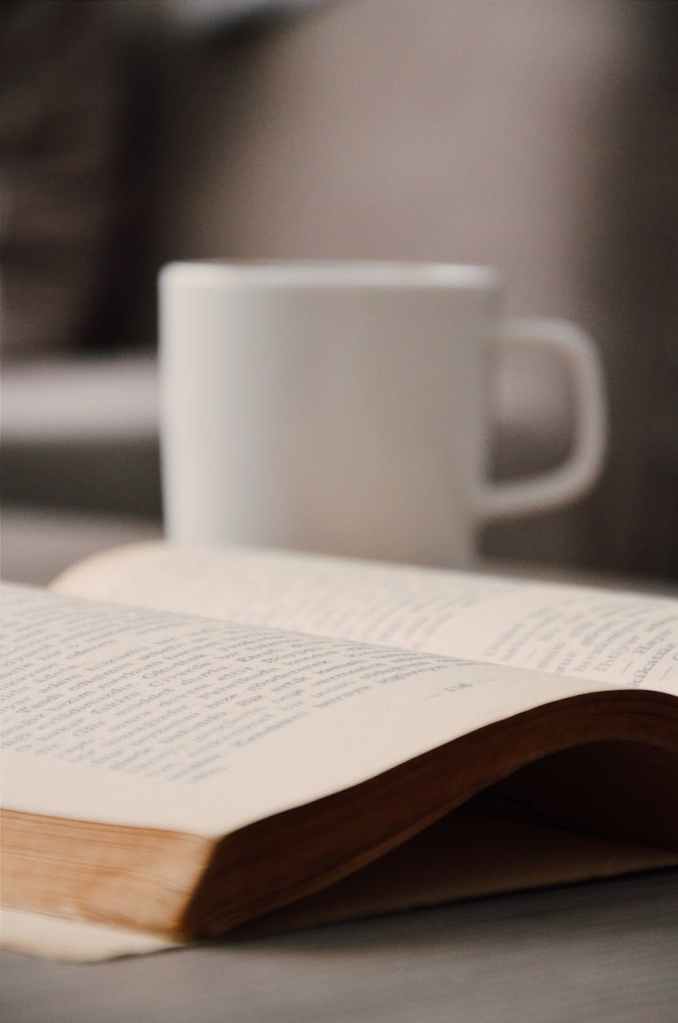
The one thing I enjoy about reading is that it gives me a bit of quiet–that solitary experience of being directly engaged with a work where silence is necessary. During the day, we can be busy with a lot of things–things like running errands, talking on the phone, doing chores, etc. And if we spend our time relaxing by watching TV, listening to music, or playing games on our cellphones or on the computer, these activities busy the mind–grab our attention–rather than let our imagination run free.

But reading is something different because it requires silence to focus on the text. It’s an activity that requires continuous and intense concentration–one which can abruptly end if a single distraction or noise intrudes upon our reading session. Thus, it’s hard to read when there’s noise or music playing in the background, or if people are talking nearby. With reading, it’s as if we can only focus on one thing at a time. It’s not just words that we’re reading, but the ideas and scenes that those words generate that we must extrapolate to turn into something meaningful and coherent to us.

In essence, we’re trying to reach a sort of agreement with the author–one in which our interpretation of their words are the same with what we believe their interpretation of them is supposed to be. Even though there is no direct communication between us and the author, we trust that their ideas can be received and understood by us if we can follow what they’ve written: the chain of their logic, the scenes that they’re describing, the emotions that they’re conveying, the sequence of events that they’ve laid out, etc.

This process of interpretation and agreement between the author and the reader is one that is continuous and imperfect, since there can be confusion when something is unclear, or if a bit of information is missing. And because the reader is trying to comprehend, as closely as possible, what the author is saying (without error, of course), it requires intense concentration and imagination. Therefore, it’s an activity where noise and sound can be the difference between understanding the text, and not understanding it at all.

Overanalyze

Photo by Anni Roenkae on Pexels.com

When I overanalyze something, I reach a desert like impasse. Meaning I’ve reached a point where I can go in whichever direction I’d like, although I won’t know where I’m going–or if it’s the right one.

Over analyzing a situation can lead us to question every facet of a topic or a situation. It’s like every road leads to a dead end, because we can see the flaws in every road. Nothing seems viable, so we’re stuck at an impasse.

When I used to take tests in school, there’d be multiple choice questions with a, b, c, d, with the additional choice of a and c, or a, b, and c, or all of the above. There’d be times when I’d reach the conclusion that any of the options could be valid–depending on how each is looked at. Often times, it was the wording that threw me off, or the answer choices being half true or equivocal in meaning. Or it could be that the answer hinged on what was meant by a certain word, or the context it was meant to be in.

Strangely enough, I heard from one of my teachers that your first choice was often the right one, and that when you overanalyze something (or pick your second choice), it was wrong. I’m not sure if I agree with it 100%, but I do understand the rationale behind it. Our first choice is based on our intuition, and our second choice is based more on our analysis of the options. There are merits to both, but our intuition isn’t 100% right, and neither is our analysis of the options.

At some point, we must concede that we’re making a risk by the choice(s) we make (if it’s a question that’s unclear or dubious). There is a probability that we could end up being right or wrong by our choice, and won’t know until we’ve made it. But if we choose to remain at an impasse, we will certainly not know which it was.

Getting In The Habit

Photo by Suzy Hazelwood on Pexels.com

Getting in the habit of something is a challenging step toward achieving our goals. So often, we make up reasons (or excuses) for not doing something routinely when we know we should. For example, I try to make it a habit of either reading or writing daily (mostly reading, since when I edit, I’m not technically writing anything new, but mostly correcting or changing things in the draft). There are days when I’m tired, when I’m not in the mood, but I convince myself to read/write anyway, since I know that if I don’t, I’ll be behind in reaching my goals.

Getting in the habit of something new is especially hard, since it is not the short term habit that is difficult, but the long term. For example, when we first take an interest in something (let’s say painting), it can be exciting and fun. But overtime, we realize that it takes a lot of work and practice, and that we need to continue doing it each day. But there are days where we don’t feel like painting, or days where we doubt ourselves. We might look at our painting and think: am I making any progress? Am I any good?

Thus, if we put off painting day after day, we’ll eventually stop painting altogether. And if we stop, it’s guaranteed that we won’t improve at all.

Any skill or endeavor that we pursue takes practice, and the dividends pay off not in the short term, since we can have our ups and downs, but in the long term–when we can see how far we’ve come from where we began. But to get there, we must get in the habit first.

Reading For Fun

Photo by freestocks.org on Pexels.com

Often times, we read for a pragmatic purpose. We read to learn, to gain information about something, to understand a concept, or when we’re browsing what products to buy.

But when we read for fun, it takes on a completely different meaning. It’s to escape into another world, to be in a different mindset–one that stimulates our imagination and curiosity. For example, when we read novels, comic books or comic strips, it’s to be entertained, wowed, or to be humored. When we play word puzzles or read about a topic we enjoy, it allows us not just to learn, but to take joy in solving problems and in discovering new or fascinating ideas.

This kind of reading is set apart from the kind that feels more like work. When reading is pragmatic, its purpose is to reach a goal (i.e. the acquisition of a piece of information, seeing what’s on the news, etc. ), so that when we’re done reading, we can get on about our business. But when reading is for fun, the purpose isn’t to reach the end, but to enjoy the ride.

Short Story: Robber Baron 

Check out my short story, Robber Baron. With Todd’s rent increasing soon, he has taken on a second job just to make ends meet. He hopes to finish editing his sci-fi novel, but he can hardly make any progress on it given his exhausting work schedule. He’s been looking for a new place to live, but can’t find a place that’s affordable in his area. Will he make the bold step to move somewhere else, or will he endure until he finishes his novel?

Nap

Photo by sergio souza on Pexels.com

A nap can take us by surprise. We can fall asleep without realizing that we are–without intending to. Besides, all we wanted to do was close our eyes for a minute and lay on the bed. We were going to get up in a minute, right?

It’s only after a nap that we wonder why we took one in the first place. Did we not get enough sleep the night before? Had we over extended ourselves in the past several days? Did we not get in our 8 hours of sleep each night?

A nap is a natural remedy for tiredness–a tiredness that we’ve been ignoring, or maybe we weren’t even aware of. During the day, we might not feel tired, although tiredness has been slowly building up like a pressure cooker. We’ll go about day, getting things done, without realizing that our bodies are starting to shut down, telling us to take a breather and get some rest.

The tiredness is so subtle that it’s not enough to make us go to sleep. But we begin to yawn, rubbing our fatigued eyes, and soon enough, we’re laying down on the bed, falling asleep. Three or four hours later, we wake up, and it’s dark outside, and we wonder if it’s morning or evening.

Reading List 2

Photo by Rafael Cosquiere on Pexels.com

I wanted to expanded upon my last post and describe two different reading lists that I had made in the past. Many years ago, I made a reading list based on what others recommended (i.e. from academia or the literary world) as being great books. It included the classics, nonfiction books, and some modern books. The books I read included The Meditations, Heart of Darkness, Portrait of an Artist as a Young Man, The Great Gatsby, etc.

Several years later, I made another reading list, although this was based on my own selection. This list included Wool, Frankenstein, White Fang, Emma, and several novels by Philip K. Dick. My experience was that this list was much more enjoyable than the first, since these books appealed to my interest.

The first reading list was based on what others recommended as being great books or were deemed as classics. Although some of the books were enjoyable, I found myself struggling with others. Not that they were difficult to read, but I just couldn’t connect with the story for one reason or another. Because this was the case, my experience overall was a mixed bag, since I forced myself to finish books that I either wasn’t interested in, or that I found long or tedious (it’s kind of like sitting through a slow movie, hoping that something exciting happens (or for the credits to roll)).

In the second reading list, I didn’t select them based on what others suggested, but they were based on genres and topics that interested me (i.e. science fiction, drama, suspense, dystopian stories, etc.). Thus, most of the books I read were great, or at least, enjoyable (I say most, since you don’t really know if it is great until you’ve reached the end).

Like movies, each person is going to have a different reaction to a book. What some will regard as great or amazing, others might regard as just okay or boring. Since each person is going to have a different opinion, a reading list has to be tailored to the individual that is reading the books. Although it is definitely possible to read books based on others’ suggestions, the experience will probably be uneven, and it will leave the reader wondering why some books are on that list in the first place.

Reading List

Photo by Artem Beliaikin on Pexels.com

Having reading goals can be worthwhile, although it depends largely on the books that we have on our list. For some books, we can breeze through them in a matter of hours or days, while others can be a challenge to finish a chapter. In that case, it could take us weeks or even months just to finish that particular book.

Thus, whether or not we finish a book depends on a number of factors. Some factors include an author’s writing style, the coherency of the plot and writing, and if we’re even engaged in the story (if it’s a non-fiction book, we might ask ourselves: am I even interested in this topic?).

I used to make my reading list based on books that others recommended, but now, I’ve made it more about the books I’d like to read. As mentioned above, certain books are more difficult to make headway in, not because they’re long or complex, but because I don’t have an interest in them. And when I’m not interested a story, it’s like I’m only reading the words, but I’m not grasping what’s going on in the story. In other words, I’m not invested in the story, and if I can’t get invested in it, then I’d rather read something else.

So for me, I prefer to pick and choose which books I want to read, and make my goal about reaching a certain number (i.e. it can be one book a month, two, or three, etc.). That number can look different for all of us, since our schedules look different, and the speed at which we read will vary as well.

Dictionary

Photo by Pixabay on Pexels.com

Before I had the internet, I’d have to look up words in a dictionary to know what words meant. I obviously couldn’t just look up the word on Google or use a dictionary app. So after saving my place in a book, I’d open the dictionary, and then leaf through the pages until I found the word I was searching for.

And if I was looking up multiple words, I’d constantly be flipping back and forth in the hefty-sized dictionary while trying to memorize what the words meant (since I couldn’t keep them open on a tab in a web browser). In the process, however, I’d learn the definitions of words I didn’t intend to look up. So instead of learning the definition of one word, I’d learn the definitions of two or three words on the same page.

This laborious process certainly hindered my reading pace, but as a result, I would spend hours reading and learning new words. Overtime, I found myself using the dictionary less, since I had expanded the breadth of my vocabulary. Even though I still use a dictionary (on the web or on an app), I don’t spend as much time looking up the definitions of words like I used to.

Overall, there’s a catch to having the answers at our fingertips. When we can find an answer to our question by just typing it on the computer, we’re less likely to probe further. But when we don’t have that option, we have to keep digging, and in the process, we’ll find hidden treasures.

New Ideas

Photo by Pixabay on Pexels.com

When trying to come up with new ideas for a story, we have to be aware of what ideas we’ve already used. It can be hard to come up with new ideas when we’re used to using the same themes, characters, and storyline. We have to break away from old habits, think of ideas outside the box.

We often have to experiment with different ideas, ones that seem strange or offbeat. But that’s the only way we can grow. In the process, we’ll discover something new about ourselves, see a new side of ourselves that will take us by surprise.

In the process, ideas that we hadn’t considered before now seem possible. By taking on new storylines, themes, and characters, it’s as if we’ve become a new writer.

New ideas can provoke a new understanding of our past work, and they can stimulate us to think deeply about long held notions about what’s good and not good in art. Instead of using the same themes and formulas again and again, we have to see what else we can come up with, and if we’re willing to try them.

Posted in Art