Thursday

Thursday is one of those odd days of the week where it’s not quite in the middle, nor at the end, but somewhere in-between. On Friday, everybody’s excited for the weekend, excited that they get two days off and can sleep in, stay up late, hang out with friends without worrying about tomorrow.

But Thursday is one of those days where one can’t do any of those things, since there’s still one day of work left. It’s a day that seems like every other day, but it’s not. People know the weekend is coming, that the work week is almost over, so it’s like they’re prepping for it mentally, anticipating the last day of work before the weekend.

And knowing that, they try to wrap things up at work, preorder movie tickets, stock up on groceries, or reserve tables at a restaurant for a get-together. They might even work on getting all of the chores done so that they don’t have to do them over the weekend. It’s like a day that calls for us to finish what we’ve started that week, as well as to make arrangements for social gatherings. In fact, Thursday might be one of the busiest days of the week.

Treasure Hunt

In a way, we’re all treasure hunters. Aside from the archetypical treasure hunter who searches for gold in a sunken ship at the bottom of the ocean or in some long forgotten cave, the modern treasure hunter is searching for items of practical use, such as a good deal on a car or a home, or those rare collectibles at the best and most reasonable price.

It could be conjectured that it’s inherent in our nature to be treasure hunters. Ever since the dawn of humankind, humans have been searching for resources, raw materials, and knowledge to better and advance life. The intellectual treasure hunter is one who seeks out the secrets of nature, whether that’s in physics, chemistry, or biology. Those that search for raw material, such as gold, zinc, silver, etc., excavate mines, hollow out craters on the earth’s surface, or explore planets or rocks, such as the moon, in search of unknown material. And in our modern age, those that are on the hunt for resources, which can span the gamut from collectibles to supplies and food, are in search of the best products/brands at the best prices.

Indeed, one can search for hours or days to fill up their treasure chest given the examples above. It harkens back to this instinctive need that has existed centuries and millenniums ago, where survival was dependent on it. It’s what drives us to explore, to search for hours and days, to persist despite the obstacles in order to acquire the treasure we’ve dreamed of. It could be a car, a house, a boat, or something as small as a coin, a comic, a rare book, an autographed item, memorabilia, etc. Treasure hunters are always on the prowl, and will be for centuries to come.

First Draft

One of the challenges with writing the first draft is that it will be imperfect. For me, when I add a chapter to a story, I want the prose and dialogue to be perfect, and I want to know exactly everything that’s going on, including the sequence of events, and the characters’ interactions.

But the trouble I run into is that I get discouraged when my writing isn’t on par with where I think it should be. If a line of dialogue, or a description, seems incomplete or lackluster, I’ll want to tap the brakes during the writing session to fix it and make it better. I’ll want to improve it (edit it) to make sure that it’s the best it could be.

But when I do so, I end up writing less and spend more time on editing. It’s one of those things where I have to get over the fact that my writing will be imperfect on the first draft, that there will be missing words, nondescript sentences, and mediocre word usage. In fact, writing the first draft is more about showing up and doing the work: the act of writing itself. It’s not about the quality so much as the joy and experience of putting idea onto paper/computer.

Afterward, once the dust has settled, the editing can happen, and whatever was imperfect, will be made, not perfect, but improved.

Dropping Something

It’s a strange phenomenon to drop something on the ground–especially if the ground is of the same likeness as the object we dropped. Because of this, what should’ve been found in five seconds ends up taking five or ten minutes. In the worse case scenario, we end up not finding it at all.

When we first drop an item, such as a coin, we look directly below us–down near our feet. Then we expand the radius of our search, inferring that it could’ve rolled to our left, or maybe to our right. It ends up taking so much time that we come to the conclusion that it’s not even worth it, but because we had already started, we don’t want to give up that easily. And once we do find it, we end up surprised that we found it all, since it was camouflaged by the ground as if it was trying to hide from us.

But that object could’ve been anything: a bottle cap, a piece of jewelry, a contact lens, a paper clip, a key, the list goes on. It’s like our brains–our eyes–weren’t made to efficiently search for dropped items. It takes a great deal of effort to find them, which can include kneeling down and sweeping our hands over the floor, turning on multiple lights, walking in circles in the same area, sweeping that area with a broom, etc.

When we do find the item, it’s like we’ve solved a complex math problem or aced a test. There’s a huge sense of relief that immediately fills us, changes our mood from one of panic and anxiety to optimism and hopefulness.

Staying Focused

Photo by Pixabay on Pexels.com

It can be hard to stay focused on a story when so many ideas come flooding into our minds. To stay focused on one story, it takes a kind of tunnel vision like concentration, one where everything else (i.e. other ideas) is blocked out, or at least put aside.

Often times, I’ve bounced around from one idea to the next when writing stories, only to find myself with a bunch of incomplete stories (and ideas). They’re mostly like sketches, not blueprints that are ready to be written. For me, a story comes to life as it is written, not just in the planning stages.

I find that it’s easier to stay focused on a short story rather than a novel for the obvious reason that the former can remain short, and it doesn’t need for the conclusion to be wrapped up neatly or explained as with a novel. A novel, however, requires us to think about that one story for weeks or months. Even if new ideas come to mind, we can only utilize the ones that pertain to the novel, not other stories.

When I come across an idea that really excites my imagination and inspires me, I will naturally want to explore that idea and expand upon it. But that excitement and energy has a shelf-life, and I need to work it on right away before the momentum is lost.

Unwavering

It’s a curious thing to see how we are flexible on some things, but unwavering on others. For example, we’re flexible when it comes to things that we don’t regard with a high degree of importance. For some, that could be choosing what to eat for dinner or what movie to watch on a Friday night, but for others, these things could be nonnegotiable. In their minds, they won’t waver when it comes to the alternatives or suggestions that someone else might offer.

To a certain degree, we’re like this in some area or other. Maybe it is in regards to how food should be prepared and cooked, what makes a good movie or book, our views about life, or about the way things should be done in our line of work. In a way, being unwavering can be a positive, since it’s indicative that we believe in our values and will stay true to our principles.

But being flexible is a part of life too, since it’s obvious that not everyone shares our ideas, agrees with them, not to mention that they might have different ideas of how something ought to be done. The middle ground is in knowing when to be flexible (and how flexible) in regard to change or what’s unfamiliar, and knowing when to be unwavering with our ideas and principles. I don’t think there’s an easy answer to this, but one thing I’ve learned over the years is that it’s always good to listen and hear what the other person has to say before making an unwavering conclusion.

Naps

Photo by Pixabay on Pexels.com

I find that late afternoon naps create more urgency than morning or early afternoon ones. If I take a nap around the afternoon and wake up one or two hours later, I still have plenty of time to get things done, such as to make lunch, write, etc. But if I take a nap around 5 PM or 6 PM and wake up at 8 PM or 9 PM, there’s very little time left to get things done with the day coming to a close.

In fact, it creates more urgency because whatever chores are left need to be done right away. I can’t take my time and work on them throughout the day, or space them out. I have to do them one right after the other before I have to go to sleep. But if I’m extremely tired after a nap and just want to go back to sleep, I’ll set those things on the agenda aside for tomorrow.

Naps are one of those things that we don’t plan on but happen due to tiredness or exhaustion. Sometimes it just happens when I close my eyes as I’m watching TV and then I find myself waking up one or two hours later. It’s a strange feeling where it seems like the day has passed when it hasn’t, or when it seems like we only slept for a half-hour when several hours had passed. It’s like our bodies needed to catch up on missed-hours-of-sleep, or at least to recuperate its energy back.

In general, naps do a weird thing where it disrupts our routines and plans. We have to adapt ourselves around them, adjust to the limited time we have after we wake up. But I’ve also come to accept that they can be beneficial and even necessary, since they’re indicative of our minds and bodies telling us something: that rest is just as vital as being awake.

Coffee Time

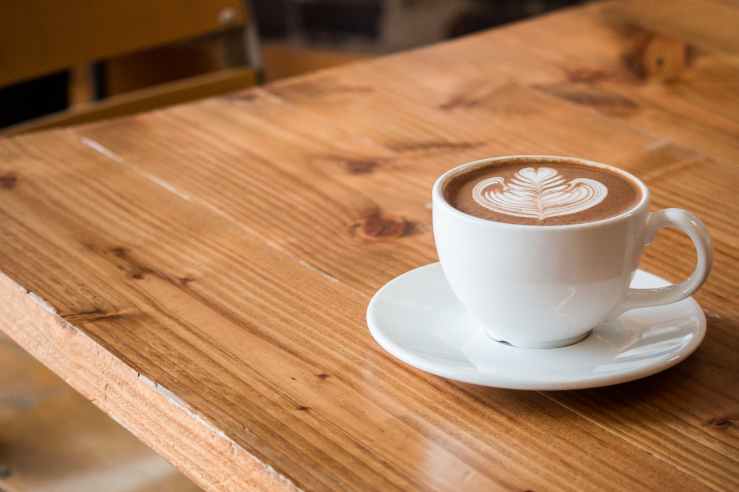
Photo by Jason Villanueva on Pexels.com

In the morning, I look forward to making coffee, since it helps wake me up, and during the winter months, it keeps me warm. But the more I drink of it throughout the day, the less I want to drink it, since it starts to lose its flavor and begins to taste bitter.

During the late morning and afternoon hours, I usually drink water, or something sweet and refreshing like iced tea or maybe a smoothie (if I’m in the mood for it). But during the evening hours, my taste buds crave coffee again. I hold off on making it since I like to drink water or iced tea with dinner.

I’ve drank coffee at night before, which has given me some trouble with going to sleep at my scheduled hour. I’ve tried drinking hot tea as a substitute, although that has given me trouble going to sleep as well. On a successful night, I’ll occupy my mind with a game of chess or write a post or watch a movie so that I don’t think about coffee. Sometimes I’ll just force myself to drink a cup of water if I’m craving coffee. But the one rule I always have to remind myself is: if I drink coffee at night, I won’t be able to sleep.

Often in life, I find that I have to make rules for myself to keep myself disciplined, focused, and consistent. It’s not enough that I just make something a habit, but I have to have a rule in my mind that says: “Don’t do it, or else . . .,” which functions as a reinforcement to the deterrent.

I remind myself that coffee time is in the morning, that if I drink it at night, I won’t be able to go to sleep. The same could be said with many other things, such as watching a movie past a certain hour, reading a book late at night, or completing work in the evening when I should save it for tomorrow (all of which keep me up until the wee hours). There’s a time and place for everything, but sometimes our want of something (such as the things listed above) try to supersede our rules by generating rationalizations that trick our minds into giving in.

For me, the rules, in conjunction with good habits, is a way to stay unperturbed and disciplined. But that doesn’t mean it’s always easy. For each person, it takes figuring out what the rules are (not to mention refining them), and what habits we can practice consistently that will make us successful.
A Place to Eat

I remember in college one evening driving around to find a place to eat with a friend. We drove from restaurant to restaurant, only to discover that the wait-times were somewhere between forty-five minutes to an hour at each one. We continued to drive further away from campus (this was in Richmond, VA), until we finally gave up (since we were about thirty to forty minutes away from campus) on a casual dining restaurant and settled on fast food.

That was many years ago, and now, if I wanted to go out to a restaurant, one, I’d probably quit after the first restaurant that told me the wait-time was forty minutes, and two, I’d go back home and just raid my pantry to make something to eat. I think there comes a point where you’ve maxed out on the experienced of eating out, and you’re content with making food at home. At least, that how it is for me.

When I make food at home, depending on the mood I’m in, I’ll make something that doesn’t require a ton of clean up afterwards. But if it does require a lot of clean up, I’ll clean as I prep the food (or put dishes in the sink as I go), so that after I eat, the clean up is short and minimal. And when I make food at home, there’s usually leftover afterwards that I can save for tomorrow or the day after that.

No longer would I spend an hour or more (as I did then on that college night) driving around to find a place to eat. But the benefits of eating out, whether if it’s with friends or family, is that it is a social experience, since it’s a time to converse, laugh, and to catch up with people you might not have seen in months or years. It’s harder to do so when you’re eating alone at home, or if you’re just grabbing something quick to eat during your lunch break.

Of course, one could argue it is cheaper to not eat out, especially when you include tip and the cost of the meal itself (as opposed to making it at home). But then again, eating out can be a fun experience when you want to enjoy a meal and catch up with someone and not have to clean up afterward or spend minutes (or hours) to cook the meal. Besides, eating out depends on who’s going out to eat, right? If you’re driving to your friend’s or family’s home, that’s technically eating out (and vice versa). Or instead of eating out at a restaurant, eating out can be a table at a park, a table at a food court, or just eating in the car while parked in a parking lot during a road trip.

Press Forward

Photo by Pixabay on Pexels.com

It can be difficult to read when we’re tired, when we’re about to fall asleep and can barely finish the next sentence. Even though the chapter ends in one page, we press forward despite our tired eyes and yawns, hoping that we have just enough energy left to finish the last couple of paragraphs.

It’s kind of like finishing a race when we’re all out of breath. Making it there seems like an impossible task, and as our legs and arms begin to feel heavier with each step, we press forward, one step at a time, all the while our bodies are shutting down. Once we make it to the finish line, instead of celebrating, we keel over and pant from exhaustion, relieved that it’s over.

When the body is at the point of exhaustion, it’s telling us to stop and rest. But in some cases, the mind wants to quell it while telling us to do more. And at those moments, it’s like the mind and body are becoming two, disconnecting, becoming unharmonious, all the while pulling in opposite directions. The mind says “keep going,” while the body says “no, stop and rest.”

Despite our tiredness, we sometimes press forward until we reach the finish line, whether that’s the end of a chapter, staying up late to study, staying up late to finish work, wrapping up a DIY project, etc. But experience shows that when we press forward beyond the limits of fatigue, beyond what can be deemed as burn out, it’s possible for us to make mistakes, to overlook details, or to even stop and quit when we’re so close to the finish line.

Knowing when to press forward and when to stop is a double-edged sword. The mind always see the impossible as possible, whereas the body knows it when it senses it. But deciding what to do at the crossroads isn’t so much a matter of will but of knowing how far our limits can take us.