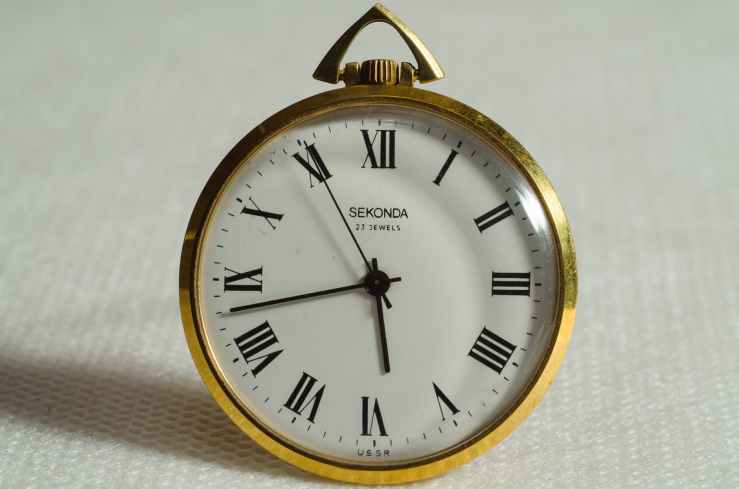
As time goes on, it dawns on me that time is finite, not infinite. Although it would seem obvious that time is not infinite, we can lose ourselves in experiences that make it seem that time is infinite, such as our hobbies, or spending countless hours listening to music or watching movies. During those musical or cinematic experiences, we’re not even aware of time passing, but rather, we’re transported elsewhere as if time doesn’t exist in the place we’re at.
But when we come back to reality, we become aware of time again, the marching of the clock as it winds down to evening and then morning. It’s like experience itself isn’t quantifiable, but the quantification of time seeks to impose itself on experience as if it should be contained and timestamped.
It’s this duality of subjective and objective time where one seems to be right and the other wrong, and vice versa. Subjective time seems infinite whereas objective time is not, and somewhere between the two, time doesn’t really care, as it sees everything as just passing by and moving along.
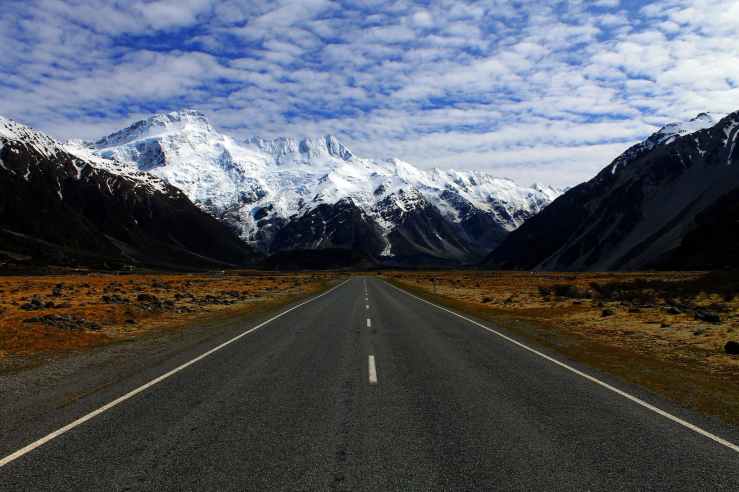
In The Cast-Iron Owl, the story features a roadtrip in which the mother, Jane, and her daughter, Mary, drive across the country to Colorado. When determining all the stops for their roadtrip, including what states they’ll pass through, it was something that took a considerable amount of time and research to figure out.
Even after I had determined what states they’ll stop at, I had to figure out which cities/counties/towns they’d find a motel in, and what the geographic landscape of those states were like. I would imagine it’s similar to filmmakers scouting locations for a film, figuring out the logistics of getting there, not to mention what the conditions and the environments are like. It’s one of those things that seems easy and straightforward on the surface, but actually takes a lot of planning and research.
In addition to the figuring out the locations, I had to plan out how long the drive would be from one place to the next. Given that the story is set during winter, I knew that snow or rain could be a factor (not to mention the cold), so I had to look into the climate as well.
If the story had taken place during the summer, it’d be a lot easier to plan out, since I needn’t worry about the cold weather or the potential for snow. But given that it does take place in the winter, I had to factor that in, including how often it snowed or rained in those places, when I planned out the roadtrip.
The nice thing about writing roadtrips is that it gives the characters plenty of opportunities to have long conservations as they travel, as well as the chance to visit new places. It’s similar to a story where characters are traversing across different countries or landscapes where they face unseen obstacles. The fun thing about writing roadtrips is that it lends itself to the unexpected and to startling encounters. On a roadtrip, even though it can be perfectly planned, there’s no guarantee that it will go as expected.
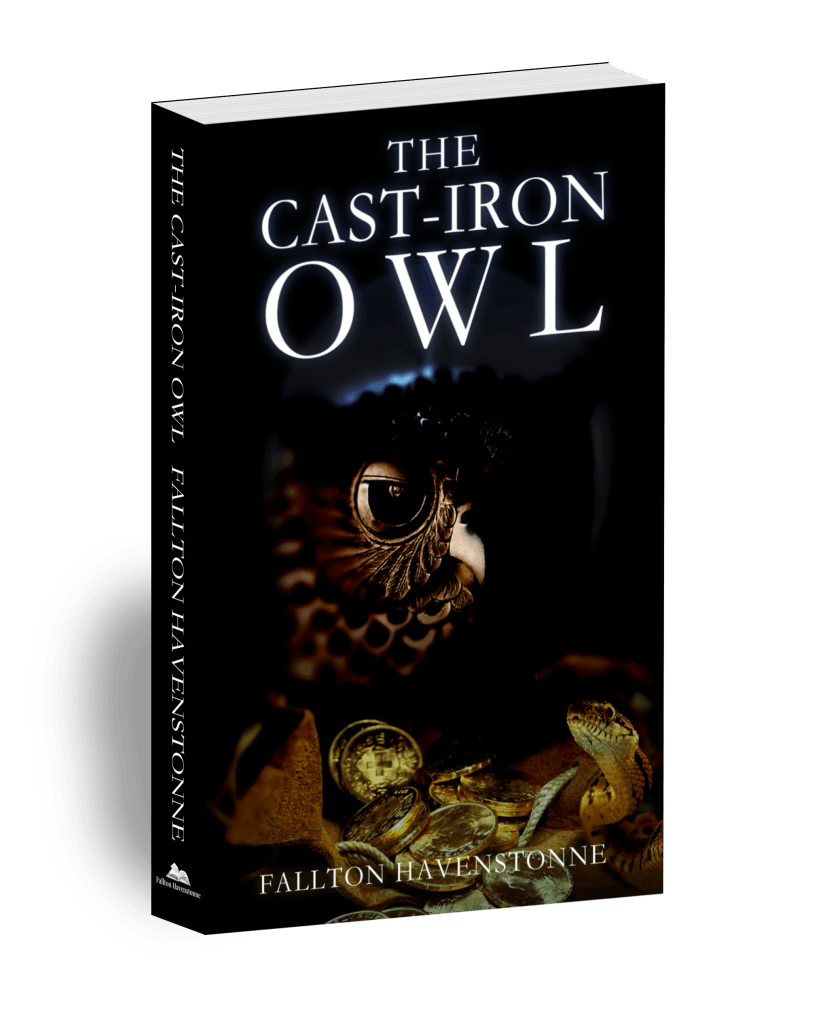
I’m excited to share the release of my newest novel: The Cast-Iron Owl.
Click the book cover to watch the book trailer (on YouTube) for the novel.
The Story
The Cast-Iron Owl is a supernatural thriller about a mother and daughter who find an antique cast-iron owl at a thrift shop. The daughter, Mary, can hear a bell-like sound emanating from it, and she begs her mother, Jane, to buy it. Jane is reluctant since she thinks it’s overpriced, but soon, they will discover that there is something ominous within the cast-iron owl that will change the course of their lives.
Book Cover Design Process
It took several iterations to create the final book cover that you see above. What’s interesting is that at each step of the process, I felt satisfied with the result I had, only to feel like I had to continue modifying it since it seemed inadequate. The process to arriving at the final book cover was a gradual one–one that was the result of countless adjustments and meticulous changes that led to a design where I felt that any additional changes was no longer necessary. Or to put it another way: any additional changes would only lead me to undo them.
Writing the Story
The idea for the story occurred to me over a year ago. It’s one of those concepts where one thing happens that leads to a chain of events that spiral out of control. It took awhile to work out the premise and concept behind it, although actually writing the story didn’t happen until much later (once I had a clear vision of the story, much like a filmmaker who has a vision of the look of their film).
When I first wrote the story, I wanted it to primarily focus on the point of view of the mother and daughter. However, as I started to edit it, I realized that I needed to tell the story from different points of views to show the impact of the objects on the other characters.
Another thing that required a lot of planning was the sequence of events. Since the events can sometimes overlap on certain days, I had to organize and plan out how one event at one location would affect a character(s) at a different location. It took some time to straighten out all of the details, but in the end, it will read seamlessly as if the events are occurring naturally.
Where to get The Cast-Iron Owl
The novel is available for pre-order on the Kindle, and it will be released on 8-16-23.
When I write a story, it can go off on a tangent where it will go down a path that I hadn’t originally planned. It was as if the characters were steering me in that direction through the dialogue and through the logic of their motivations. Sometimes, the result can be better than I expected. What I had originally planned was just okay, but the tangent it went off in was a lot more exciting and original.
Often times, I welcome tangents while I’m writing. However, it’s possible for a tangent to stray too far from the plot. But when tangents do work, they feel organic and natural, something that I wouldn’t have discovered unless I allowed myself to be in the zone and immersed in the story. Tangents can also happen with dialogue where a character will say and reveal things that are a surprise for both the writer and reader. It was as if the process of writing itself made it come to light instead of in the planning stages.
Tangents can also happen when the plot veers off in a different direction. When I notice this happening, I let it take its course to see where it goes. Sometimes it works, and other times, it seems like it’s sidetracking the plot. But as a writer, I allow them to happen since it can be exciting to discover secrets within the plot that I hadn’t even known.
For my upcoming novel, research was vital to ensure that I included facts and detail that were accurate. Whether a story is set in modern times or in the past, these minor details can liven up the story, immerse the reader into a world where the people, objects and events feel tangible and real. It also is a great way for the reader to learn tidbits as they read, facts that they wouldn’t have otherwise known so that they feel like they are gaining knowledge as they read.
Depending on the subject matter, research can take a very long time. It’s not just learning about the history or the facts of a field, but understanding it and selecting the key information that will work for the story. Hours can be spent learning about specific details and facts, only for you to realize later that you don’t need to include them, or that you only need to include a fraction of what you’ve read.
I find this often happens when I research different locations for a story (especially my newest novel). I learn about that place’s history, its scenery, its housing and economic landscape, etc., and I might realize afterward that it won’t suit the story. Even if I don’t use that specific location, at least I know of it, and I could use it in a different story or know what makes it different from the location I will use.
For stories in the fantasy and science fiction genres, research can entail studying early civilizations, folklores or facts about anthropology or science. All this information can be combined and weaved together in a story seamlessly–utilized in such a way that is unique and original to tell a new tale or to illustrate a vision of an otherworldly universe. When it comes to world building, it’s a matter of creating everything from scratch, of laying out a foundation of its history, of designing the terrain and landscape, and of creating the societies that exist within that world. In this way, it’s somewhat like building a universe with its own history and where events and key figures cross paths and influence each other in a way that is unique but strangely familiar to us.
I’m in the process of wrapping up my next novel. It’s been a work in progress for several months, and the original idea for it occurred to me over a year ago.
I’ve been working on the cover design for it, and am very happy with how it turned out. I even made a book trailer for the novel, which I will upload at some point. I’m hoping to release the book before the end of summer. It’s a story that has supernatural elements, mixed with crime and mystery.
One inspiration for the novel was the author Edith Wharton. She wrote a collection of short stories about ghosts that left me thinking about apparitions in a different light. She didn’t write about ghosts in the way that they’re portrayed in movies where they jump out of the dark and scare characters. Rather, the ghosts in her stories seem to come and go without notice, leaving the characters with a sense that some entity is there (or had been there). She created an eeriness to the mood and tone of her stories that made the characters’ discovery of the ghosts even more chilling.
So if you’re wondering if there are ghosts in my newest novel, don’t be surprised if there are. It’s a story that transcends this reality, since ghosts are supernatural.
The X-Files was another inspiration for this story, since I like how that show blended science, mystery, and supernaturalism into the episodes. When I wrote this story, I drew influences from all over and brought them together to express my individual ideas and voice in a story that I believe will resonate with the reader.
Whenever I finish writing a story, it feels like a tremendous weight off my shoulders. I can finally relax, take the week off, and let my mind wander instead of mulling over every detail of each chapter and scene from the story.
But this break tends to be short-lived.
My mind will return to the story as if it misses the challenge and creativity that comes with working on one. It misses the art of piecing together scenes and ideas, of breathing life into characters. In essence, it misses working on a project that involves so much thought, planning, and artistry, that it will soon get bored of the vacation its on.
When enough time passes, we might put the story behind us, but we won’t forget the feeling that comes with finishing it–the sense of accomplishment we had after it was done. Eventually, we’ll have return to that story to edit it, or else, we’ll start working on a new one. In this way, finishing a story is just the beginning of another–waiting to be written.
For some people, this question can have an easy answer: it’s finished when the conflict or final scene has been resolved.
For me, it’s hard to say when a story is finished, since I always have this feeling that I can keep going and carry the story forward even after it’s ended. When I reach the last paragraph of a story, I will ask myself if it should keep going, or if it would be superfluous if I did. But by that point, after writing tens of thousands of words (if it’s a novel), I’m already exhausted, and I’m happy to end it so long as I can take a break. Of course, that ending could change once I started editing the story. I’d say to myself, why did it end here? There’s more to be said, story arcs that need to be wrapped up.
If there is a lingering question of “what if” after I’ve ended a story, or events or scenes that haven’t fully been explained, I will continue to add to the narrative despite where I originally planned on ending it.
And for short stories, I like to end it on a note that I leaves a strong impression or a thought provoking idea for the reader rather than wrap it up as a complete narrative. The structure for a short story is more conducive to that kind of ending, since they can function more as an idea(s) or “food for thought” rather than a story with a clear-cut plot.
There are times when I will revise a sentence or a paragraph numerous times and not feel like it’s done. I can see countless variations that all work just as effectively, but none of which will be final, since I can see yet a few more variations to try.
But after minutes or hours of trying to get that sentence or paragraph right, it can get frustrating and even tiring to try out a multitude of possibilities. It’s as if there is no right answer, just a gray area of possibilities. But I know in the back of my mind that there is one right answer, and if only I kept going, would I find it.
For me, that feeling of finality is reached when I can step away from it and not feel the urge to revise it again. Not all sentences or paragraphs are like that, however. Some just come naturally and effortlessly. But there are others that need so much work and polishing that I’ve reached the point where I’d rather delete them. But deleting them isn’t the answer either, since it leaves a void that needs to be filled.
For me, what helps is to just leave it alone, to come back to it later after a few hours or a few days. And when I do, it’s as if the answer was simple and straightforward, and I didn’t need to edit it to oblivion after all.
When life throws curve balls at us, it can disrupt our writing schedule. When I write, it often happens in spurts–when I feel the call to write. Or when I’m working on a project, such as a novel, do I implement a schedule to finish it all the way through.
Sometimes writing isn’t so much about adding to a draft as it is jotting down ideas. Or it could be planning out the events of a story, or thinking up names for the characters. There are other forms of writing we do that we don’t take much notice of but are stepping stones to a final product.
But sticking with writing is a challenge I’ve faced many a times because of all the disruptions that have occurred either externally or internally. It could be that I have too many things to do, or that I’m not motivated or don’t know what to write about. In place of writing, I will sometimes visualize things, such as scenes for a story, or I will hear the dialogue between the characters as if they are already printed on the page.
Writing is just the last phase of putting those thoughts and visions down onto paper. They first must form in the mind, and once we deem them worthy enough to record, do we write them down.
 Fallton Havenstonne