Different Outlook

Sometimes we get stuck in a mindset where we overlook the things we have. It could be as simple as good health, where we’re so used to it that we don’t even notice or appreciate it. Instead, we become fixated on the things we lack or don’t have (i.e. a goal that casts everything else aside) rather than appreciating what we have–even when it’s in abundance.

Having this rigid mindset can cause us to become tunnel visioned on the areas where we don’t feel complete in, which can make us feel like we haven’t accomplished much at all. It could apply to many facet of our lives, such as our experiences, work, even our creative life, where we feel like we haven’t accomplished very much, even though we have.

But even when we’ve achieved goal after goal, there’ll always be another to reach, another finish line to cross. It never ends in a way, as it becomes a constant pursuit, causing us to overlook everything along the way.

In the process, we’ll go through trials, surmount challenges, stepping stones, and roadblocks that we have to figure out. We will have learned new skills, garner new ideas and knowledge, not to mention reach smaller goals on our way to something grander. But ultimately, it’s not always about the end goal, as there’ll always be another one. Instead, it’s about how we look at the whole process, how we’ve changed, who we’ve become, and how much we’ve grown and achieved along the way compared to before.

Long Journey

Writing is a long journey. It requires countless hours of reflection and internal dialogue within our minds while we pen our thoughts down. There’s no immediate reward for it except the feeling of getting our pent-up feelings and thoughts out into the world.

Becoming a good writer or even a prolific one isn’t something that happens overnight. It takes persistence and years of practice to learn and develop the craft, of putting in the time to mull over the details of our prose, of editing every last sentence and word.

We may feel like there is no reward at the end of the tunnel, as if we’re spending time on something that will not yield some life-changing reward. But it may not be about a reward that’s waiting for us. Writing is like holding up a mirror to our thoughts rather than creating a tangible object that has some utility or function such as a chair or a tool. It doesn’t necessarily have to have a monetary or practical value, since even filling up a journal could bring joy and meaning to us.

Rather, this long journey of finding our voice, of developing our style, of putting ideas and stories down on paper, is what gives life and brings meaning to our ideas and thoughts before they disappear.

Motivation

We can break down motivation into two types: intrinsic and extrinsic. Intrinsic is basically what motivates us from within, and extrinsic is motivation that stems from external rewards, such as wealth, adulation, acquiring things, etc. To me, creating art is mainly driven by intrinsic motivation. Stories and songs are written because of the inner flame of the soul and imagination. And writing stories or songs doesn’t necessarily equate to a material reward.

Often times we might write just to get ideas down–as a way of thinking–just as someone might compose music to express their emotions. When we write stories, it satiates the need to express the fountain of our ideas and thoughts, much like how exercise or getting fresh air is necessary to our physical health. It’s not asking for anything in return except to do, to be active.

Although extrinsic motivation is necessary for acquiring the things we need on a daily basis, that’s not what art is about. It’s not a utility, but a form of expression.

Posted in Art

Imagination

Photo by Heather McKeen on Pexels.com

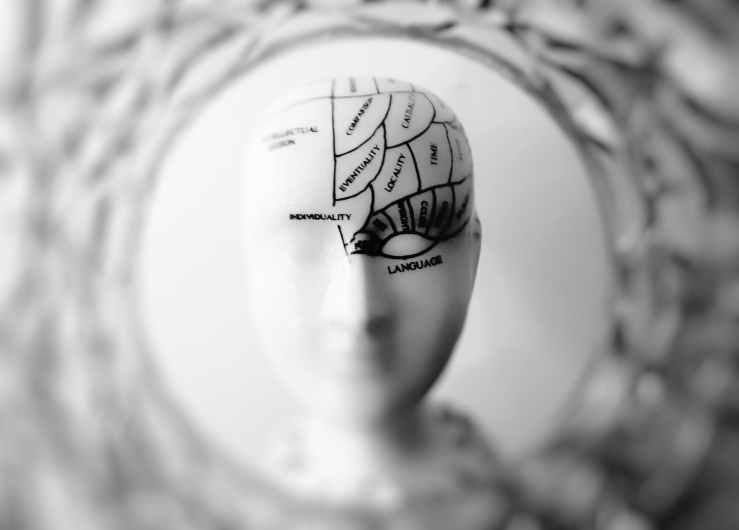
Even though writing a story is a conscious process, the values and ideas within a story come from the unconscious. The characters, landscapes, ideas, and scenes can come from dreams, sudden insights, random thoughts, visions, or be inspired through a movie or book or song. No matter how much we deliberate on the particular of a story, shaping them into a linear three part act, their content rests within the imagination, which sprouts from the deepest recesses of the mind.

Posted in Art

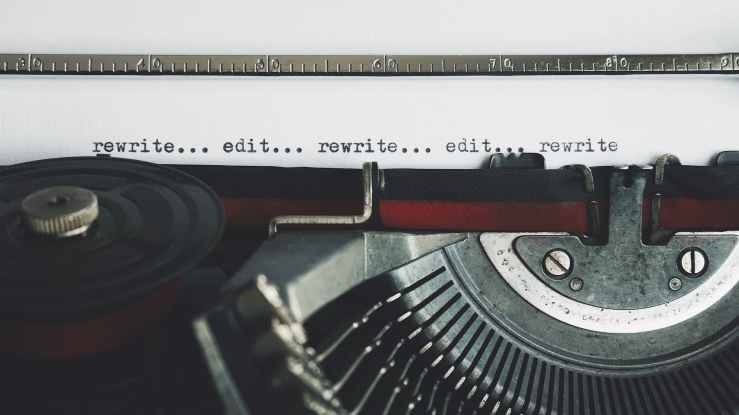
Re-editing

Re-editing a story can go on for weeks, months, years, and even after it’s been edited five or ten times, we’ll find something else that can be fixed even though it already has been. It’s like working on a painting, and no matter how much detail and improvements are made to it, it can always be revamped if our eye catches something off.

The finished manuscript contains all the essentials and more: the plot is complete, the readability is smooth, and the spelling, grammar and punctuation are, for the most part, ironed out. But when we go back to read it weeks or months later, we’ll find things to change/add, such as the wording, dialogue, or we could decide on a completely new direction for the story. It never feels like it’s finished, even though it has to be at some point, since the purpose of all those countless hours of editing was to finish the story.

Besides, there is a finite amount of time that we can spend working on any one project. And then there are the countless other projects, which are bouncing around in our minds, that want to be told–put down on paper (or the computer). The final edit is the one that we decide is complete because if we spend anymore time on it, we’d never be done.

Final Product

Photo by Pixabay on Pexels.com

When a novel or a work of art is finished, people only see the final product. They don’t see the work that went into it, such as the drafts, revisions, edits, and countless hours that went into each and every detail. It’s just the final product they see, and their perception of it can last a few seconds, or even be a glance.

But to the writer and artist, it’s not merely a final product, but a cumulation of a vast array of ideas and experiences that have been harmonized as one. It’s a reflection of who they are, and what their imagination wishes to share. It embodies not only the skill and labor they put into it, but the careful selection of ideas, images, and sounds, meticulously brought together to form a vision of something new.

Posted in Art

Staying on Pace

When falling behind on something, it has to do with not catching up, or staying on pace, with the expected timeline. It could be there being too much work to do, or not having enough time to do it, or not having the resources or know-how to do it. But not staying on pace can be indicative that some things can’t be rushed, since quality matters more than quantity in certain cases.

Of course, some projects/assignments are time-dependent, because they’re based on a fixed/rigid schedule, or the sheer volume of tasks that have to be completed. But other things, like works of art, stories, scientific research, etc., can require months or years to complete. Sure, it can be rushed to completion, but it wouldn’t be the same–and not to the same calibre–if it had progressed at the pace it needed to become more than just a box to check off.

Finding Lost Items

There are times when you go through an old box, storage bin, bag, etc., and you find something that you thought you had lost. When you find that item after months or years, it makes you wonder what else is lying dormant, hidden from sight, waiting to be found.

It could be a hat, flashlight, tools, or some note that you thought you had thrown away. It brings back memories, but it also makes you question why you had put it where you did. In the time since, you had replaced that tool or item (i.e. hat, shirt, shoe, etc.), and maybe you don’t need that found item anymore.

Now what do you do with it? You have two of a kind now (it, and its replacement). The found item functions as a backup, or else, you can store it away. But if you do, you won’t make the same mistake; you’ll put it somewhere where you know you’ll find it. That is until things get shuffled around, and you forgot where you put it.

Free Time

Free time decreases the busier we are. But when there is an abundance of it, we look for ways to spend it. Free time has to be converted into time for something else. It could be reading, writing, watching TV, playing video games, finishing chores, running errands, working on a project, etc.

In this sense, free time is like currency. With the allotment we have, we have to choose what to spend it on. As soon as we drive home from work, free time starts to tick as the minutes and hours go by. Free time gets eaten up faster than we can use it. Making dinner. Cleaning the dishes. Folding laundry. Watching the news. Surfing the web. By the time it’s 10 P.M. or later, there’s no free time left. It was just pocket change.

However, free time can be converted into something worthwhile, something meaningful, even if it was spent on a challenging or arduous goal, much like work. When we invest it into something that not only brings us joy, but that improves our knowledge, skills, or is the product of our imagination, such as a painting or story, it can fulfill a need to express or discover something about ourselves or the world. Whether it’s art or music or a DIY project, once it’s completed, we can look back at it and say that it was time well spent.

Finishing a Story

One of the challenges when writing a story is finishing it. It’s like a marathon where taking a break can result in losing or not finishing the race at all. Sometimes things get in the way, such as unexpected events, or other pressing matters. It requires persistence to finish a story, to keep going when the ideas and the momentum falters.

But in the end, when the story is finished, it is exhilarating, a weight off one’s shoulders. The reward is unlike any other, since it’s like reaching the destination of a long road trip after countless hours of driving and getting lost. And unlike those wins in sports where the whole team cheers, or the crowd cheers, it’s a private and quiet victory. No one else knows about it, since it’s not noticeable, and you reward yourself with something nice, like a day off from work, or a nice meal at a nice restaurant.