
Summer Vacation

Photo by Ylanite Koppens on Pexels.com

It’s that time to pack up for a road trip, to head over to the beach for the weekend, or to take a swim in the pool. With the sun out all day, we can take our time, spend our day as if there’s no hurry or rush to call it a night.

In the summer, there are a multitude of ways to spend one’s vacation. Some people like to go to amusement parks, the pool, or the beach, while others prefer to travel across the country or overseas, or hike in the woods or go camping. Even if we work for most of the day, there’s no denying that the atmosphere is different during the summer. People are more laidback, relaxed. Given all of the months of staying inside from the cold weather, we no longer have to bundle up or crank up the heat. We can stay inside if we want to, or go outside to get some vitamin D.

In the summer, there’s an atmosphere that all is well and one needn’t rush or race to get ahead. The sun is out all day anyway. There’s plenty of time to catch it, even in the evening.

In the summer, the sun invites us to enjoy countless activities such as walking, cookouts, traveling, hiking, swimming, playing sports, etc. We better take advantage of it too, because not before long, the leaves will change colors, and the chills of Fall will sweep across the streets.

Overloaded

Photo by MART PRODUCTION on Pexels.com

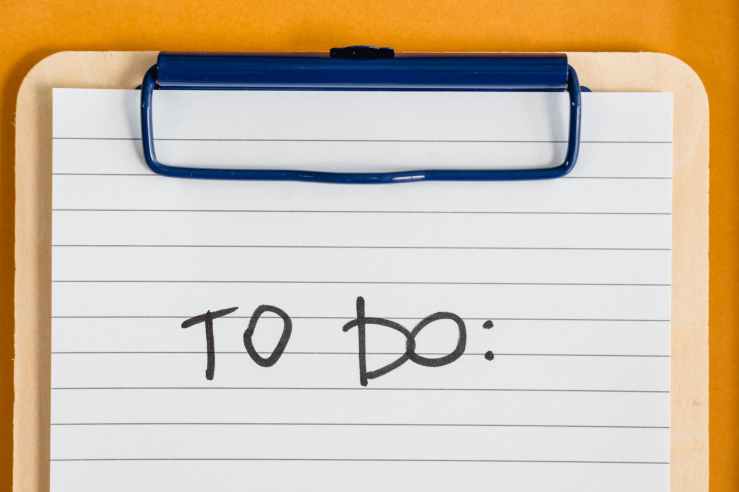
We can get to a point where we are overloaded by our to-do list. It’s easier to divide up the work across the week, or with other people, rather than to do it all by ourselves (especially big projects). To do everything by ourselves wears us down, demoralizes us in the long run.

Time management is important, but also being realistic with what can be done within a given period of time. When we’re overloaded, it can be difficult to concentrate and focus. We can get tired and exhausted, on the verge of giving up and call it quits.

Being overloaded can happen if we underestimate the challenges ahead. We might say to ourselves, “Oh, that’s easy,” or, “It won’t take that much time,” but once we start, we’ll soon face unexpected dilemmas such as things that are broken, things need to be fixed, things that need to be purchased or need to be repaired, etc. All of these things add up over time, which delay us from accomplishing the other things on our to-do list.

Before we know it, we’re over budget, out of resources, and out of time, and we’ve lost the momentum to keep moving forward. All because we had underestimated the challenges–because we didn’t factor in the things that could go wrong.

Perhaps we should start with accomplishing one thing at a time, things that are manageable, things that have a track record of being doable and small, rather than take on gargantuan projects that will overload us.

Outlook

Photo by The Humantra on Pexels.com

Our outlook can change at a moment’s notice. It just takes one life changing moment, or a series of life changing decisions, and then everything we had believed in can get dismantled.

The ideas we hold are simply that: ideas. Can they resist the change of time, the course of unexpected events? Are the principles and values we hold onto dearly immutable, or are they subject to change and modification?

The way we handle difficulties, as well as respond to conflict and disagreement, speak volumes compared to the ideas we simply believe. There can be a duality between the two, similar to someone who says to do one thing but does the opposite. The truth is in the way we act, in what we choose to do.

Our outlook can be positive or negative, and thus, they can give us confidence and certainty, or make us dejected and pessimistic. Between the positive and negative outlooks, there’s a middle ground: being realistic. But what does that mean exactly? To be realistic, we are not overly optimistic, nor overly pessimistic. We’re in the middle. We see that things can go both ways. But if we’re stuck in the middle, we might not take chances, might not achieve great success or change.

Our outlook determines a great deal about our attitude and the way we approach forks in the road, but as we mature and age, our outlook becomes molded not by our own ideas, but by the complex interaction of life-changing moments and events, and the decisions we make during and after they occur.

Preparing

Photo by Anna Shvets on Pexels.com

To prepare for something, you must know in advance what you need. We could prepare financially for an amount we want to have saved, or to make a large purchase. We can prepare for emergency situations, road trips, parties, etc. Preparation takes time, and the length of time depends on the event and how much resources are required for it.

The same could be said for our own projects, like writing a book, a DIY project, a painting, etc. But just because we prepare, doesn’t mean things go as planned. There are always unexpected twist and turns that happen along the way, things that shake the foundation of our planning. Preparation can only take us so far, but we also must be able to adapt when the unexpected occurs.

Collection

Photo by Engin Akyurt on Pexels.com

Collecting things can be a fun hobby, especially if it’s something that we can enjoy like books, movies, etc. I used to collect books, buying various books from authors I enjoyed reading (even if I didn’t get to reading all of their books) and housing them on my bookcases. As the years past, I would revisit the books, open them up to read a few pages, then put them back to read another.

But in general, collecting things never seem to have an end. Not only that, we run out of space, have no place to store the newest items for our collection. Overtime, the collection will gather dust, and we might even forget about what we had bought–or grew out of them.

Some people donate their collection to make more space, or because they no longer have an interest in the hobby or the things they collected. In my case, I donated boxes of books, not only because I did not read them anymore, but because I didn’t have the space for them.

It felt good to have less stuff, to make room for newer things. I still think about the books I read, the ideas and characters they implanted in my mind. Even though the physical books aren’t in my possession, the books themselves have stayed with me in how they shaped me and influenced my life.

When Things Aren’t the Same

During one of my day trips, I got this feeling that things weren’t the same anymore. With everything that has transpired, the vibe was different at the place I visited. The scenery was the same, and so was the environment, but my outlook was different. I couldn’t unplug myself from the memory of what it was like before.

It’s similar to meeting someone you hadn’t met in years, or visiting a place that you hadn’t been to in who knows how long. You can’t help but compare the present experience with the last–hope that it is the same or better.

Things have changed a lot. They seem quieter now, and less crowded too. My last memory was one filled with activity, noise, energy. But things have calmed, and the experience was like seeing shadows of the past.

Questions

To advance knowledge in science, it has to begin with a question.

Which leads the scientist to a hypothesis. It doesn’t mean they know the answer, though they might have a sliver of an idea of what it might be. And to find the answer to their question, it involves a series of tests, or experiments, to see if their hypothesis is correct. Maybe it’s not. And if not, they have to investigate why, see what the patterns are, what went astray.

When we think about math or science, what comes to mind are facts, formulas, and well-established truths. But what doesn’t come to mind are the questions that led to them, the trial and error and mistakes that steered the scientist and mathematician on the right path in making the discoveries that are known today.

Why is that though? Perhaps we’ve become accustomed to caring more about the solutions, the immediate answers, rather than the impetus which lead to them: questions. It is with questions that truths and facts become known. Questions lead to investigations, and investigations lead to discoveries. Thus, without questions, there would not be investigations, and without investigations, there would be no discoveries.

When we think about all of the technology that science, math, and engineering made possible, it’s easy to accept cellphones, computers, TVs, etc., for what they are, to buy and use them because they are available to us. But how did they get there? They weren’t always there, and they didn’t get there by themselves.

Didn’t it begin with people asking why something is the way it is, how to make something work, how to make something better, how to create something . . . ?

Hiccups

We’ve often heard stories about the struggles of filmmaking, and how there would be setbacks during the production, including issues with the budget, the location, casting, scheduling, etc. Nothing ever seems to go smoothly, and it requires a great amount of time, resources, and energy to overcome all the obstacles along the way.

Similarly, when we’re focused on trying to get something done, there will usually be hiccups along the way. The hiccups can be minor or major, or they can add up overtime and snowball into something that can seem insurmountable.

They can be come from our own doing, such as when we procrastinate or overlook the minute, but very important details. When writing a book, for example, this can take the form of not writing often, or not developing the characters or the storyline thoroughly. In the end, this can result in inconsistent characters, or an incoherent plot.

Externally, hiccups can come from delays or unexpected events or obligations that come up during the day/week. We have no control over when they occur, and we can’t ignore them either. They must be addressed or else they will snowball and lead to other hiccups down the line.

The thing about creating and finishing any project, whether it is a film, a book or a DIY project, is that it is an adventure, similar to trekking down a hiking path that has unexpected twists and turns, and rocky and uneven trails. There will be times where you will get exhausted, get lost, or come across a wall or a dead end. You must adapt and be creative in finding solutions, or start over or backtrack to get on the right path. Thus, to reach the destination, it not only takes talent and knowledge, but perseverance and resourcefulness to get there.

Theories

In our lifetime, we’ll come up with various theories about the world. Theories about people, human nature, the universe, etc. Even though we might not publish or share them, they will have more value to us than the ones we’ve read or learned elsewhere. 

The theories we’ve read or learned are stored in our mind, catalogued and retrieved as a sort of talking point whenever they’re discussed or mentioned. They can be useful when we need them to be, but we’re quick to put them aside when they don’t have application anymore.

The theories we’ve developed overtime are a combination of both experience and reasoning, and they stay with us because they have relevance to our everyday life, and in how we function in the world. Even though we’ve learned and heard a lot of interesting theories in our lifetime, we don’t channel them through our actions unless we’ve adopted them, accepted them as if they were our own.

There have been times when we’ve been captivated by a theory, took it for a grain of salt. But it’s questionable how long that theory will stay with us. If we truly care about its validity and usefulness, we have to think about it deeply, see how it plays out in reality, evaluate its strengths and weaknesses, and analyze it until we truly understand it. And once we do so, we’ll improve our own understanding of the world and know that no theory is perfect. 

Notes

When we take notes for an academic class or for a meeting, it’s usually to help us recall what was discussed and to highlight important facts. It’s not something we hold on to dearly, for after the test or project, we discard the notes–forget about it as a sort of timestamp of the past.

But the notes we jot down for a book or a work of art have more meaning and importance to us. They were the blueprint for the creative work, the outpouring of our thoughts–a timestamp of our creative mind at work. We could look back at them months or years later and see how much we’ve grown, how much time and energy we put into what we created. They can be timeless for us, just as the paintings and books from the past still leave an impression on us today.

Even the though our notes might not be special to an outsider, they were instrumental in developing and fine-tuning the creative and intellectual abilities we have today.