
Wandering Mind

When you’re reading a book and you can’t seem to focus, your mind tends to wander. It wanders on to random things–things that aren’t pertinent to the story, but keeps it active: the last movie you saw, the last thing you purchased, etc. A wandering mind is an escape from the book. In fact, it deters you from making any progress in it.

A wandering mind doesn’t happen for no reason at all. It’s a sign that the book didn’t hold your interest–didn’t keep you engaged in the story or characters. There comes a point when your brain is struggling to maintain focus while you read, and when it lets go, the mind wanders without you realizing it. Even though it might seem like you’re reading when it happens, you’re actually just reading the words on the pages, but not the meaning behind them.

It’s like reading a sequence of random numbers, thinking that there is some sense to it when there isn’t. To get back on track in the story, you have to start from where you last remembered (or left off). Even though you lost time, it was merely a delay. Besides, the book isn’t going to wander anywhere.

Utility

We often regard the things around us in terms of their usefulness. When objects are built/created for utility, they are designed to serve a need or to perform a certain task–and to do it well.

When “form follows function,” the utility of a building or tool is primary over its aesthetic quality. But when function replaces form, what we get is bland design: things that look boxy, rectangular, basic, but simple.

When something is reduced entirely to its function, then color, style, mood, tone, etc., are irrelevant in terms of what it’s supposed to do. As a result, we regard that object like we would a kitchen utensil. It’s not designed to inspire, not something that is supposed to have character, originality or distinction.

Utility is all fine and good if simplicity and uniformity were all that we were after. But we seek more from life. We want new experiences, and we want to improve and enhance the quality of our life. And when it comes to the utility of the things we own, their value not only comes from their usefulness or longevity, but in how they inspire us, elicit ideas, or evoke emotions.

Inner Dialogue

As we go about our day, we’ll think about our surroundings, and what’s happening in our lives. We might imagine an upcoming conversation we’re about to have, or have an internal debate about the pros and cons of a situation or idea. Whatever the case may be, we’re having an inner dialogue–working through the possibilities of what might be said, and what is the best thing to say.

It’s as if we need to rehearse the conversation in our mind before it occurs. This helps us to anticipate and to react to a wide range of scenarios. The inner dialogue is a part of how we voice our thoughts in a sort of batting cage. Besides, when we think, our ideas are bouncing all over the place, and people might not understand what we’re trying to say. But after some fine tuning in the batting cage, our ideas are clearer, and we feel more confident in expressing our thoughts aloud.

Zoning Out

Photo by Johannes Plenio on Pexels.com

Zoning out is kind of like slipping into a daydream. Our eyes are not shut, we’re not unconscious of where we are or what’s going on, and we might even be functioning to some degree. But our minds are so far off from what we’re doing that it’s as if we’ve left our bodies and traveled to a different place, a different world.

That’s what zoning out is like. It could happen when we’re staring at the TV but thinking about something completely different. We’re so absorbed in thought that the show or movie isn’t even registering in our brains. We’ve stepped into a space that is more real–a space that demands our attention and focus.

Even though from the outside, it looks like we’re watching TV, internally, we’re playing a game of chess, working on our financial goals, or imagining scenes for our next story. And once we’ve left our “space,” only then does it feel like we’ve been living in two different realities.

Forgotten Stories

Every once in a while, I’ll read a story of mine on my hard drive that I had forgotten about. When I read it, it brings a feeling of deja vu–like a dream that I had before. What’s surprising is the mindset I was in when I wrote it. The ideas in it are not the ideas that I would write about today. Even the story and the characters seem like they came from a different imagination than mine. Although they bear similarities with stories I had written about before, they have a uniqueness and distinction that is all its own.

Our forgotten stories reflect what our imagination was like when we wrote them. Our imagination has evolved over time, borrowing from our experiences and the ideas we’ve shed, developed, and the new ones we’ve learned about.

Forgotten stories are like timestamps of the past–works that captured who we were at a certain point in time. Although they do not represent who we are as writers today, they reveal why we write the stories we do.

Hidden Treasures

Photo by Caleb Oquendo on Pexels.com

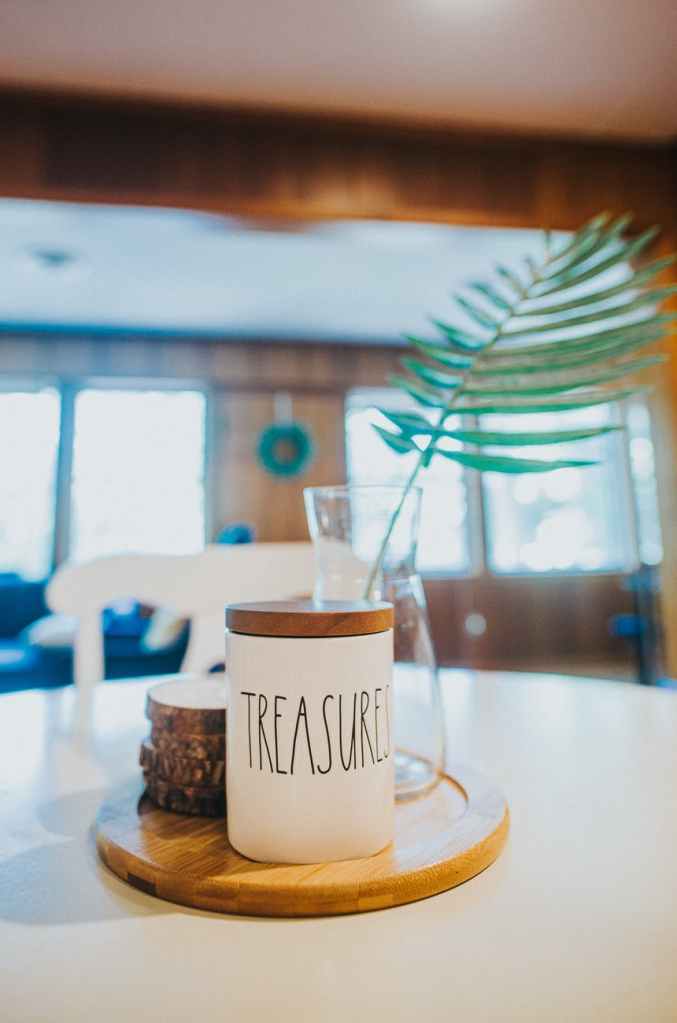
Whenever I reorganize my things, I often find hidden treasures in some box or bag that I had stowed away. Things that I forgot I had–things that I thought I had lost.

For items to be hidden treasures, they don’t have to be expensive or luxurious. They’re often sentimental items such as old photographs from family gatherings, CDs that I used to listen to, drawings that I had sketched in my youth, and artwork that I had made in college.

Finding a hidden treasure often brings a surge of memories. What counts as a hidden treasure is different for all of us. It could be something as simple as a gift from someone we knew, or a wristwatch we used to wear, a book we used to read, or a toy from our youth. They may not mean much to anyone else, but they have great significance to us.

These hidden treasures remind us of how transient life is, and that the things that are important to us are not important because of their monetary value, but because of the memories we’ve attached to them.

Library Books

Photo by Artem Beliaikin on Pexels.com

Going to a bookstore, I’m not as inclined to buy a book from there than to check the same book out from the library. Perhaps it’s because there are far less bookstores than there were years ago. I used to browse books at bookstores until I settled on one I wanted to buy. But now, it seems that there are far more libraries than there are bookstores. And I can check out the books from there for free.

Even if I buy a book from a bookstore (or order one online), the urgency to read it isn’t there. It’s mine, and I can start reading it whenever I want (no pressure at all). But with books that I check out from the library, I’m borrowing them, so I’ll try to read and return the books before or on the due date.

It’s kind of like a game for me to see if I can read the books before I have to return them. I’ll start reading the books the week I picked them up. If I decide that I’m not going to finish a book, I’ll make the trip to return it knowing that I at least tried. And if I end up finishing a book or two, I might consider buying them if I like them enough. But even if I do buy those books, it’s rare that I’ll read them again from cover to cover.

Putting Off Sleep

Photo by Christian Domingues on Pexels.com

When we want to sleep, but put it off, it carries a feeling of frustration. There can be many reasons for this. We might convince ourselves to stay up late and finish things for work, or to prepare for an important event, or even finish up an assignment or project for a class.

Sometimes when this happens, it’s when we need sleep the most. It’s as if these things are conspiring against us, keeping us from having a good night’s rest.

Couldn’t they wait until tomorrow? Couldn’t we tell ourselves that? Even though we might, we don’t take our own advice. Instead, we stay up for hours working on whatever needs to be done until it’s finished. By that point, it’s 1 or 2 in the morning. If we’re lucky, we’ll get 5 or 6 hours of sleep. Not enough to be fully rested for work the next day.

Perhaps the best thing to do is to hold off on what needs to be done. Get it done tomorrow so that we can get some rest. Or we can wake up early to work on it (although this is easier said than done). Or we should start getting on a regular sleep schedule, and make everything else work around that.

Silence

Years ago, I felt the need for silence–the need for calmness and tranquility from all the noise on TV and from the media. So I started to read, made it a goal to read for just one hour a day. The more I read, the more the noise started to die down. And in my solitude of reading, my mind was transported elsewhere–living in the imaginary world of the books I read.

That silence became a kind of meditation–a way of centering my focus, of training my mind to be still and to concentrate on one thing for a long period of time.

While the noise was gone, my mind was active. I hardly tuned in to the media or to what was on TV. I realized how much less anxious felt with them gone, how much clearer my thoughts were, how much better I was able to think.

Reading requires silence because our imagination is working harder than actively seeing or listening. Reading is a different medium from music or film, one that requires us not just to perceive through our senses, but to imagine what images and sounds might exist.

Wandering

Photo by Ethan Jones on Pexels.com

When we explore a new place, we wander–not knowing where we will end up. Like going to a fair, an amusement park, or an art museum. We wander to see what’s around the bend, to know what’s out there.

Wandering is a slow process. The point isn’t to get to any place quickly, but to know what the place is about. We need time for it to sink in, and to discover each part of it.

Wandering can also help us to think and reflect. It’s an opportunity to sort through our thoughts when sitting or standing still isn’t working. The goal isn’t a destination, but to move as if we were moving through the landscape of our mind–piecing together the fragments and links–finding the treasures that are the key to our questions.