
Close Call

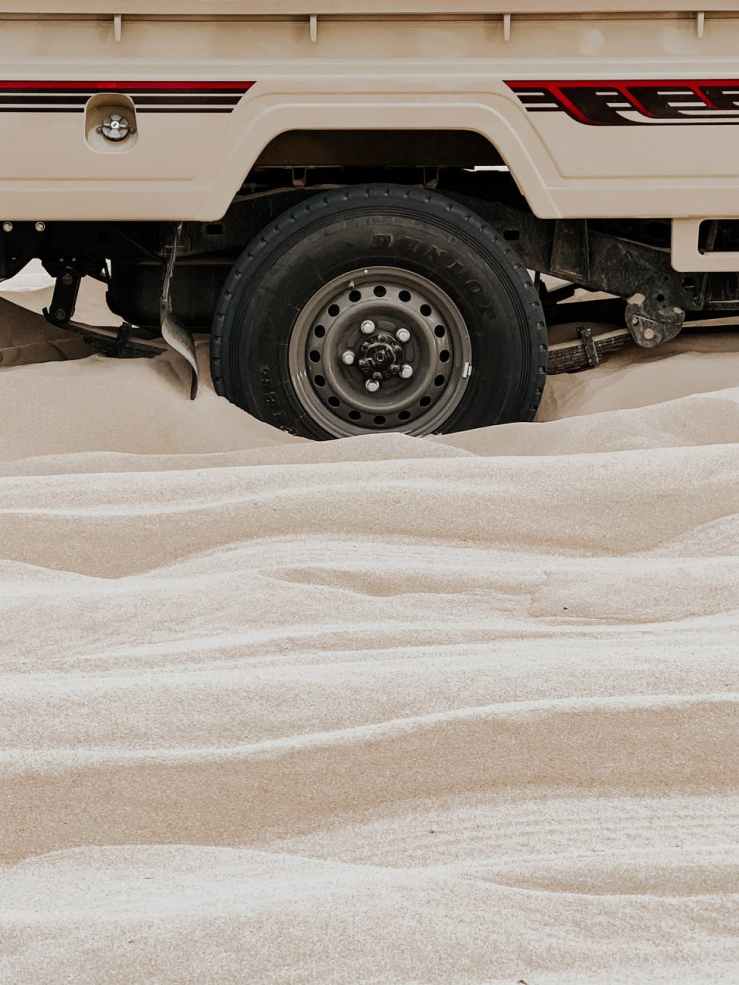
Photo by Harry Cooke on Pexels.com

I was filling up my car when an SUV pulled up in front of me to use the adjacent gas pump. It’s one of those gas stations where there are lanes with gas pumps on each side. I began to feel anxious once I noticed that they parked at least two or three feet away from the nozzle (why people do this, it completely baffles me). This meant that when it was time for me to leave, I’d have to squeeze by their SUV and the SUV across from them, which was about five or six feet apart.

This was around rush hour, mind you, so the place was really busy. When my gas pump clicked, I replaced the nozzle and got in my car. I turned it on and noticed that there was barely enough room for me to squeeze pass them, but I didn’t want to wait another four or five minutes until the person in front of me left. The optimist in me believed that I could make it, so I pulled out of my spot and steered right to go between them.

As I inched closer toward their vehicles, I realized that I was was almost door to door with them, trapped in a sort of bottleneck. I started to panic, and when I realize I might not be able to squeeze by, I craned my head around to back up.

Suddenly, a car pulled up to the gas pump that I was at. And then another car pulled up behind me (a smaller one) that wanted to squeeze by the narrow pass I was right in the middle of.

I was somewhat shocked by the situation I found myself in. I had to make a decision to either take a chance and drive between the two SUVs without brushing against their doors, or to wait until one of them left. It was one of those moments where I felt like everything wrong that could happen happened. A frustrating moment where I felt like I should’ve been more patient and waited until the SUV in front of me left rather than to take this risk.

In the seconds that past, I decided to drive passed the two SUVs, moving at a snail’s pace, carefully eyeing how close my side mirrors were to theirs. As soon as the nose of my car passed theirs with just inches (or centimeters) between our doors, I started to pick up the pace, darting out from the bottleneck. I started to shake my head in frustration as I did so, knowing that this was too close of a call, that things could’ve went awry if I had scraped both of their SUVS.

As soon as the tail end of my car exited the narrow pass, which was barely the width of a parking spot, I turned sharply and left the gas station in relief. On the way home, however, I couldn’t help but think how close of a call that was, and criticized my decision to drive between the SUVs. The fact that someone pulled into my spot, preventing me from backing up, and that a car pulled up behind me, made the situation only worse. A perfect storm, the saying goes.

During the drive home, I realized that the way we visualize (or imagine) a situation in our minds can go astray in reality. My decision to pass the SUVs was based on the assumption that it was possible when in fact, it was, but extremely risky. Perhaps I thought that there was more than enough room between the vehicles than there really was. But the opposite can be true, where we imagine a situation to be risky or impossible when it really isn’t.

I think the close calls that our minds see and our eyes see are two different things. We make judgments and decisions based on them, and they’re not always perfect, and we’re continually trying to make better decisions based on what worked or didn’t work in the past. We’d like for our minds and senses to be in congruence, but whereas the former can imagine the extraordinary and the impossible, the senses is grounded in the ordinary and the possible. In my case, it was like my mind had to catch up with my senses, realizing, too late, that it had miscalculated (or overlooked) the risk.

Symmetry

Photo by Patricia Lazaro on Pexels.com

Symmetry is essential in math, since it is requisite in equations, graphs, and the laws of logic. Mathematicians can build an entire universe with them, a gigantic pyramid of formulas and equations and knowledge that is certain and unequivocal. But the way this world is viewed doesn’t always correspond to the world we live in, especially since the latter can seem so chaotic and unpredictable at times.

When we look at a building or artwork that is hung in a gallery, they need to be leveled, symmetrical, and centered. We’d prefer things to be that way because it makes sense in our minds, and because of real world applications. If one picture is slightly lower than another, we notice it right away. If a building is not perfectly flat (leveled), we know that things will start to roll on the floor.

When we see something that is off centered or uneven, we want to fix it, since it gives us the impression that there is a tad bit of disorder and uncertainty about it. This way of looking at things can have application in our everyday lives, such as the lines on the road, the way a tree is planted, or the piles of papers and office supplies that are on our desk.

Perhaps the idea that everything needs to be symmetrical has to do with the way we see an ideal world, a world which is geometric and orderly. But the world we live in isn’t exactly that, and in some cases, the imperfections we notice might be the way things are supposed to be, since nature’s rules aren’t always in accord with our own.

Always Something More

No matter how much we have, there is always something more that we can get. The things we’ve obtained start to lose their magic after awhile, and we yearn for something else to replace them, or at least, to keep the magic alive.

Even if we have everything we need, it’s easy to make a list of what we don’t have. It’s as if there’s always empty space on our shelves, space that’s waiting to be filled by something new, something unique. Even if we’ve acquired everything on our checklist, we can find other areas of our lives that we can have more of, whether that be clothes, extra supplies, collectibles, etc.

It can ever occur once we’ve reached capacity. We’ll figure out ways to make more space, rearrange things, fit them somewhere. At some point, our want of something new will convince us to get rid of our old things. Or we might grow bored with them, and start to reorganize or downsize our stuff. But even so, that call for something more continues to linger in our thoughts, and we must choose whether to listen to it or not.

Forget

Has there been a time when you’ve forgotten basic information about yourself? Basic information like your phone number, address, birthdate, or email? It’s strange when it happens. It’s as if you don’t know who you are anymore, and that you’ve been living a life that you thought was yours.

I was at the store and when I went to the checkout line, the cashier asked me what my phone number was to pull up my membership . As soon as I tried to enter it on the keypad, I completely forgot it. I stood there for a moment, sifting through numbers in my mind, looking like I was doing mental math for a ten-step equation, but all I could come up with was other people’s phone numbers. It was like my brain had lost my own number, and the only way to retrieve it was to ask someone else who knew it.

Sometimes I think it’s the pressure that comes from having to recall something on the spot. I would’ve been able to type it if I was relaxed and could enter it at my own pace. But under pressure, everything locks up, and my brain is stuck, unable to function properly. I couldn’t remember my number no matter how hard I tried to think of it. Obviously, I know my number by heart, and I’ve written it down countless times on forms and documents. I’ve even told it to people time and time again, saying it without even thinking of it, so I should know it without hesitation.

But for whatever reason at that moment, I failed to recall it. The cashier might as well ask me the latitude and longitude of my address. I would’ve looked as perplexed as when I couldn’t remember my number.

And then moments later, after I had left the store and entered my car, I looked up my number on my phone and felt silly for not knowing it earlier. Why did my brain have a lapse when my number was so obvious to me? Was I aloof? Was I tired? Was my brain unable to make the synaptic connections to retrieve the data because of some misfire or it not working at all?

It could be a number of reasons. But one thing is clear: when we forget something that’s so basic and obvious to us, it’s like being a character in a movie that has forgotten their identity, forgotten where they live at and what their name is, and everyone’s expecting them to be themselves.

After The Fact

Photo by Alex Andrews on Pexels.com

It is only after the fact do we realize what the right answer was, the decision we should’ve made. There is a lesson to be learned after the fact. It’s different from someone telling us that we’re wrong, or seeing an X beside a question that we got incorrect on a test or a quiz. It’s the type of learning experience where we have to admit to ourselves that we were wrong, because if we didn’t, we would go about our lives with something that can’t be used or that would cause problems later down the road.

For example, if we build or install something that isn’t leveled, could we live with it knowing that it’s crooked? If something is assembled incorrectly or in the wrong way, how could it be functional or of use to us? In order to fix it, we’d have to start over or find where the mistake was. What we thought was correct was actually incongruent to the outcome we expected–something we could only spot after the fact.

Sometimes we look at our mistakes as something we should’ve already known rather than something that is to be learned after the fact. But we should keep in mind that the right answers to the things we were taught might’ve been learned after the fact by someone else.

Regrets

Photo by Mohamed Abdelnoor on Pexels.com

Having regrets is something that is a part of life. To have regrets is to acknowledge the fact that our decisions could’ve been better, that some decisions took us down the wrong road or a road that was subpar compared to what we could’ve taken.

I’ve heard some say that they have no regrets because their decisions got them to where they are today. They might even add that if it weren’t for their mistakes, they wouldn’t be the person they are today, since they learned from their mistakes and grown as a person. However, just because someone can learn from their mistakes, it doesn’t mean that they should repeat them or that someone else should make them as well.

Having regrets can seem like someone is stuck in the past, dwelling on past decisions or decisions not taken (opportunities missed). But regrets can be viewed as a sort of timestamp: a marker in our lives that remind us of what we shouldn’t do again–of opportunities we shouldn’t pass up if they were to occur again.

Of course, we shouldn’t dwell on our regrets, nor try to fix them in our minds as if that would change the past. But we do need to come to terms with them so that we can learn from them, and so that we become more prudent with our decisions the next time around.

Decisions

Photo by Pixabay on Pexels.com

Some decisions are easy to make, natural even, while others are hard. With the hard ones, there’s always a compromise that has to be made, a give and take. In economic terms, there’s an opportunity cost for every decision. For example, by not eating out, we’re saving money by making food at home. But by eating at home, we’re missing out on the convenience of having a meal cooked for us, and of not having to clean it up afterwards.

Another dilemma arises when we’re always trying to make the right decision. In one sense, the right decision can mean trying to make one that will always yield a positive result–one that will guarantee us being happy. In another sense, it can mean a decision that has more pros than cons–one that seems logically right or that seems right at the moment at least. The problem is that we don’t always know the consequences of that decision further down the road–the chain reaction of events that follow, which can lead to complications or even harder decisions. It’s similar in movies when they describe the consequences of time travel, how one change in the past can lead to a butterfly effect, resulting in unpredictable or even catastrophic outcomes in the future. For example, by fixing something in the past that in hindsight is negative, will that fix the future, or merely change it?

We can struggle with small decisions, like not eating out, or big ones, like whether a particular job or career path is right for us. Accepting one job or another can be based on factors such as wage/salary, the commute to and from work, the workload, our personal fulfillment, etc. We might choose a job that sounds right for us, but in a month or two, things can change, and maybe the way things are run can change as well. Or it might be that even though the wage/salary is high, the hours are long, which can lead to tiredness, stress, etc. Or it might be that the job isn’t what we expected it to be . . .

If we had a crystal ball and could see the future of each decision we could make, could we settle on one decision–one path to take? Isn’t there always one decision that is better than the next? Or would it be a matter of choosing the one that will make our lives easier, the one that will make us the happiest? But when everything gets easier, it takes more to make us happy. And if it takes more to make us happy, then the happiness we thought we had will slowly slip away since we’re never content with what we have.

Every hard decision we make is a step toward trying to make progress, whether that is progress in happiness, achievement, or wealth. But the more progress we make, the higher and more challenging the next the goal has to be. And with that, comes harder decisions that don’t always pan out the way we expect them to. In fact, some decisions might even set us back, and we have to work our way back up from where we slipped down.

Since all of our decisions cannot be perfect (or right one hundred percent of the time), it comes down to accepting the fact that each decision we make has no guarantees, and because we’re human with a finite understanding of the world, we can only make approximations (or educated guesses) to get where we want to be. But sometimes, when our reason seems doubtful, we follow our intuition or instinct (our sixth sense).

Collectibles

In my last post, I wrote about collecting things as a hobby. In this post, I want to dive into the sentimental value that collectibles can have for us. Of course, what is a collectible for one person might not be a collectible for another. It falls into a niche where only the collector values that object, an object that on the face of it, is just an ordinary object to the average person.

For the collector, that object can be valued in two ways: its monetary potential in the market, or its aesthetic/sentimental value. A collectible can have monetary value because of its rarity and because of its history. Based on its current condition, who owned it (or who its owners were), and what function it had, its market value will vary depending on these factors. But collectibles can also have value that transcends its monetary potential, since it is moreover a keepsake.

What do I mean by that? What I mean is that it could be an object that was a gift or an inheritance, passed down from our grandparents or a family member or a friend. It’s an item that we don’t want to part with because if we do, it would be like parting with the memory of that person. The item could also have value to us because it’s something that we return to, such as a favorite book, or a painting or sculpture that we admire. Because if we do give it away or sell it, it’s gone completely, and we won’t be able to get it back.

For some, having collectibles is a business, whether that’s selling the items on eBay or through a pawn shop. But for others, it’s about preserving the memories associated with those objects, of knowing that they’ll be safe with us.

Collection

Photo by Pixabay on Pexels.com

Collecting things as a hobby can be a lifelong pursuit. It can take on a life of its own, and take us down a road where we’re searching everywhere for that one item (or two or three . . .) that belongs in our collection.

Although it might be just a hobby to collect, it can easily become more. Those collectibles can fill up bookshelves, walls, or entire rooms. The time that we invest into collecting can span years–decades even. In the process, we become experts in the field as if we’ve earned a Phd in it, knowing every nuance of the items we collect, and where to get the best deals on them.

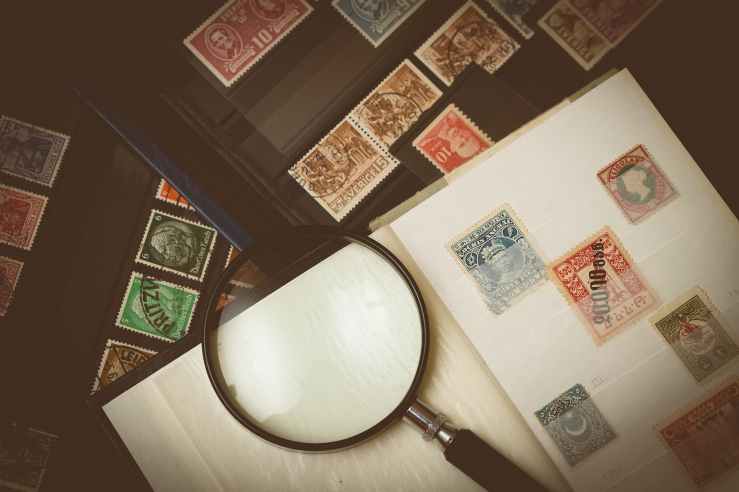
This hobby of collecting can range anywhere from video games, cards, stamps, coins, memorabilia, books, artwork, comics, etc. It begins with having an item or two–an object that piques our interests, one that sparks our curiosity. As we collect more, we uncover a world that has a life of its own, including a history with its own origin story, and how those objects evolved into what they are today.

As we dive deeper into this world, collecting things like there’s no tomorrow, filling up our bookshelves until there’s no space left, we start to realize that no matter how much we collect, there’s always more to collect, and in some cases, there’ll be something new that will come out in the future.

Due Dates

Photo by Pixabay on Pexels.com

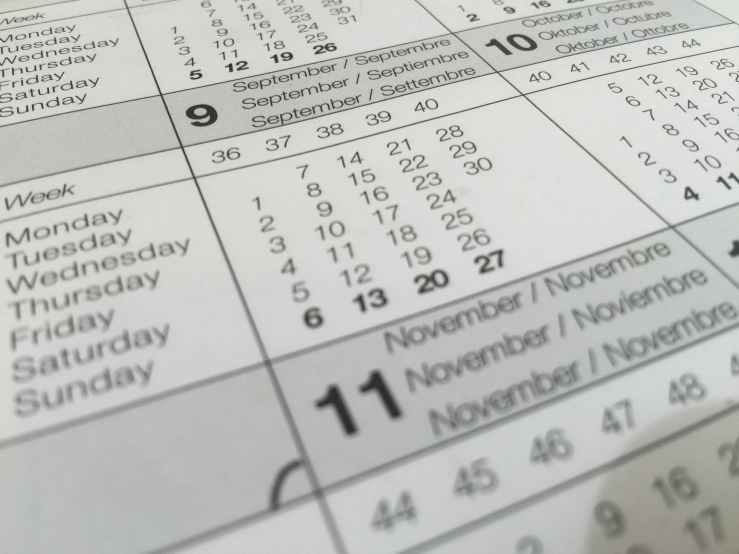
Due dates give us an incentive to finish, to wrap up whatever we’re doing before we proceed further. Even though there can be pressure and anxiety associated with due dates, they push us to work harder, to focus on the task at hand until the work is completed.

But due dates can have a negative effect as well. Depending on the amount of work there is in proportion to the due date, that due date can add undue stress and fatigue, especially if the work far exceeds what can be accomplished by the due date. This can make the work/project unbearable, unenjoyable, and make us want to never return to that kind of work or project again.

On the flip side, without due dates, the initiative isn’t there to finish a project. We can take as much time as we need, but on the assumption that we’ll be working on it consistently, and that we’re not pulled away by other things that distract us or demand our attention. But how often are we distracted, and how often do new things come up that demand our attention? Daily, of course.

Thus, there must be a middle ground between the two extremes of unreasonable due dates and no due dates at all. That middle ground exists where experience shows what can be achieved given what is humanly possible. Exceeding that limit can cause us to sacrifice quality for completion, or to sacrifice completion for quality. But the question is how far can that limit be pushed?