Outlook

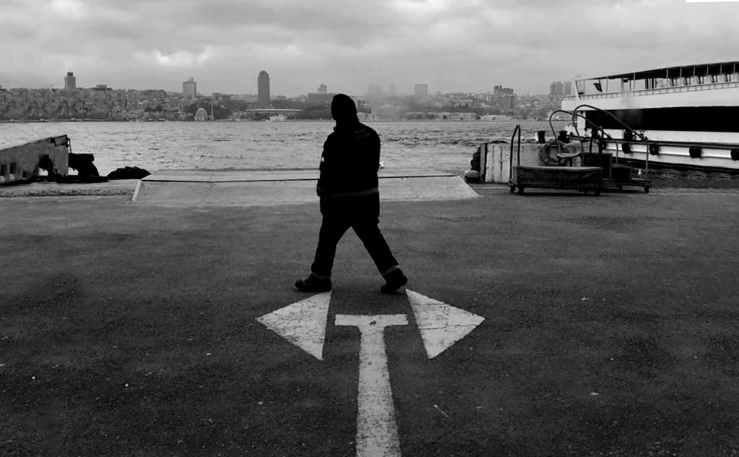
Photo by The Humantra on Pexels.com

Our outlook can change at a moment’s notice. It just takes one life changing moment, or a series of life changing decisions, and then everything we had believed in can get dismantled.

The ideas we hold are simply that: ideas. Can they resist the change of time, the course of unexpected events? Are the principles and values we hold onto dearly immutable, or are they subject to change and modification?

The way we handle difficulties, as well as respond to conflict and disagreement, speak volumes compared to the ideas we simply believe. There can be a duality between the two, similar to someone who says to do one thing but does the opposite. The truth is in the way we act, in what we choose to do.

Our outlook can be positive or negative, and thus, they can give us confidence and certainty, or make us dejected and pessimistic. Between the positive and negative outlooks, there’s a middle ground: being realistic. But what does that mean exactly? To be realistic, we are not overly optimistic, nor overly pessimistic. We’re in the middle. We see that things can go both ways. But if we’re stuck in the middle, we might not take chances, might not achieve great success or change.

Our outlook determines a great deal about our attitude and the way we approach forks in the road, but as we mature and age, our outlook becomes molded not by our own ideas, but by the complex interaction of life-changing moments and events, and the decisions we make during and after they occur.

Preparing

Photo by Anna Shvets on Pexels.com

To prepare for something, you must know in advance what you need. We could prepare financially for an amount we want to have saved, or to make a large purchase. We can prepare for emergency situations, road trips, parties, etc. Preparation takes time, and the length of time depends on the event and how much resources are required for it.

The same could be said for our own projects, like writing a book, a DIY project, a painting, etc. But just because we prepare, doesn’t mean things go as planned. There are always unexpected twist and turns that happen along the way, things that shake the foundation of our planning. Preparation can only take us so far, but we also must be able to adapt when the unexpected occurs.

When Things Aren’t the Same

During one of my day trips, I got this feeling that things weren’t the same anymore. With everything that has transpired, the vibe was different at the place I visited. The scenery was the same, and so was the environment, but my outlook was different. I couldn’t unplug myself from the memory of what it was like before.

It’s similar to meeting someone you hadn’t met in years, or visiting a place that you hadn’t been to in who knows how long. You can’t help but compare the present experience with the last–hope that it is the same or better.

Things have changed a lot. They seem quieter now, and less crowded too. My last memory was one filled with activity, noise, energy. But things have calmed, and the experience was like seeing shadows of the past.

Hiccups

We’ve often heard stories about the struggles of filmmaking, and how there would be setbacks during the production, including issues with the budget, the location, casting, scheduling, etc. Nothing ever seems to go smoothly, and it requires a great amount of time, resources, and energy to overcome all the obstacles along the way.

Similarly, when we’re focused on trying to get something done, there will usually be hiccups along the way. The hiccups can be minor or major, or they can add up overtime and snowball into something that can seem insurmountable.

They can be come from our own doing, such as when we procrastinate or overlook the minute, but very important details. When writing a book, for example, this can take the form of not writing often, or not developing the characters or the storyline thoroughly. In the end, this can result in inconsistent characters, or an incoherent plot.

Externally, hiccups can come from delays or unexpected events or obligations that come up during the day/week. We have no control over when they occur, and we can’t ignore them either. They must be addressed or else they will snowball and lead to other hiccups down the line.

The thing about creating and finishing any project, whether it is a film, a book or a DIY project, is that it is an adventure, similar to trekking down a hiking path that has unexpected twists and turns, and rocky and uneven trails. There will be times where you will get exhausted, get lost, or come across a wall or a dead end. You must adapt and be creative in finding solutions, or start over or backtrack to get on the right path. Thus, to reach the destination, it not only takes talent and knowledge, but perseverance and resourcefulness to get there.

Shortcut

I was returning from a day trip when the GPS alerted me to a shortcut that would save me approximately 15 minutes. I reluctantly took it, knowing from experience that GPS shortcuts can take you down a path that would make you think that you’re lost.

From the highway, I turned onto a narrow road that weaved through a forest. A truck was close behind me, and a storm had swept through the area not too long ago. Debris, leaves and branches littered the road. Driving over them, branches snapped and leaves rustled continously since they were in both lanes.

The shortcut was only a few miles long, and I was hoping for it to end soon, since I had been gripping the steering wheel tightly. The oncoming traffic would zoom by near the turns, and I couldn’t really see beyond thirty or a forty feet. With the road still wet from the storm, I drove cautiously, slowing down near the bends and wherever I saw puddles.

I was relieved when I had made it to the last mile of the shortcut. That was until I saw a police vehicle parked in the middle of the road. The officer stood in front of his vehicle holding traffic wands, and had on a reflective vest. The truck ahead of me began to make a sharp U-turn, and I sighed, knowing exactly what that meant.

The officer gestured with the traffic wands to turn around. I noticed the driver in the truck behind me shaking his head, visibly irritated by the bad news. I peered down the road past the police vehicle before making the U-turn, but couldn’t see what was blocking the road. Maybe a fallen tree? Maybe something further down the road–out of sight?

As I drove back the way I came, my GPS tried to reroute me back toward the roadblock. It was like it wouldn’t change its mind, didn’t want to give up on the original route. Clearly, it didn’t understand why everyone was turning around.

The drive back wasn’t as bad nor stressful as when I first drove down the road. I knew what to expect along the way, and there was a truck in front of me to serve as a sort of guide.

Along the way, I kept thinking about how easy and simple the highway would’ve been, how much time it would’ve saved if I hadn’t taken the shortcut. The GPS couldn’t have known of the roadblock if it was recent. If it had been updated earlier, it would’ve notified me for sure–redirected me to the next shortest route.

After getting back on the highway, the GPS took me on a new route–one that took me through a series of backroads and small towns where there was hardly any traffic. I drove past gorgeous pastures, farms and animals, and areas that were lush with vegetation and greenery. It was quite the opposite of the experience I had driving for most of the day: highways.

Highways can be fastest route to a destination, but it doesn’t really offer the same experience and adventure that an offbeat path would give us. Even though I lost time on the shortcut, I did get to experience a new adventure on the trip.

Waking Up

After a nap, we wake up and think that it’s morning. We have to get up, get ready for work, maybe even make breakfast with coffee.

It’s bright outside, however. The clock says it’s 5 PM. The day hasn’t changed. It’s sunny in the afternoon, and only a couple of hours have passed since we last checked the clock.

How could a couple of hours of sleep shake and disrupt our mind so severely? What was so special about the dream?

Maybe nothing was special about it. Perhaps that nap restarted us, kind of like a computer reboot. It was as if more sleep was done in those couple of hours than in an eight-hour rest. Why is that?

Maybe our body is adjusted to those 7 or 8 hours of rest. It’s used to the timing of it: resting when it’s night, then waking up in the morning. But the two hour nap was unexpected, and happens when we’re exhausted, fatigued. That nap was needed, and it’s so reinvigorating that it was like we woke up on a brand new day.

Patterns

We see patterns in our everyday experience. We see them in nature, such as when the sun rises and falls, the seasons, physical laws, as well as in numbers–even down to our routines and schedules.

But what about patterns that are seemingly invisible to us? Patterns that aren’t exactly measurable or formulaic, but fit a somewhat general rule? For example, the patterns in the way we think, behave, and how we react to certain events. Even though these fit a general pattern, when we become aware of them, we can deviate from them–create new patterns apart from the old.

The same is true of many things like stories, art, sports, and chess. In stories, there are general rules for each genre, as well as in the story progression and story arcs. In art, a certain kind of composition and color pattern (i.e. complimentary colors) works well most of the time. In sports, there are certain plays and strategies that can lead to success. And in chess, there are patterns in positions, checkmates, openings, etc.

But the exciting part of life is discovering the patterns, or at least, applying our knowledge of previous ones to discover new ones. When we become familiar with the old, we look for new things to surprise us, to pique our interest. Because as a general rule, there are always more things to discover.

Insight

When we have an insight about something, we can’t explain it. It’s almost like a gut-feeling, or an intuition about something that’s hidden, hovering just beneath the surface.

But insights usually come and go. They don’t stay with us unless we act on them or give them credence. An insight can happen when we’re writing a book, when we’re studying a natural phenomenon, or when we we’ve discerned an unusual and mysterious pattern in our everyday world.

Insights can come out of nowhere–landing on a shoulder as if to whisper in our ear. When we hear that insight speak to us, it gives a clue to unlocking a mystery that we’ve been trying to solve.

But because we don’t understand it (or the source from which it came), we’re prone to dismiss it. But like knowledge that comes from a dream, an insight doesn’t always come in a neat package, but by sudden, spontaneous burst of magic.

Tangents

Tangents can lead us astray. They lead us down a series of seemingly random thoughts, and like cobwebs, they expand in all directions without rhyme or reason. Tangents can pull us away from our day-by-day routine, and take our mind down a road that’s obscure and dreamlike.

But tangents are not so random after all. They are products of our subconscious, inspiration tucked away and forgotten about. They exist to open our eyes to see things in new ways, to look at the familiar from a new perspective, an oblique angle.

Tangents help us to see new possibilities. They can flash in our mind like when we have that a-ha moment and make a discovery about something. They open doors, invite us to follow them to the unknown. But when our mind lands on a tangent, it’s so easy to shrug it off and think that it was just nothing.

Countless Hours

I remember working at an office years ago and thinking how slow time used to tick by. It moved at a snail’s pace, and to keep from boredom, I’d challenge myself to not look at the clock on the wall every ten or twenty minutes. Even when I was tempted to, I’d tell myself to wait, that the next time I looked at it, it’d be lunch time.

This was when smart phones didn’t exist yet, when most of my workday involved handling papers and folders and desktop computers and CRT monitors were still a thing. The days seemed to drag on as if they would never end. Yet, here I am, over ten years later, and those days at the office are like a blink in my memory.

In those days when I didn’t have a smart phone to check my email or open up apps, I had to dwell my thoughts, dwell on what I had been reading or on something I had heard on the radio. I would dwell so deeply that I often began to forget about time and became fixated on a singular thought. Those countless hours past a little faster, and each day became a challenge to busy my mind with what I considered creatively or intellectually stimulating.

In hindsight, those countless hours were merely a reflection of my perception of time. Time is experienced based on how much we participate in an event or how little we do. When we’re bored, we’re waiting for something to happen: waiting to be entertained, engaged, or to react to whatever comes our way.

An hour can feel like a full day when we have nothing to do. But when we’re engaged or working on something that’s new and challenging, an hour can feel like a few minutes. In that moment, time is less thought of, and the moment itself becomes paramount compared to the seconds that tick by.