
Something Missing

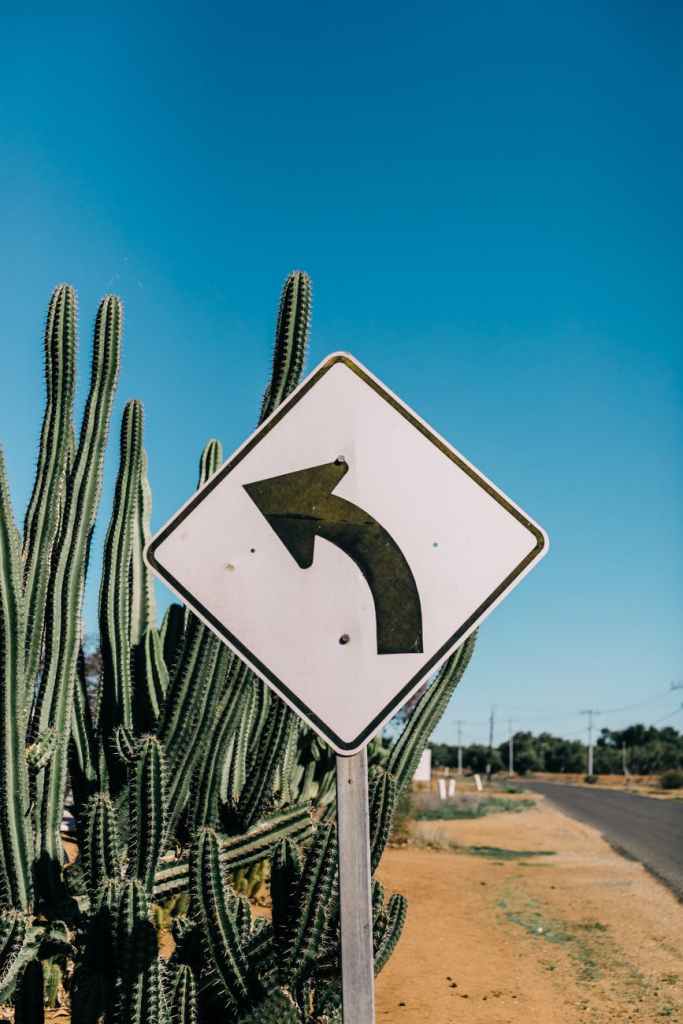
Photo by Markus Winkler on Pexels.com

When we attain something that is missing from our lives, it feels great for awhile. Sooner or later, however, that feeling of elation begins to fade. We seek something else, something to replace that feeling of incompleteness and dissatisfaction.

This can apply to anything such as something we want to buy, or a goal that we’ve been pursuing. Once we get what we want, there will be something else in the future that we want. Something that drives us to pursue it.

Perhaps there is some good in this. As a writer, I’m never satisfied with just writing one story or one blog post. Likewise, there is no definitive goal where I can say after I write this epic book, I’m calling it quits with writing. On the contrary, writing is a lifelong pursuit, one that takes practice and dedication.

There’s always something to write about: a world to create, an idea to communicate. I could always think of something that I haven’t written about before. There’s no end to the topics and ideas that I could address.

But the negative in this endless pursuit of things/goals is when we pursue beyond our means, beyond what we’re able to attain to the point of exhaustion, weariness–until we’re burnt out. When our pursuit becomes detrimental to us, we know that something is wrong. There must be a limit. And once we’ve reached it, we know that it is time to take a break, to take a step back and look at what we’ve accomplished–what we have.

Blindspots

We all have blindspots. We can’t see and know everything no matter how much we try. Our faculties equip us to discern and understand what we need, but not everything.

When we drive, a blindspot is that area that we can’t see even if we use our mirrors. We have to turn and see if there are any cars in that blindspot. The same is true when we create or study anything. No matter what resources or tools we use, there will be areas that we’ll be blind to. Not because we didn’t know better, but because we didn’t know something was there to begin with. We might have to ask someone for help, or do some extra research to discover what we didn’t know before.

Because we have blindspots, there’s always something new to learn, something we can improve upon. If we knew everything, we wouldn’t have any blindspots. But we only have two eyes, two hands, etc. It’s inevitable that our point of view won’t give us a complete picture of anything. We have to shed light on the blindspots.

Missing a Turn

Photo by Rachel Claire on Pexels.com

When we drive on a route that is familiar to us, we don’t have to think about the turns we have to take. It’s like we’re driving on autopilot, and we’re so familiar with the path that we can estimate how long it’ll take and what shortcuts we could take if necessary.

But if we’re driving to a new location, missing a turn could cost us valuable time. We could end up spending minutes looking for a place to turn around at. And if we missed an exit on a highway, we’d have to keep driving until we got off the next exit, then get back onto the highway to find that exit we missed.

All because of one missing turn. One that made us late or got us lost.

Even if we made every turn but one, that one is enough to cause considerable headache and frustration. We could get back on track, of course, but it’s the time and energy that is lost that annoys us the most.

We might say to ourselves: “Why does this happen? Why did I miss that turn?”

Perhaps missing a turn will inevitably happen at some point. Any place that is unfamiliar and new to us will disrupt our normal way of seeing things. It will cause a rift in our schematic pattern, force us to adapt. Perhaps missing a turn isn’t merely an inconvenience. It can be an opportunity to explore and learn.

Hiatus

Photo by Julia Volk on Pexels.com

When we go on a hiatus from a project, it can be one of two reasons. One is that we get busy with other things, and the other is that we’re exhausted and we need a break. A hiatus, nonetheless, can help give us perspective, allow us to analyze and reflect on our goals and the things that have occupied us.

When we continue to work on something without a break, we believe that that is all there is. It becomes our world, and we spend so much time there that we fail to see that it is just a microcosm of something that is much larger. We don’t see it in relation to the grand scheme of things, but as if it was the grand scheme itself.

As we begin our hiatus, we distance ourselves from the microcosm that became our world. That microcosm could be finances, work, or whatever worries we have. After some distance from it, we realize that its importance and value was really a matter of perspective.

Writing Out Thoughts

Writing out what we think can be a revelatory process. It’s kind of like seeing what we hear in our mind, becoming aware of where our train of thought is going. When we see what it looks like on paper (or the computer), it reveals the subtle and delicate nature of our subconscious. Writing out our thoughts can also capture the random things we say to ourselves. Things that if we said them out loud, would seem like a different person to us.

It’s like listening to a bantering debate about the latest thing in the news. Or it can be about problems we’re trying to solve, or the plans we’re working on for the future. Regardless of what it’s about, however, writing them down helps us remember them, to become aware of them, as if we’re a third party listening to our inner voice.

When we make mental notes with the intention of remembering things, how often do we remember them? Do we not forget the key ideas we’ve brainstormed, or forget what was next in line on the itinerary? Our mind can only do so much in the process of thinking things through and remembering. Sometimes things are forgotten in the process.

Thus, whether we write out our thoughts on a napkin, notepad, or in a cellphone or on the computer, we record the transitory nature of our mind, which, like water, flows and changes each second. And the more we write down, the more we see into our own mind.

Junk

It can be hard to define junk, especially when it was stuff that had utility and value to us. What was once a fun toy or game, an informative book or magazine, or clothes that we wore all the time, have now become junk in our eyes after a few years.

Why is that? Is it because our preferences have changed? Because our values have changed and therefore, we no longer value the things of the past?

Junk seems to be a relative term in that sense. It changes just as we change overtime. Not only that, it’s relative to each person. Something that is useful to one person will be un-useful to another. It depends on our outlook too, based on what we use or need from day to day. We get rid of “junk” when things no longer serve a purpose to us. We get new things to replace it, which will become “junk” later.

Thus, wouldn’t all of our possessions become junk when we no longer need them? Don’t they all have an expiration date, since they have the potential to be junk? The clothes we have now will become worn out and dated in a few years. So will the shoes, jackets, and books, movies, and magazines we own. Thus, “junk” is just stuff we don’t need or want anymore, but at one point, we did.

Cleaning

Photo by OVAN on Pexels.com

When we clean, it can take on a life of its own. I’m not talking about cleaning dishes or vacuuming, but the type of cleaning where we get rid of stuff, clear out junk mail, receipts, old documents–things that we have collected overtime but no longer serve a purpose.

Cleaning can take on stages such as decluttering, organizing, shredding documents, donating things to goodwill, or selling items. Cleaning will make our space more tidy, neat, as well as get rid of dust and dirt from our workspace and shelves. It will also make us look at what we have, what we need, and what we should or should not keep.

The process of cleaning is akin to clearing our mind, analyzing and straightening out our thoughts. It’s a physical manifestation of tackling the clutter and confusion we have held on to, and untangling it to make sense of it and to focus on our goals.

After the cleaning is done, we have a new space–something that we’ve created out of nothing. We can now roam free in it, use it in ways that we couldn’t have before. It now has room for filing new papers and documents, for storing new items and tools. It’s clear of the things we no longer need to remember or think about, and welcoming of the future.

Roadtrip

Photo by Matt Hardy on Pexels.com

Going on a road trip can be a thrilling and exciting experience. The adventure ahead is abound with opportunities and places to visit. Each day brings a new story, a new chapter to your life.

Road trips involve hours of driving, and along the way, you’ll see vistas for each state (or country) you visit. Some are hilly, whereas others are flat or mountainous. You’ll also notice different road signs (like Moose Crossing), depending on where you’re traveling through.

A road trip can take days or weeks, and the great thing about it is that you decide where you want to go and when. And if you want make a detour to a town or to a museum, go right ahead.

Of course, if you’ve already made motel/hotel reservations, you’ll probably be sticking to a schedule. In that case, you’ll have to make an itinerary of where you want to go, and an estimate of how long it’ll take you to finish the to-do list.

A road trip can be exhausting when everyone’s tired, especially of being on the road all the time. On the other hand, when you visit a place you haven’t been to before, it can make up for that, since it’ll bring moments that are completely unique and memorable to you.

Summer Vacation

Photo by Ylanite Koppens on Pexels.com

It’s that time to pack up for a road trip, to head over to the beach for the weekend, or to take a swim in the pool. With the sun out all day, we can take our time, spend our day as if there’s no hurry or rush to call it a night.

In the summer, there are a multitude of ways to spend one’s vacation. Some people like to go to amusement parks, the pool, or the beach, while others prefer to travel across the country or overseas, or hike in the woods or go camping. Even if we work for most of the day, there’s no denying that the atmosphere is different during the summer. People are more laidback, relaxed. Given all of the months of staying inside from the cold weather, we no longer have to bundle up or crank up the heat. We can stay inside if we want to, or go outside to get some vitamin D.

In the summer, there’s an atmosphere that all is well and one needn’t rush or race to get ahead. The sun is out all day anyway. There’s plenty of time to catch it, even in the evening.

In the summer, the sun invites us to enjoy countless activities such as walking, cookouts, traveling, hiking, swimming, playing sports, etc. We better take advantage of it too, because not before long, the leaves will change colors, and the chills of Fall will sweep across the streets.

Overloaded

Photo by MART PRODUCTION on Pexels.com

We can get to a point where we are overloaded by our to-do list. It’s easier to divide up the work across the week, or with other people, rather than to do it all by ourselves (especially big projects). To do everything by ourselves wears us down, demoralizes us in the long run.

Time management is important, but also being realistic with what can be done within a given period of time. When we’re overloaded, it can be difficult to concentrate and focus. We can get tired and exhausted, on the verge of giving up and call it quits.

Being overloaded can happen if we underestimate the challenges ahead. We might say to ourselves, “Oh, that’s easy,” or, “It won’t take that much time,” but once we start, we’ll soon face unexpected dilemmas such as things that are broken, things need to be fixed, things that need to be purchased or need to be repaired, etc. All of these things add up over time, which delay us from accomplishing the other things on our to-do list.

Before we know it, we’re over budget, out of resources, and out of time, and we’ve lost the momentum to keep moving forward. All because we had underestimated the challenges–because we didn’t factor in the things that could go wrong.

Perhaps we should start with accomplishing one thing at a time, things that are manageable, things that have a track record of being doable and small, rather than take on gargantuan projects that will overload us.