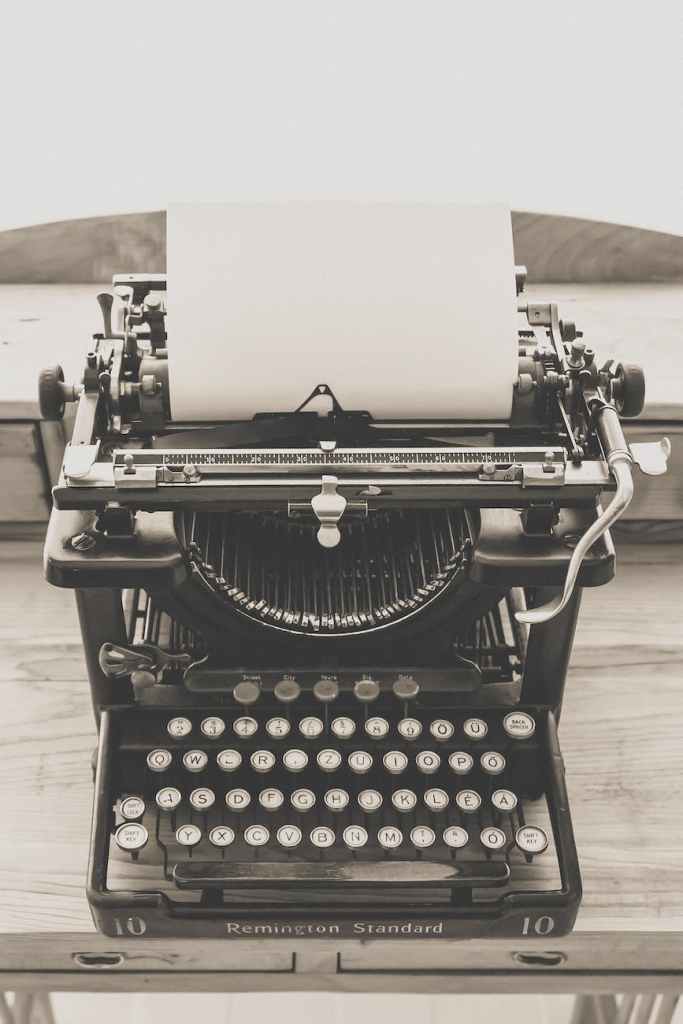
Writing

When life throws curve balls at us, it can disrupt our writing schedule. When I write, it often happens in spurts–when I feel the call to write. Or when I’m working on a project, such as a novel, do I implement a schedule to finish it all the way through.

Sometimes writing isn’t so much about adding to a draft as it is jotting down ideas. Or it could be planning out the events of a story, or thinking up names for the characters. There are other forms of writing we do that we don’t take much notice of but are stepping stones to a final product.

But sticking with writing is a challenge I’ve faced many a times because of all the disruptions that have occurred either externally or internally. It could be that I have too many things to do, or that I’m not motivated or don’t know what to write about. In place of writing, I will sometimes visualize things, such as scenes for a story, or I will hear the dialogue between the characters as if they are already printed on the page.

Writing is just the last phase of putting those thoughts and visions down onto paper. They first must form in the mind, and once we deem them worthy enough to record, do we write them down.

Story Writing

A story won’t write itself. That’s what I say to myself when I’m not writing when I should, or when I’m too tired to write. It won’t write itself; I need to keep adding to it, to keep the characters alive and to make the story tangible and real on the screen or on paper.

There can be too many obstacles that deter us from writing. It’s easier not to write than it is to write. We can come up with a laundry list of excuses not to write it, or say we’re not in the mood to. But no matter what excuses we come up with, a story isn’t going to write itself. It’ll sit idly in our thoughts, idly in our imagination until we write it.

Once we start writing, at first, it can be difficult and cumbersome. It can feel like trudging through a muddy trail, or navigating through a foggy forest. I’ve had roadblocks where I just didn’t know what to write from one sentence to the next. It was as if the story ran out of gas, or else I ran out of energy to write. But at some point, if we keep writing, the story will inexplicable propel itself into existence, and there isn’t enough energy for us to keep up with it. It’s as if we’re in the driver seat, and the story is leading the way, but as we write, we can’t make excuses to stop. To stop is tantamount to letting the story wither and fade out of existence.

New Ideas

Photo by Pixabay on Pexels.com

There have been many times when I’ve been writing where the story will suddenly steer in another direction. A new idea dawns on me that shines a light on my original idea, metamorphosing it into something else that I wouldn’t have expected. It’s not simply that a new idea replaces the old one, although that can happen, but that the new idea builds and adds to it in layers upon layers.

It’s as if a floodgate of ideas come streaming forth as I write, providing harmony, detail, and depth to the story. Original scenes that were well thought out during the planning phase have become altered or replaced altogether with scenes that are more cohesive and powerful.

It’s something that I’ve learned to accept and embrace as I write, since my original idea was merely the impetus for something greater. To give an analogy: a writer starts with a piece of stone or wood for sculpting, and as they carve out the form, they begin to see the potential of what those basic forms could become, shaping them into something more real, organic, and life-like, such that they take on a life of its own.

Writing

There’s a saying that the definition of insanity is doing the same thing over and over and expecting a different result. But isn’t that what practicing is? In fact, when you do the same thing over and over again, even though the result might not change the first few times, you’ll begin to see improvement later, and thus, the results will be different.

Ever since I’ve heard that saying, I’ve had reservations about it, because in one sense, it’s true, but in another, it’s false. It’s true when there should be no logical difference in the outcome. Meaning, if I were to try over and over again to run at 60 miles per hour, or try to lift an object that weighed ten tons, I’d never be able to do so, because it’s not logically (feasibly) possible. But if I were to play chess against a strong opponent (i.e. the computer), I’d start losing a lot of games at first, but eventually, with enough practice and learning, I might start to win.

Or if I start flipping a coin over and over again, and it keeps landing on tails, that doesn’t mean it won’t land on heads at some point. Or if I write for ten minutes a day, and I can only finish a page in that time–say–for the fifth time, that’s not to say that on the sixth attempt that I couldn’t write more than a page.

When we expect a different result, we can’t expect it on the third, fourth, or even fifth attempt. Sometimes we don’t know when that different result will happen, but it can–eventually–if it is logically possible, and within our means.

In the field of writing, a writer can write for years despite not achieving the success or result that they wanted. According to the aforementioned definition of insanity, wouldn’t writing fall into it? Should a writer quit writing since they were technically doing the same thing over and over again and expecting a different result? Not at all. As with any art, writing is a labor of love, one that requires devotion and practice and refinement throughout many years, one in which the result, in some ways, isn’t the end, but just part of the journey.

Just Writing

When I turn off word count and start to write, I actually enjoy writing more than with it on. When the word count is on, I’m constantly looking at how much I’ve written rather than focusing on what I’m writing about. It’d be like a runner who constantly keeps checking the timer as they run, rather than running the best they can.

I’ve found that there have been times where word count has helped me since it kept me writing when I felt like taking a break. But at the same time, it could be daunting to reach a word count goal, since it’s like you’re writing to reach a number rather than writing for the enjoyment of it.

But I think it depends on the writer. Some writers need that extra push, that external motivation of reaching a goal each writing session. For me, I can reach that goal once in a while, but not all the time. My writing sessions are influenced by my mood and energy level, and whether or not I feel inspired.

It’s hard for me to write anything if I’m not inspired or if I feel like I’m depleted of ideas. I’d sit at the chair and stare at the screen blankly until an idea strikes me, whereas some can just start writing when they see a blank screen. But when the wheels start turning in my mind, I can write based on what I see in my mind, like I’m recording an event as it’s playing out on the cinema screen behind my eyes.

And when I write, it’s not like I’m aiming for a number or toward a goal of it being my best piece of writing, but because what I’m seeing is so important to record that I don’t want to miss it.

Story Titles

Picking a title for a story can be a mind-boggling conundrum. It’s a task that on the surface of it, should be easy and straightforward to do, but when an author goes about choosing one, it’s as if the title keeps slipping away–hidden in the misty cloud of book titles that keep calling to be picked on as the winner.

For me, even if I spend hours or days thinking of a title for a story, none of the ones I think of seems like the right one. It’s like each one can work, but I’m not looking for the one that can work, but for the one that fits perfectly, suitably, as if it was meant to be. I want to pick a title that sounds original, that doesn’t sound like everyone else’s title. In addition, I don’t want to pick one that is too vague or open-ended, nor one that gives away the plot, let alone the story arc or twist.

When I finally settle on a title, it’s one that I feel comfortable with no matter how many edits or changes I make to the manuscript. It’s as if the story is defined by it, and can’t be named anything else, since it would be like shortchanging it.

When I gave my mystery novel the title The Birnbaum Case, it was chosen because it brought to mind a detective-type story, and when combined with the cover, it conveys an ominous and mysterious atmosphere to it. On choosing that title, I felt like it summed up the mood of the story without giving away what it was about. Instead of titling it by the main character or by what will happen in the story, the title is supposed to bring to mind a mystery that will lead to twists and turns as the reader turns the pages.

But that’s not to say that titles can’t be named after the main character of a story. In fact, Harry Potter is one such example, and they can be named after places too (for example, my novel, Kitewell). In a sense, it depends on what the author wants to achieve through the title–the mood, idea, or feeling that they want to convey when the potential reader sees their book cover. Does the title hint at an intriguing mystery? Does it hint at an important object/item in the story? Does it describe the journey that the reader will embark on? Does it suggest whom the reader will learn about in the course of the story? These are just a few things that an author might consider when creating a title.

Nonetheless, story titles are not easy to come up with, nor are they easy to settle upon, since they require a lot of thought, time, and patience. It’s one of those things where the author wants to be sure that they picked the right one, because once the book is published, the story will be known and recognized by its title.
First Draft

One of the challenges with writing the first draft is that it will be imperfect. For me, when I add a chapter to a story, I want the prose and dialogue to be perfect, and I want to know exactly everything that’s going on, including the sequence of events, and the characters’ interactions.

But the trouble I run into is that I get discouraged when my writing isn’t on par with where I think it should be. If a line of dialogue, or a description, seems incomplete or lackluster, I’ll want to tap the brakes during the writing session to fix it and make it better. I’ll want to improve it (edit it) to make sure that it’s the best it could be.

But when I do so, I end up writing less and spend more time on editing. It’s one of those things where I have to get over the fact that my writing will be imperfect on the first draft, that there will be missing words, nondescript sentences, and mediocre word usage. In fact, writing the first draft is more about showing up and doing the work: the act of writing itself. It’s not about the quality so much as the joy and experience of putting idea onto paper/computer.

Afterward, once the dust has settled, the editing can happen, and whatever was imperfect, will be made, not perfect, but improved.

Staying Focused

Photo by Pixabay on Pexels.com

It can be hard to stay focused on a story when so many ideas come flooding into our minds. To stay focused on one story, it takes a kind of tunnel vision like concentration, one where everything else (i.e. other ideas) is blocked out, or at least put aside.

Often times, I’ve bounced around from one idea to the next when writing stories, only to find myself with a bunch of incomplete stories (and ideas). They’re mostly like sketches, not blueprints that are ready to be written. For me, a story comes to life as it is written, not just in the planning stages.

I find that it’s easier to stay focused on a short story rather than a novel for the obvious reason that the former can remain short, and it doesn’t need for the conclusion to be wrapped up neatly or explained as with a novel. A novel, however, requires us to think about that one story for weeks or months. Even if new ideas come to mind, we can only utilize the ones that pertain to the novel, not other stories.

When I come across an idea that really excites my imagination and inspires me, I will naturally want to explore that idea and expand upon it. But that excitement and energy has a shelf-life, and I need to work it on right away before the momentum is lost.

Challenging Oneself

Photo by Pixabay on Pexels.com

When we challenge ourselves, we’re raising the bar, pushing ourselves to strive for more–possibly beyond our limits. At first, it feels like an impossible task, but when we hold ourselves accountable, we’d be surprised at how much we can achieve.

I remember when I was writing a novel years ago and setting up daily word counts for each writing session. At first, it was something low, like six hundred words. It was hard for me to stay focused, and often, I wanted to get up from the chair and do something else, since it was hard to continuously come up with the next line, the next sentence.

I told myself to write, even if it was bad, ignoring typos and punctuation errors, just letting my thoughts flow like I was transcribing my thoughts rather than trying to be precise about what the next word should be. After several days of struggle, I became accustomed to flow, writing as if it was simply natural. And once that goal became attainable, I raised the bar to a thousand words per writing session. Soon, that became surmountable without difficulty, and I was starting to write somewhere between two to three thousand words per writing session.

It’s as if the writing muscle needed to be strengthened after a long extended break, and once it had become accustomed to the exercise, it became natural for the writing muscle to push itself beyond what it was previously incapable of.

Challenging oneself is a test of endurance and ability. Not only that, it is a mental test–one that test our mindset and attitude about what we’re capable of achieving. Once we’ve passed the test, the next one is not the same test, but one that is like it that asks us to go beyond where we’ve left off.

Humor

Photo by Ilargian Faus on Pexels.com

A story that has humor gives it that extra value of entertainment and engagement that uplifts the experience from one that is simply read to one that we can laugh out loud with.

Humor can come in the form of irony, satire, or even straightforward jokes. When it is in the form of irony, it can give character and a playfulness to the dialogue or the events that unfold. For example, they can give insight into the way the characters think, or in the way the events unfold in relation to what we expect (perhaps, defying our expectations to great surprise).

When the humor is satirical, it reveals the ridiculousness or absurdity of a situation with an effect that can be more powerful than just plainly saying it is. And with humor that is straightforward (i.e. when characters tell jokes), it shows us a side of the characters that we wouldn’t otherwise know unless we were told that they had a whimsical side to them.