Re-editing

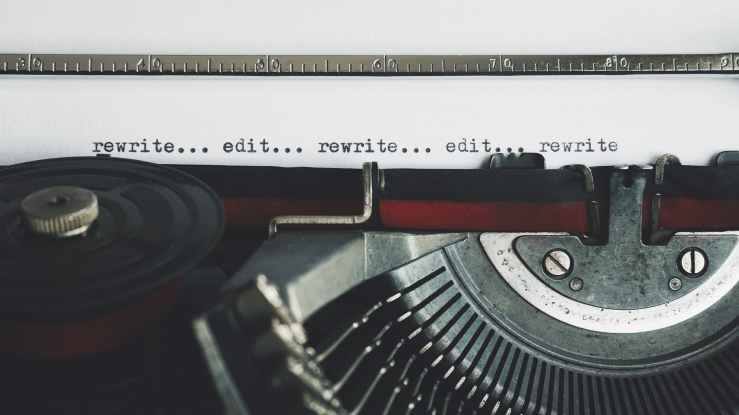
Re-editing a story can go on for weeks, months, years, and even after it’s been edited five or ten times, we’ll find something else that can be fixed even though it already has been. It’s like working on a painting, and no matter how much detail and improvements are made to it, it can always be revamped if our eye catches something off.

The finished manuscript contains all the essentials and more: the plot is complete, the readability is smooth, and the spelling, grammar and punctuation are, for the most part, ironed out. But when we go back to read it weeks or months later, we’ll find things to change/add, such as the wording, dialogue, or we could decide on a completely new direction for the story. It never feels like it’s finished, even though it has to be at some point, since the purpose of all those countless hours of editing was to finish the story.

Besides, there is a finite amount of time that we can spend working on any one project. And then there are the countless other projects, which are bouncing around in our minds, that want to be told–put down on paper (or the computer). The final edit is the one that we decide is complete because if we spend anymore time on it, we’d never be done.
Finishing a Story

One of the challenges when writing a story is finishing it. It’s like a marathon where taking a break can result in losing or not finishing the race at all. Sometimes things get in the way, such as unexpected events, or other pressing matters. It requires persistence to finish a story, to keep going when the ideas and the momentum falters.

But in the end, when the story is finished, it is exhilarating, a weight off one’s shoulders. The reward is unlike any other, since it’s like reaching the destination of a long road trip after countless hours of driving and getting lost. And unlike those wins in sports where the whole team cheers, or the crowd cheers, it’s a private and quiet victory. No one else knows about it, since it’s not noticeable, and you reward yourself with something nice, like a day off from work, or a nice meal at a nice restaurant.

Grammar

Photo by Suzy Hazelwood on Pexels.com

Grammar is something I’m always learning, continuing to increase my knowledge of. When I write the first draft of a story, I won’t even think about grammatical errors, punctuation, spelling, etc. The first draft is just getting the ideas down on paper (or the computer) in its unencumbered form. But when I start to edit, I’ll start to question if the way I wrote something is correct. Even if it might read correct, it won’t sound correct when I read it aloud.

I’ll begin to look up the definition of a word to see how it’s supposed to be used. One word I always look up is “passed” and “past.” Another is “further” and “farther.” I know “passed” has to do with distance, and “past” has to do with time, but I’ve seen them used interchangeably, which only makes it more confounding (not to mention the way it’s used as an adjective, adverb, and noun).

And with the rules regarding commas and em dashes, I’ve seen them use interchangeably as well. And with semi colons and periods, some writers prefer one or the other, or both, and their usage is almost dependent on style rather than form.

It seems that some of the rules of grammar depend very much on the context of the writing, whereas others are set and stone, even though some writers could abandon them for the sake of presenting a certain style or for dramatic effect. For example, if a writer was writing in the first person, or was writing in colloquy, or in a certain dialect, etc.

The rules of grammar are not as rigid as the rules governing mathematics, since grammar is more like an art, dependent on the reader knowing the rules just as well as the writer, whereas mathematics is like a science where one mistake produces an error in which the entire sequence collapses. But there are grammatical rules nonetheless, such as the word “I,” as a noun, must be capitalized, and the first letter of a sentence, and the first letter of a name. But whereas mathematics is about precision and consistency, allowing freedom only in the problem-solving approach, the rules of grammar are more like guidelines rather than axioms or unyielding laws, since their laxity depends on what a piece of writing is about.

One More Story

Photo by Pixabay on Pexels.com

After finishing a novel, I feel mentally exhausted, creatively fatigued. It’s like there’s nothing left in my mind to conjure up, and my will seems all but spent. I wonder if I can write one more story, if I have enough energy to create another world or another plot. And because of the fatigue, I tell myself that I’m content with the last story I wrote, that there’s no need to put one more story out there . . .

But sooner or later, the yearn to write takes on a life of its own. It’s as if a quiet and unexpected idea, story, curiosity–whatever it is–needed to exist for its own sake. It’s like it existed in another realm independent of us, and out of nowhere, it zapped us, calling on us to write, to bring it into existence.

One more story can be like wishful thinking in a way, because it’s harder than it sounds. If we paused to reflect on the grueling work it would entail, especially the countless hours of planning and writing and rewrites and edits, we might reconsider. But to create or pursue anything worthwhile, whether it be a book, a painting, a song, etc., requires a leap of faith so to speak, a nosedive into the unknown.

Writing a Roadtrip

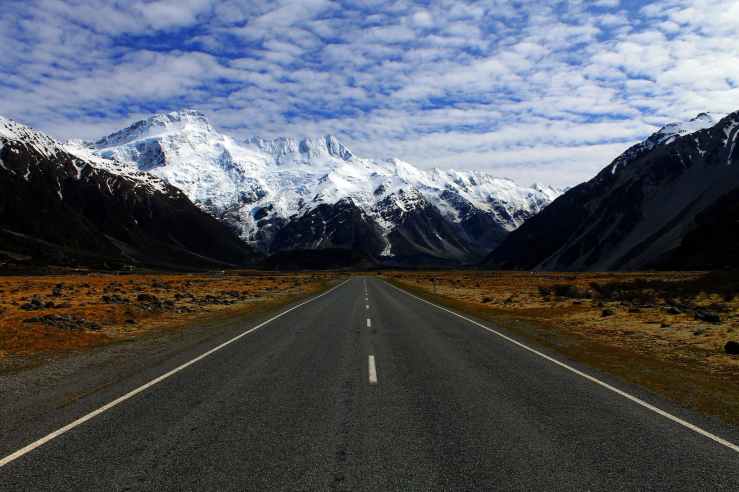
Photo by Pixabay on Pexels.com

In The Cast-Iron Owl, the story features a roadtrip in which the mother, Jane, and her daughter, Mary, drive across the country to Colorado. When determining all the stops for their roadtrip, including what states they’ll pass through, it was something that took a considerable amount of time and research to figure out.

Even after I had determined what states they’ll stop at, I had to figure out which cities/counties/towns they’d find a motel in, and what the geographic landscape of those states were like. I would imagine it’s similar to filmmakers scouting locations for a film, figuring out the logistics of getting there, not to mention what the conditions and the environments are like. It’s one of those things that seems easy and straightforward on the surface, but actually takes a lot of planning and research.

In addition to the figuring out the locations, I had to plan out how long the drive would be from one place to the next. Given that the story is set during winter, I knew that snow or rain could be a factor (not to mention the cold), so I had to look into the climate as well.

If the story had taken place during the summer, it’d be a lot easier to plan out, since I needn’t worry about the cold weather or the potential for snow. But given that it does take place in the winter, I had to factor that in, including how often it snowed or rained in those places, when I planned out the roadtrip.

The nice thing about writing roadtrips is that it gives the characters plenty of opportunities to have long conservations as they travel, as well as the chance to visit new places. It’s similar to a story where characters are traversing across different countries or landscapes where they face unseen obstacles. The fun thing about writing roadtrips is that it lends itself to the unexpected and to startling encounters. On a roadtrip, even though it can be perfectly planned, there’s no guarantee that it will go as expected.

Tangents in Writing

When I write a story, it can go off on a tangent where it will go down a path that I hadn’t originally planned. It was as if the characters were steering me in that direction through the dialogue and through the logic of their motivations. Sometimes, the result can be better than I expected. What I had originally planned was just okay, but the tangent it went off in was a lot more exciting and original.

Often times, I welcome tangents while I’m writing. However, it’s possible for a tangent to stray too far from the plot. But when tangents do work, they feel organic and natural, something that I wouldn’t have discovered unless I allowed myself to be in the zone and immersed in the story. Tangents can also happen with dialogue where a character will say and reveal things that are a surprise for both the writer and reader. It was as if the process of writing itself made it come to light instead of in the planning stages.

Tangents can also happen when the plot veers off in a different direction. When I notice this happening, I let it take its course to see where it goes. Sometimes it works, and other times, it seems like it’s sidetracking the plot. But as a writer, I allow them to happen since it can be exciting to discover secrets within the plot that I hadn’t even known.

Research in a Story

Photo by Pixabay on Pexels.com

For my upcoming novel, research was vital to ensure that I included facts and detail that were accurate. Whether a story is set in modern times or in the past, these minor details can liven up the story, immerse the reader into a world where the people, objects and events feel tangible and real. It also is a great way for the reader to learn tidbits as they read, facts that they wouldn’t have otherwise known so that they feel like they are gaining knowledge as they read.

Depending on the subject matter, research can take a very long time. It’s not just learning about the history or the facts of a field, but understanding it and selecting the key information that will work for the story. Hours can be spent learning about specific details and facts, only for you to realize later that you don’t need to include them, or that you only need to include a fraction of what you’ve read.

I find this often happens when I research different locations for a story (especially my newest novel). I learn about that place’s history, its scenery, its housing and economic landscape, etc., and I might realize afterward that it won’t suit the story. Even if I don’t use that specific location, at least I know of it, and I could use it in a different story or know what makes it different from the location I will use.

For stories in the fantasy and science fiction genres, research can entail studying early civilizations, folklores or facts about anthropology or science. All this information can be combined and weaved together in a story seamlessly–utilized in such a way that is unique and original to tell a new tale or to illustrate a vision of an otherworldly universe. When it comes to world building, it’s a matter of creating everything from scratch, of laying out a foundation of its history, of designing the terrain and landscape, and of creating the societies that exist within that world. In this way, it’s somewhat like building a universe with its own history and where events and key figures cross paths and influence each other in a way that is unique but strangely familiar to us.

Finishing a Story

Whenever I finish writing a story, it feels like a tremendous weight off my shoulders. I can finally relax, take the week off, and let my mind wander instead of mulling over every detail of each chapter and scene from the story.

But this break tends to be short-lived.

My mind will return to the story as if it misses the challenge and creativity that comes with working on one. It misses the art of piecing together scenes and ideas, of breathing life into characters. In essence, it misses working on a project that involves so much thought, planning, and artistry, that it will soon get bored of the vacation its on.

When enough time passes, we might put the story behind us, but we won’t forget the feeling that comes with finishing it–the sense of accomplishment we had after it was done. Eventually, we’ll have return to that story to edit it, or else, we’ll start working on a new one. In this way, finishing a story is just the beginning of another–waiting to be written.

When is a Story Finished?

For some people, this question can have an easy answer: it’s finished when the conflict or final scene has been resolved.

For me, it’s hard to say when a story is finished, since I always have this feeling that I can keep going and carry the story forward even after it’s ended. When I reach the last paragraph of a story, I will ask myself if it should keep going, or if it would be superfluous if I did. But by that point, after writing tens of thousands of words (if it’s a novel), I’m already exhausted, and I’m happy to end it so long as I can take a break. Of course, that ending could change once I started editing the story. I’d say to myself, why did it end here? There’s more to be said, story arcs that need to be wrapped up.

If there is a lingering question of “what if” after I’ve ended a story, or events or scenes that haven’t fully been explained, I will continue to add to the narrative despite where I originally planned on ending it.

And for short stories, I like to end it on a note that I leaves a strong impression or a thought provoking idea for the reader rather than wrap it up as a complete narrative. The structure for a short story is more conducive to that kind of ending, since they can function more as an idea(s) or “food for thought” rather than a story with a clear-cut plot.

Revising

There are times when I will revise a sentence or a paragraph numerous times and not feel like it’s done. I can see countless variations that all work just as effectively, but none of which will be final, since I can see yet a few more variations to try.

But after minutes or hours of trying to get that sentence or paragraph right, it can get frustrating and even tiring to try out a multitude of possibilities. It’s as if there is no right answer, just a gray area of possibilities. But I know in the back of my mind that there is one right answer, and if only I kept going, would I find it.

For me, that feeling of finality is reached when I can step away from it and not feel the urge to revise it again. Not all sentences or paragraphs are like that, however. Some just come naturally and effortlessly. But there are others that need so much work and polishing that I’ve reached the point where I’d rather delete them. But deleting them isn’t the answer either, since it leaves a void that needs to be filled.

For me, what helps is to just leave it alone, to come back to it later after a few hours or a few days. And when I do, it’s as if the answer was simple and straightforward, and I didn’t need to edit it to oblivion after all.