My new mystery novel, The Birnbaum Case, will be released on 3 – 21 – 20. It is available on Amazon for preorder.
Stanley Birnbaum Jr. is a physics professor at Glebe University who is working on groundbreaking technology in the field of optics. But one day, he and his family disappear. Neither the police nor his sister, Melinda, can find them.
After 2 months, there are still no leads or suspects.
Desperate to find out what happened, Melinda hires a private detective, Corbin Forester, who has the unique ability to communicate with spirits in his dreams. Through each dream, he unravels the mystery behind their disappearance, and discovers that Stanley’s disappearance might not be what it seems . . .
There was a time when I’d read nonfiction books voraciously, especially history, science, and mathematics. It was during a time when I felt I needed to learn as much as I possible.
One trend I noticed about all the nonfiction books I enjoyed was that I learned the most when they were told in the form of a narrative. The subject of history lends itself to this because each major event builds upon a chain of events . . . a series of decisions, actions, or inactions.
Science can be engrossing if written in the same way. To read about the struggles of scientists, the experiments they developed to test their ideas, the challenges they faced, this is much more fascinating and fun to read than to just have the facts given to you.
When we approach a work of nonfiction, we can have the facts, dates, and names given to us, or we can read how ideas or people shaped the events that have happened. I find I learn a lot more this way rather than just remembering the facts.
There are so many ways to approach reading nonfiction. You could read it educate yourself, to catch up on the news, or to simply digest information that’s useful.
The best nonfiction books I’ve read not only educate me on a subject matter, but inspire me to think about the world. They address ideas I haven’t considered, and even if I don’t agree with them, I find that in the process of questioning those ideas, I refine my own.
One of the things I love about short stories is that they hook you immediately and take you deep into the premise within a short period of time. Short stories establish the setting and characters quickly, whereas a novel might take you through a couple chapters of exposition before you’re fully immersed in it.
Short stories also have the power of communicating an idea or a conflict in just a single scene or in a few brief pages. As a writer, it takes practice and skill to write them effectively to communicate so much in just a few pages. But a short story can be just as powerful as a novel. The experience of course, is shorter, but the impact can leave you thinking about the story for days.
Years ago, I would spend almost an entire day reading a book, racing to get to the end. For example, I would spend a Sunday afternoon reading a novel and if it really hooked me, I could finish it by evening. I felt like I was immersed in that world, living and breathing with the characters as they struggled with their conflicts, or trying to achieve their goals.
But now I tend to read in brevity. I don’t finish a novel a day. I’ll read it in sections, a couple chapters at a time. It has a different feel to it than finishing a novel in a day. I notice I’m reflecting on the story more, reflecting on the characters’ thoughts, as well as how the narrative worked, not to mention the pacing. It feels like I’m taking a walk with the characters, whereas when I finished a novel fast, I had more of a movie experience.
Neither approaches to reading are right or wrong. It just depends on what kind of reading experience you prefer. Both can be valuable in their own way.
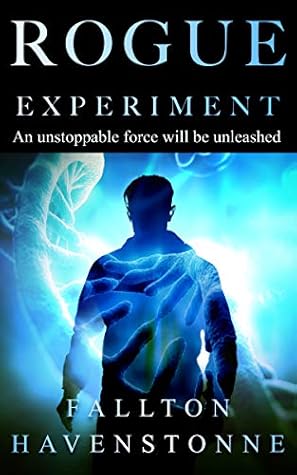
My novel Rogue Experiment is available for pre-order on Amazon as well as other vendors such as Apple Books, Barnes and Noble, and Kobo. The release date is February 28th, 2020.
Rogue Experiment is a science fiction/mystery novel about college professors that perform a radical experiment on students to boost their intelligence and physical abilities. But the professors’ worlds turn upside down when one of the students from the experiment ends up comatose.
He is now in the hospital, on the verge of death. His parents are grieving, demanding answers from the police and from the hospital staff. No one has answers. At least no one is telling them what is really going on.
The main character, Doctor Selena Cato-Sanchez, is a biology professor at Glebe University that all the students admire and respect. She has written biology textbooks and is always available to help her students with homework and with reviewing for exams. Now that the police are involved, the university is cooperating with them to solve the mystery of whodunit. Selena is a suspect, given her association with the lead scientist of the experiment, who has been arrested. Her colleague and good friend, professor Randall Birchine, is also a suspect.
A no nonsense detective, Locke, is investigating all the professors involved, gathering evidence to put them away in prison. Since Selena is on his radar, she must figure out what happened to the comatose student and where the experiment went wrong. She soon learns that the drug is restructuring his brain to a staggering degree that no human could possibly cope with. In fact, he will die if he doesn’t get a cure soon. With the detective on her tail, and with the drug destroying the student’s brain, she races against time to find a cure before he dies and she is arrested.
Later in the novel, Selena discovers that the drug has the power to give anyone superhuman abilities, making them a threat to humanity. With Randall by her side, and two police officers who believe she is innocent, she must keep the drug from getting into the wrong hands before they use it for evil.
The story has a wonderful cast of characters, including Selena, the caring biology professor, Randall, her wisecracking colleague who teaches mathematics, detective Locke, a hardboiled detective whose distrust of everyone makes him a force to be reckoned with, and a mad scientist who is bent on making a scientific breakthrough no matter the cost, even at the expense of others.
The story delves into the risks and ethics of experimentation, and at what cost will someone go to make a scientific discovery. Is it all worth it?
 Fallton Havenstonne