Errors

Photo by Suzy Hazelwood on Pexels.com

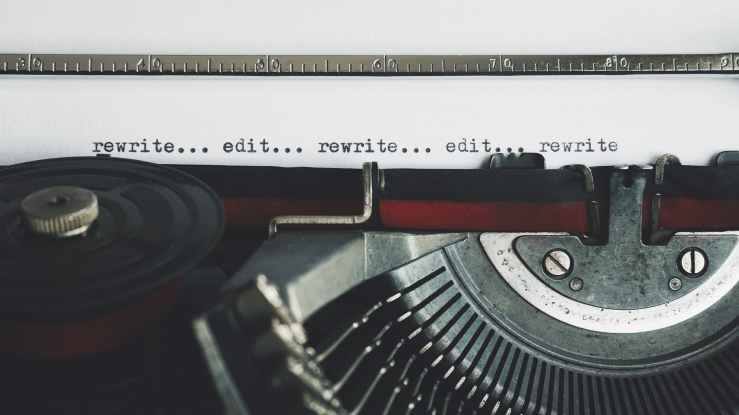
Whenever I catch errors as I’m reading a book, I’ll be taken aback in surprise. At first, I’ll be in disbelief, and I’ll reread the passage to make sure that I hadn’t misread it or that it was supposed to be a mistake (i.e. if it was part of a character’s dialogue). Once I realize that the error I caught was indeed an error, I’ll start to wonder how many more there are–if I had missed any prior.

I won’t feel disappointed by the error, however. On the contrary, it reinforces the fact that no matter how thoroughly a book has been checked for spelling and grammar, there are errors that are hidden–errors that seem to blend in one with the page, and could only be caught by someone who isn’t familiar with the book–someone who is reading it for the first time.

There’s a saying that during the editing process, we should get another pair of eyes on our draft. For one, the reader can catch the errors we missed due to our blindspots, since we’re so familiar with our work that we don’t see the errors that would stand out for someone else. Also, even if we’ve proofread our work a dozen times, that doesn’t mean that there aren’t errors we had skimmed over or missed. Besides, our knowledge and application of grammar rules, punctuation, and word usage could have flaws.
Short Chapters

When chapters are short (i.e. 2 – 5 pages), it’s easy to breeze through them, get to the next chapter without taking a break. On the other hand, when chapters are long, it can get tiring and exhausting to reach the end. For me, I’ll close the book once I start yawning or my eyes get heavy. If I don’t make it to the end of the chapter on the second reading session, I’ll be less inclined to pick up the book for a third session.

And each time I read it and don’t finish a chapter, I’ll read less each time I pick up the book. It’s like I’m not making any headway in the book. When I read a book, I want to feel rewarded by the experience, to learn something new or at least make it to the next check point. And if I’m not at least making it to the next “check points” (i.e. chapters), and it becomes more of a chore to read the book than a rewarding experience, I’ll stop reading the book altogether.

If I’m reading a book with short chapters, even if the chapters are uneventful and slow, they won’t strain my attention nor my concentration. They’re short enough where I can get through the pages without feeling bogged down by the pace or the lack of action or dialogue. I can make progress through the book much more efficiently, since each one presents something new without overextending itself with filler. Besides, short chapters enhance the pace of the book, and they can have as much or more impact than a chapter that’s lengthy and tedious, which can put me to sleep.

Reading List 2

Photo by Rafael Cosquiere on Pexels.com

I wanted to expanded upon my last post and describe two different reading lists that I had made in the past. Many years ago, I made a reading list based on what others recommended (i.e. from academia or the literary world) as being great books. It included the classics, nonfiction books, and some modern books. The books I read included The Meditations, Heart of Darkness, Portrait of an Artist as a Young Man, The Great Gatsby, etc.

Several years later, I made another reading list, although this was based on my own selection. This list included Wool, Frankenstein, White Fang, Emma, and several novels by Philip K. Dick. My experience was that this list was much more enjoyable than the first, since these books appealed to my interest.

The first reading list was based on what others recommended as being great books or were deemed as classics. Although some of the books were enjoyable, I found myself struggling with others. Not that they were difficult to read, but I just couldn’t connect with the story for one reason or another. Because this was the case, my experience overall was a mixed bag, since I forced myself to finish books that I either wasn’t interested in, or that I found long or tedious (it’s kind of like sitting through a slow movie, hoping that something exciting happens (or for the credits to roll)).

In the second reading list, I didn’t select them based on what others suggested, but they were based on genres and topics that interested me (i.e. science fiction, drama, suspense, dystopian stories, etc.). Thus, most of the books I read were great, or at least, enjoyable (I say most, since you don’t really know if it is great until you’ve reached the end).

Like movies, each person is going to have a different reaction to a book. What some will regard as great or amazing, others might regard as just okay or boring. Since each person is going to have a different opinion, a reading list has to be tailored to the individual that is reading the books. Although it is definitely possible to read books based on others’ suggestions, the experience will probably be uneven, and it will leave the reader wondering why some books are on that list in the first place.

Reading List

Photo by Artem Beliaikin on Pexels.com

Having reading goals can be worthwhile, although it depends largely on the books that we have on our list. For some books, we can breeze through them in a matter of hours or days, while others can be a challenge to finish a chapter. In that case, it could take us weeks or even months just to finish that particular book.

Thus, whether or not we finish a book depends on a number of factors. Some factors include an author’s writing style, the coherency of the plot and writing, and if we’re even engaged in the story (if it’s a non-fiction book, we might ask ourselves: am I even interested in this topic?).

I used to make my reading list based on books that others recommended, but now, I’ve made it more about the books I’d like to read. As mentioned above, certain books are more difficult to make headway in, not because they’re long or complex, but because I don’t have an interest in them. And when I’m not interested a story, it’s like I’m only reading the words, but I’m not grasping what’s going on in the story. In other words, I’m not invested in the story, and if I can’t get invested in it, then I’d rather read something else.

So for me, I prefer to pick and choose which books I want to read, and make my goal about reaching a certain number (i.e. it can be one book a month, two, or three, etc.). That number can look different for all of us, since our schedules look different, and the speed at which we read will vary as well.

Interrupting Thought

Photo by Vie Studio on Pexels.com

When reading a book, a thought can come to mind, one that will interrupt our focus on a book. It can be a thought that’s unrelated to the story, such as a chore that we need to do, a financial matter that has been looming in our minds, or something as trivial as a commercial we saw on TV.

But even when this interrupting thought comes to mind, we continue to read–read as if nothing has happened. And as we read, we become slowly consumed by that thought–become lost in it until it’s at the forefront of our minds.

A minute or two will go by, and then when we pause, we’ll realize that we’ve grasped nothing from the book. We won’t even know what events have transpired, nor will we know what was said amongst the characters. This realization will shock us for a moment, but once we’ve come to our senses, we’ll become annoyed with that interrupting thought.

But we have to ask ourselves why it was there in the first place. Was it there because that thought brought to mind something that we need to address–to take care of right away? Or did it occur because the text wasn’t engaging, or was the text itself mystifying to read?

At any rate, we need to start over. But will that interrupting thought stir up in our minds again?

The Hourglass And Other Short Stories

Now available on Amazon is my new short story collection, The Hourglass And Other Short Stories.

This collection includes three short stories by Fallton Havenstonne, the author of Rogue Experiment, Kitewell, and other books. In The Hourglass, Rob discovers a perilous world teeming with immortal wolves. In Searching, Harold will embark on a journey to uncover the truth about his own memories. And in A Sign, the life of a comatose man hangs in the balance.

The Present And Other Short Stories

Now available on Amazon is my new short story collection, The Present And Other Short Stories.

Get ready for three exciting short stories in this collection by Fallton Havenstonne. In The Present, Henry receives a present from his uncle that will change his family’s life forever. In Aura, Jubilee realizes that she can only play the piano well when her piano tutor is around. And in Marnie, a cat does everything in its power to stay with its family.

Wandering Mind

When you’re reading a book and you can’t seem to focus, your mind tends to wander. It wanders on to random things–things that aren’t pertinent to the story, but keeps it active: the last movie you saw, the last thing you purchased, etc. A wandering mind is an escape from the book. In fact, it deters you from making any progress in it.

A wandering mind doesn’t happen for no reason at all. It’s a sign that the book didn’t hold your interest–didn’t keep you engaged in the story or characters. There comes a point when your brain is struggling to maintain focus while you read, and when it lets go, the mind wanders without you realizing it. Even though it might seem like you’re reading when it happens, you’re actually just reading the words on the pages, but not the meaning behind them.

It’s like reading a sequence of random numbers, thinking that there is some sense to it when there isn’t. To get back on track in the story, you have to start from where you last remembered (or left off). Even though you lost time, it was merely a delay. Besides, the book isn’t going to wander anywhere.

Library Books

Photo by Artem Beliaikin on Pexels.com

Going to a bookstore, I’m not as inclined to buy a book from there than to check the same book out from the library. Perhaps it’s because there are far less bookstores than there were years ago. I used to browse books at bookstores until I settled on one I wanted to buy. But now, it seems that there are far more libraries than there are bookstores. And I can check out the books from there for free.

Even if I buy a book from a bookstore (or order one online), the urgency to read it isn’t there. It’s mine, and I can start reading it whenever I want (no pressure at all). But with books that I check out from the library, I’m borrowing them, so I’ll try to read and return the books before or on the due date.

It’s kind of like a game for me to see if I can read the books before I have to return them. I’ll start reading the books the week I picked them up. If I decide that I’m not going to finish a book, I’ll make the trip to return it knowing that I at least tried. And if I end up finishing a book or two, I might consider buying them if I like them enough. But even if I do buy those books, it’s rare that I’ll read them again from cover to cover.

Finding a Great Book

Photo by Pixabay on Pexels.com

When searching for a book to read, we’re looking for one that will pique our interest–hold our attention for hours and days. It’s one we don’t want to put down, one that will make us think about the story, the characters, and stirs us to compare it to our world. We could spend days looking for such a book, one that we hope will inspire us and change our outlook on life–give us some insight too.

At some point, we find a book that appeals to us. We start reading. But what ends up happening is that after a few pages in, we get bored–become uninterested in the story. Even though the synopsis sounded exciting, the story doesn’t go anywhere. Nothing exciting happens. We start yawning every time we read a page. It’s one of those books that gets great reviews, but our experience doesn’t match them. It’s as if we’re reading a completely different book. That great book that they praised and lauded was nothing like what we read.

In reality, however, a great book isn’t one that we find. It’s one that we discover once we’ve finished it. But what makes a great book anyway? Every reader has their own criteria of what makes a great book. Perhaps one way to put it is one that we wish we could write. Or maybe it’s one that we would read again.