New Novel Coming Soon

I’ve been working hard on a new novel that’s coming out soon. It’s a YA/urban fantasy novel with magic and lots of mystery.

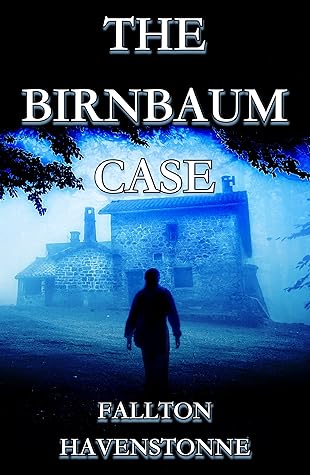
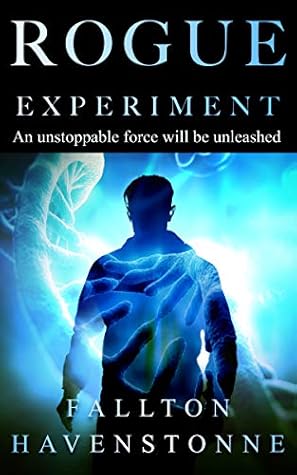
I made it a goal this year to complete 4 novels, and I’m getting close to finishing number 3. The 4th novel is still up in the air, but I know I’d like to take a break after novel number 3 and complete number 4 later on this year. If you haven’t checked out Rogue Experiment or The Birnbaum Case, please check those out. They’re out on Amazon as well as iBooks.

Choosing a Book

Sometimes I am just interested in so many books that it’s hard to focus on one. I might try to read a little a bit of each book, but one book usually ends up winning my attention. Especially with longer books, it’s a commitment to follow through and get to the end. I feel that if I slip away into another story while I’m in the middle of one book, I’ll start forgetting the details of the last book, and it would be harder to return to it later.

One analogy is movies. It would be like watching a movie, pausing it a quarter of a way through, watching another movie, pausing it a quarter of the way through, then switching to the first. The momentum is gone. It’s not the same experience. The focus has been disrupted.

I end up reading one book at a time anyway. It’s one of those things where you have to make a wishlist and prioritize what you want to read first.

The Birnbaum Case

My new mystery novel, The Birnbaum Case, will be released on 3 – 21 – 20. It is available on Amazon for preorder.

Stanley Birnbaum Jr. is a physics professor at Glebe University who is working on groundbreaking technology in the field of optics. But one day, he and his family disappear. Neither the police nor his sister, Melinda, can find them.

After 2 months, there are still no leads or suspects.

Desperate to find out what happened, Melinda hires a private detective, Corbin Forester, who has the unique ability to communicate with spirits in his dreams. Through each dream, he unravels the mystery behind their disappearance, and discovers that Stanley’s disappearance might not be what it seems . . .

Nonfiction II

There was a time when I’d read nonfiction books voraciously, especially history, science, and mathematics. It was during a time when I felt I needed to learn as much as I possible.

One trend I noticed about all the nonfiction books I enjoyed was that I learned the most when they were told in the form of a narrative. The subject of history lends itself to this because each major event builds upon a chain of events . . . a series of decisions, actions, or inactions.

Science can be engrossing if written in the same way. To read about the struggles of scientists, the experiments they developed to test their ideas, the challenges they faced, this is much more fascinating and fun to read than to just have the facts given to you.

When we approach a work of nonfiction, we can have the facts, dates, and names given to us, or we can read how ideas or people shaped the events that have happened. I find I learn a lot more this way rather than just remembering the facts.
Nonfiction

There are so many ways to approach reading nonfiction. You could read it educate yourself, to catch up on the news, or to simply digest information that’s useful.

The best nonfiction books I’ve read not only educate me on a subject matter, but inspire me to think about the world. They address ideas I haven’t considered, and even if I don’t agree with them, I find that in the process of questioning those ideas, I refine my own.

Short Stories

One of the things I love about short stories is that they hook you immediately and take you deep into the premise within a short period of time. Short stories establish the setting and characters quickly, whereas a novel might take you through a couple chapters of exposition before you’re fully immersed in it.

Short stories also have the power of communicating an idea or a conflict in just a single scene or in a few brief pages. As a writer, it takes practice and skill to write them effectively to communicate so much in just a few pages. But a short story can be just as powerful as a novel. The experience of course, is shorter, but the impact can leave you thinking about the story for days.

Reading in Brevity

Years ago, I would spend almost an entire day reading a book, racing to get to the end. For example, I would spend a Sunday afternoon reading a novel and if it really hooked me, I could finish it by evening. I felt like I was immersed in that world, living and breathing with the characters as they struggled with their conflicts, or trying to achieve their goals.

But now I tend to read in brevity. I don’t finish a novel a day. I’ll read it in sections, a couple chapters at a time. It has a different feel to it than finishing a novel in a day. I notice I’m reflecting on the story more, reflecting on the characters’ thoughts, as well as how the narrative worked, not to mention the pacing. It feels like I’m taking a walk with the characters, whereas when I finished a novel fast, I had more of a movie experience.

Neither approaches to reading are right or wrong. It just depends on what kind of reading experience you prefer. Both can be valuable in their own way.