Story Writing

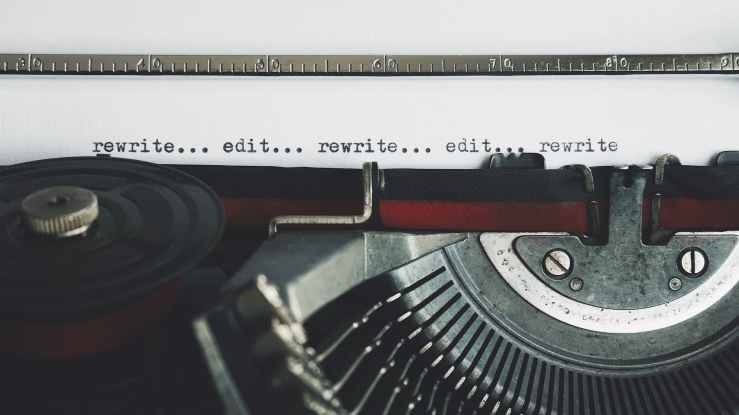
A story won’t write itself. That’s what I say to myself when I’m not writing when I should, or when I’m too tired to write. It won’t write itself; I need to keep adding to it, to keep the characters alive and to make the story tangible and real on the screen or on paper.

There can be too many obstacles that deter us from writing. It’s easier not to write than it is to write. We can come up with a laundry list of excuses not to write it, or say we’re not in the mood to. But no matter what excuses we come up with, a story isn’t going to write itself. It’ll sit idly in our thoughts, idly in our imagination until we write it.

Once we start writing, at first, it can be difficult and cumbersome. It can feel like trudging through a muddy trail, or navigating through a foggy forest. I’ve had roadblocks where I just didn’t know what to write from one sentence to the next. It was as if the story ran out of gas, or else I ran out of energy to write. But at some point, if we keep writing, the story will inexplicable propel itself into existence, and there isn’t enough energy for us to keep up with it. It’s as if we’re in the driver seat, and the story is leading the way, but as we write, we can’t make excuses to stop. To stop is tantamount to letting the story wither and fade out of existence.
Ahead of Schedule

Photo by Jess Bailey Designs on Pexels.com

Being ahead of schedule gives us a sense of relief, a feeling of satisfaction and accomplishment. It eases the pressure of having to finish our deadlines by the nick of time, not to mention, easing our worries about falling behind. It allows us to relax and to work at our own pace, to go above and beyond our current goals, since we’re already ahead.

But the time, energy, and work we have to put in to reach that point can be arduous and tiring. It’s like running at full speed during a race, and once we realize that we’re ahead–by a wide margin even–we can start to slow down, breathe, albeit, for a short time. At that point, we can begin to pace ourselves, to not be so tense about the race as we make it to the finish line.

Being ahead of schedule allows us to plan for our next projects, and gives us the option to wrap up our current project sooner, assuming that we continue at the same pace we were at. Being ahead of schedule gives us the breathing room to explore other ideas that we haven’t delved into, and to improve upon our ideas as well. When we’re ahead of schedule, it’s like having more space freed up in our minds for dormant ideas to take shape, and to take notice of what we’ve long forgotten or had once dreamed of starting, but didn’t have the time to do.

Edits

Photo by Suzy Hazelwood on Pexels.com

In this day and age of twenty-four seven news, social media posts, texting, etc., I can’t help but notice editing mistakes wherever I look. I’ll see things like the letter “I” not capitalized when used as the subject in a sentence; I’ll see typos and misspellings when these mistakes could’ve been fixed if the writer had reread the sentence once; I’ll see words dropped from sentences, the wrong word usage, and run-on sentences with no punctuation, which will read like someone was trying to say something in the span of a paragraph in one breath.

But when we compare this type of writing to published books, it gives a different experience for the reader. Whether it’s a novel or a non-fiction book, they have to be carefully edited to be taken seriously (and to be read for a great length of time). They have to be double checked, triple checked, and reread and rewritten multiple times before they’re even published. It’s a far cry compared to reading something that’s posted online, which might’ve been written in a few seconds, then posted.

The amount of time and effort we put into our writing matters when we want to make a strong impression and leave a lasting impression on the reader. Thus, if I see typos and grammar mistakes galore, I won’t take the prose seriously since the editor in me will automatically come out and want to fix everything. The point didn’t come across as it was intended, since there were flaws in the delivery. Ultimately, it’s a matter of quantity versus quality, and which we value more in how we approach writing and what we choose to read.

Misplaced Item

I cannot count how many times I’ve misplaced items, only to find them weeks or months later just by accident. It’s as if I think I’ll remember where I’ve put an item the moment I put it away, such as in a drawer or in a box, only to forget about it later when I’m trying to find it.

It just turns up after I’ve already bought something to replace it, or it turns up when I happen to be organizing or looking for other things. I realize that when I put something somewhere I think I’ll remember it, it’s not done on an organizational level, but on the assumption that I’ll use it again very soon. But that assumption won’t hold for very long, since new situations come up daily, and soon, I’ll forget about that item.

And even if I organize everything and keep things tidy and neat, my assumption of where things should be will continue to change as I improve upon the preexisting model of organization. It’s like organizing is a work in progress, something that is organic rather than fixed and constant, since our shelves, drawers and bins can fill up quickly, and we need to make more space to organize our things, or the organizational system we had had become inadequate, since it needs to be adapted to practical daily use.

New Challenges

There are phases in our lives where we’ve become accustomed to routines and tasks, and we need new challenges to stir our spirits. It’s not just a new goal that we need, but something that’s uncharted that will spark in us a calling to learn and try something new.

These challenges vary, ranging from traveling to learning something new such as music, art, or the numerous fields in technology. When we’ve become accustomed to the same routines and goals, we’re no longer pushed to or beyond our limits. Only new challenges can test the limits of our intellect, imagination, and effort.

These new challenges can be daunting at first, but wasn’t that the case with everything we first learned and pursued? After getting our feet wet, do we begin to feel more emboldened to face those new challenges that are before us. Only then do we see a frontier of endless possibilities that we didn’t know we could surmount.

Autopilot

When we’re in the habit of carrying out the same routine, it’s one that we’ve become conditioned to, one that has become automatic: done without thought. This can apply when we’re driving home from work, but we only notice how automatic it has become when we have to make a detour, say, at a store. Sometimes we might unintentionally drive passed it without realizing we’ve done so, since we’ve become so accustomed to driving passed it on the way home. Or we might notice it when we’re cooking and we want to try out a new recipe, but we end up same meal anyway. It’s only after the meal is cooked that we realize we forgot to add in different ingredients, or to change the quantity of salt, sugar, etc.

Autopilot is perhaps a survival mechanism, a way for our brains to conserve energy while performing a repeated task so that we don’t drain it by thinking about every step of the process, since we’ve done it a hundred or a thousand times. In the modern world, autopilot has applied itself toward the routines and habits aforementioned, such as driving, cooking, as well as doing chores, and the tasks at our jobs.

It’s only when we deviate from the beaten path that we notice how often we’ve been on autopilot (or that particular routine). It’s like a shock to the system, a surprise to the senses, since deviations from routines are a break from the familiar, the ordinary.

It makes us wonder if we’re on autopilot all the time, or at least, most of the time, and how regular and patterned our world has become through technology and a time-centered outlook. Have we become so accustomed to day-to-day routines that we’re operating on autopilot since it’s convenient and familiar, or is it that the schedules that we’ve planned for the week are more conducive to operating on autopilot? Is it the case that being on autopilot is necessary for survival? Could it also be the case that when we’re bored or need variation and change (i.e. traveling to new places, setting new goals, etc.), that we begin to deviate from the beaten path?

Every Five Years

Every five years, we end up in different places in our lives whether that’s economically, socially, geographically, professionally . . . even in terms of our goals (i.e. whether we accomplished them, or the ones we set for ourselves).

Of course, a lot can happen in a year or two, even three, but in five years, it’s as if we lived a different life, had a distinct mindset and outlook that was unique to us then. Five years ago, I was in a completely different place in terms of my outlook and focus compared to where I am now.

I would say as time progressed, I became more focused on the practical side of life, focusing on daily routines, organization, chores, etc., whereas before, I was more focused on reading literature, learning about the arts, creating art, etc. And if I were to go back another five years from that point in time, I was even more focused and immersed in the arts, learning from books and reading and discovering different authors.

As I go back every five years in the reservoir of my memories, it all seems like a lifetime ago, although it’s not. In the span of each five year interval, so much has happened, and there seemed to be all the time in the world in each and every moment, but when we look back on it from the present, it all happened so fast, kind of like a distant and fading dream.

Searching for Something

When you know you have something but you can’t find it, it can be a perplexing and confounding experience. As you look under every possible rock (metaphorically speaking, of course), and you still can’t find it, you try to think back to when you last saw it, where you might’ve put it.

I had this experience recently with a tool I was trying to find. I clearly remembered holding it in my hand and putting it away inside of a bin. But when it came time to get it, it wasn’t where I thought I had put it. It was like it got up and walked away on its own like it was playing hide and seek.

I searched everywhere for it, going through bins and drawers and whatnot, and no matter where I looked, it wasn’t there. Then a thought dawned on me: had I thrown it away? Did I accidentally throw it in the garbage bin, thinking at the time that I wouldn’t ever need it? Besides, what other explanation was there? I didn’t let any one borrow it. I didn’t take it anywhere. And it couldn’t have just walked off on its own.

After an exhausting search that led me no closer to finding it, I decided to replace the tool and ended up buying a new one. I wonder if it will turn up one day when I’m not even trying to find it. It might turn up as I’m casually rummaging through boxes and bins as I’m finding something else. It’s happened before, or maybe, just maybe, it was really good at playing hide and seek.

Staying Busy

When I keep myself busy, I know I’m being productive, and when I’m completing tasks on a to-do lists, whether those are chores or fixing things or organizing my space, there’s a sense of accomplishment that comes from knowing that I’m being productive and utilizing my time wisely.

Of course, there are limits to how much we can stay busy, because staying too busy can lead to burn out, exhaustion, and a sense of restlessness. Time needs to be set aside for rest, relaxation, and recreational activities, such as exercise, sports, and or hobbies. But even those have their limits as well, since too much rest, relaxation, etc., can lead to a general sense of boredom, lethargy, and a feeling that time is passing by without making the best use of it.

Staying busy is one of those things whose meaning varies depending on how you look at it. Does it mean a day filled with long hours of work, a schedule full of activities and a long list of to-do items, or does it mean keeping the mind and body busy, of not letting each day pass by without completing something that is important and fulfilling?

There is something to be said of each of these, since work can keep our minds active, give us a sense of purpose, and completing activities or to-do items can keep us on track of what we need to do so that we’re not forgetful about things. But when we’re pursuing something we’re passionate about, it’s a different kind of busy, since it doesn’t seem like something that’s busying us, but that by pursuing it, we are staying busy.

New Ideas

Photo by Pixabay on Pexels.com

There have been many times when I’ve been writing where the story will suddenly steer in another direction. A new idea dawns on me that shines a light on my original idea, metamorphosing it into something else that I wouldn’t have expected. It’s not simply that a new idea replaces the old one, although that can happen, but that the new idea builds and adds to it in layers upon layers.

It’s as if a floodgate of ideas come streaming forth as I write, providing harmony, detail, and depth to the story. Original scenes that were well thought out during the planning phase have become altered or replaced altogether with scenes that are more cohesive and powerful.

It’s something that I’ve learned to accept and embrace as I write, since my original idea was merely the impetus for something greater. To give an analogy: a writer starts with a piece of stone or wood for sculpting, and as they carve out the form, they begin to see the potential of what those basic forms could become, shaping them into something more real, organic, and life-like, such that they take on a life of its own.