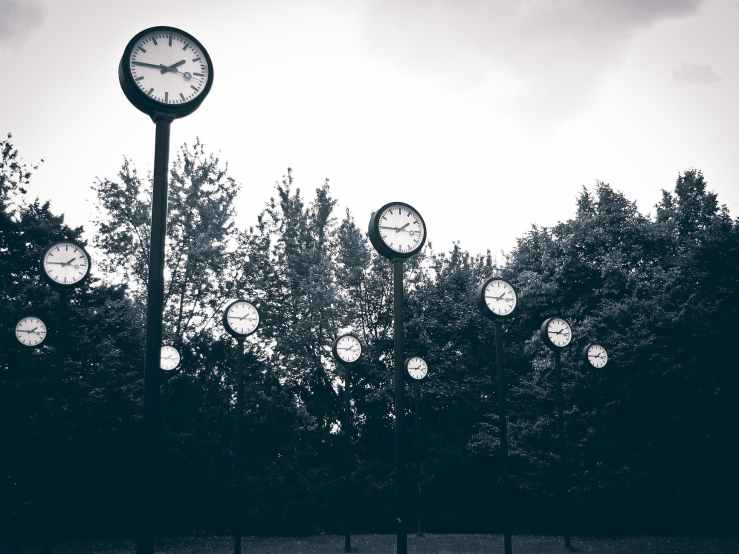
Dwindling Time

Photo by Pixabay on Pexels.com

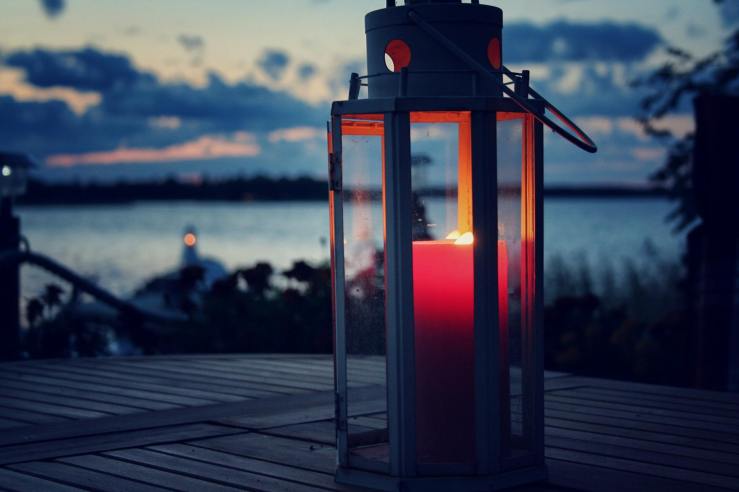
When we’re busy with work or trying to get chores and errands done, time dwindles without our noticing it. Only when time is up do we notice it getting darker as dusk sweeps across the sky. It’s then that we realize there aren’t enough minutes in the day to finish all of our goals. Time is like a force of gravity that continues its ascent forward despite anyone’s wishes or dissent. It perceives nothing, yet it knows where it’s going, always reaching its destination.

I notice time more when I have less of it. Or when the sun rises and falls, bringing forth light and trading it for darkness. Each year that passes, a yearly calendar gets thrown away, never to be seen or used again. Another notch on our belt–a number on a data sheet–something we memorize like it was a date in a history book. But in our day to day life, we notice time like a candle that is melting wax, burning relentlessly through the wick. It leaves its mark on the world, and all we can do is make the best of each second and minute and hour before the light goes out.

Synonyms

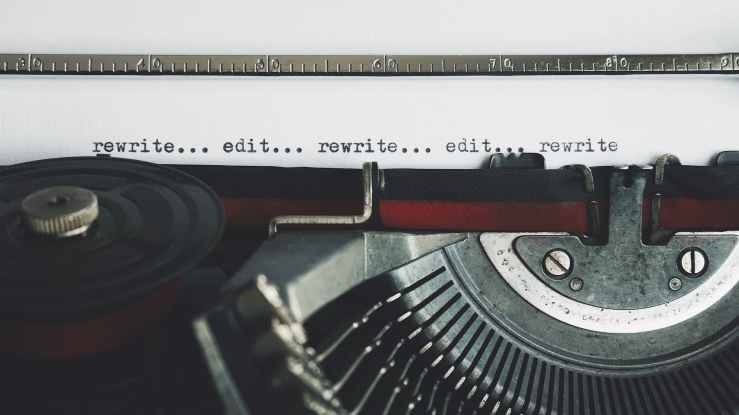
When writing the first draft, I’ll use the same word over and over again without realizing it. For example, I’ll use the word “and,” “as” or “the” to no end, or I might start a series of sentences the same way. It’s not until I begin editing the story that I’ll notice these redundancies, and I’ll look for words to substitute them (i.e. synonyms), or I might delete or rewrite the sentence so that it doesn’t sound repetitive.

The Thesaurus can be a great tool during the editing process. When I can’t think of a new word that I’m trying to replace, I’ll use the Thesaurus, which will give a list words that mean (or are similar to) a specific word. It can also provide antonyms, which are words that are opposite of that specific word. I’ll only use the Thesaurus, however, when I’m editing, since my focus during the first draft is to get all my thoughts down–to fill up the pages–rather than to polish the writing.

Options

It can be overwhelming to make the right/best choice with so many options to choose from. It’s like going to the grocery store and seeing an array of pasta noodles on the shelves. We can hastily pick up our go-to brand, or we can pick up something new. There are various factors to consider, such as the ingredients, cost, quantity (in the package), brand name, sell by date, etc.

The same goes with researching a product online that we want to buy, and deciding from which vendor offers the best price. We want to make the best choice, but even after making the purchase, the result is not always what we thought. For example, the item could be faulty, and it might wear out sooner than we thought. All that time and energy we had put into it couldn’t have foreseen the future, including how it would hold up overtime, and if it’s even durable.

With the vast array options to choose from, there’s always an unknown variable(s). The same could be said of books, movies, comics, etc., where there’s no guarantee that we will enjoy them or get value from the experience once we’ve finished the story/movie. As much as we’d like to think that we could make the best or perfect decision, it’s still a hypothetical, and it usually plays out better in our minds than in reality.

Small Steps

Photo by Pixabay on Pexels.com

It’s easy to overlook the small steps that it takes to reach our goals. It’s as if our minds are more enamored by the end product–the goal–as soon as it sets its sights on it. It’s more focused on reaching the finish line rather than the steps that it takes to get there. But much like writing a book or a story, it’s only possible when small steps are taken, since it leads to chapters getting written, and when enough of them are finished, the story is complete.

Or it’s like working on a math equation, where the solution is found by applying the laws of equality several times until the final line is x = a, where a is a number. The solution couldn’t have been found until the intermediary steps were applied. And a book couldn’t be written without pages and chapters being finished. All those small steps matter, since they make up the end product–are necessary to the achievement our goal(s).

Different Outlook

Sometimes we get stuck in a mindset where we overlook the things we have. It could be as simple as good health, where we’re so used to it that we don’t even notice or appreciate it. Instead, we become fixated on the things we lack or don’t have (i.e. a goal that casts everything else aside) rather than appreciating what we have–even when it’s in abundance.

Having this rigid mindset can cause us to become tunnel visioned on the areas where we don’t feel complete in, which can make us feel like we haven’t accomplished much at all. It could apply to many facet of our lives, such as our experiences, work, even our creative life, where we feel like we haven’t accomplished very much, even though we have.

But even when we’ve achieved goal after goal, there’ll always be another to reach, another finish line to cross. It never ends in a way, as it becomes a constant pursuit, causing us to overlook everything along the way.

In the process, we’ll go through trials, surmount challenges, stepping stones, and roadblocks that we have to figure out. We will have learned new skills, garner new ideas and knowledge, not to mention reach smaller goals on our way to something grander. But ultimately, it’s not always about the end goal, as there’ll always be another one. Instead, it’s about how we look at the whole process, how we’ve changed, who we’ve become, and how much we’ve grown and achieved along the way compared to before.

Long Journey

Writing is a long journey. It requires countless hours of reflection and internal dialogue within our minds while we pen our thoughts down. There’s no immediate reward for it except the feeling of getting our pent-up feelings and thoughts out into the world.

Becoming a good writer or even a prolific one isn’t something that happens overnight. It takes persistence and years of practice to learn and develop the craft, of putting in the time to mull over the details of our prose, of editing every last sentence and word.

We may feel like there is no reward at the end of the tunnel, as if we’re spending time on something that will not yield some life-changing reward. But it may not be about a reward that’s waiting for us. Writing is like holding up a mirror to our thoughts rather than creating a tangible object that has some utility or function such as a chair or a tool. It doesn’t necessarily have to have a monetary or practical value, since even filling up a journal could bring joy and meaning to us.

Rather, this long journey of finding our voice, of developing our style, of putting ideas and stories down on paper, is what gives life and brings meaning to our ideas and thoughts before they disappear.

Motivation

We can break down motivation into two types: intrinsic and extrinsic. Intrinsic is basically what motivates us from within, and extrinsic is motivation that stems from external rewards, such as wealth, adulation, acquiring things, etc. To me, creating art is mainly driven by intrinsic motivation. Stories and songs are written because of the inner flame of the soul and imagination. And writing stories or songs doesn’t necessarily equate to a material reward.

Often times we might write just to get ideas down–as a way of thinking–just as someone might compose music to express their emotions. When we write stories, it satiates the need to express the fountain of our ideas and thoughts, much like how exercise or getting fresh air is necessary to our physical health. It’s not asking for anything in return except to do, to be active.

Although extrinsic motivation is necessary for acquiring the things we need on a daily basis, that’s not what art is about. It’s not a utility, but a form of expression.

Posted in Art

Imagination

Photo by Heather McKeen on Pexels.com

Even though writing a story is a conscious process, the values and ideas within a story come from the unconscious. The characters, landscapes, ideas, and scenes can come from dreams, sudden insights, random thoughts, visions, or be inspired through a movie or book or song. No matter how much we deliberate on the particular of a story, shaping them into a linear three part act, their content rests within the imagination, which sprouts from the deepest recesses of the mind.

Posted in Art

Re-editing

Re-editing a story can go on for weeks, months, years, and even after it’s been edited five or ten times, we’ll find something else that can be fixed even though it already has been. It’s like working on a painting, and no matter how much detail and improvements are made to it, it can always be revamped if our eye catches something off.

The finished manuscript contains all the essentials and more: the plot is complete, the readability is smooth, and the spelling, grammar and punctuation are, for the most part, ironed out. But when we go back to read it weeks or months later, we’ll find things to change/add, such as the wording, dialogue, or we could decide on a completely new direction for the story. It never feels like it’s finished, even though it has to be at some point, since the purpose of all those countless hours of editing was to finish the story.

Besides, there is a finite amount of time that we can spend working on any one project. And then there are the countless other projects, which are bouncing around in our minds, that want to be told–put down on paper (or the computer). The final edit is the one that we decide is complete because if we spend anymore time on it, we’d never be done.

Final Product

Photo by Pixabay on Pexels.com

When a novel or a work of art is finished, people only see the final product. They don’t see the work that went into it, such as the drafts, revisions, edits, and countless hours that went into each and every detail. It’s just the final product they see, and their perception of it can last a few seconds, or even be a glance.

But to the writer and artist, it’s not merely a final product, but a cumulation of a vast array of ideas and experiences that have been harmonized as one. It’s a reflection of who they are, and what their imagination wishes to share. It embodies not only the skill and labor they put into it, but the careful selection of ideas, images, and sounds, meticulously brought together to form a vision of something new.

Posted in Art