Pen or Pencil?

Photo by Jess Bailey Designs on Pexels.com

That is the question.

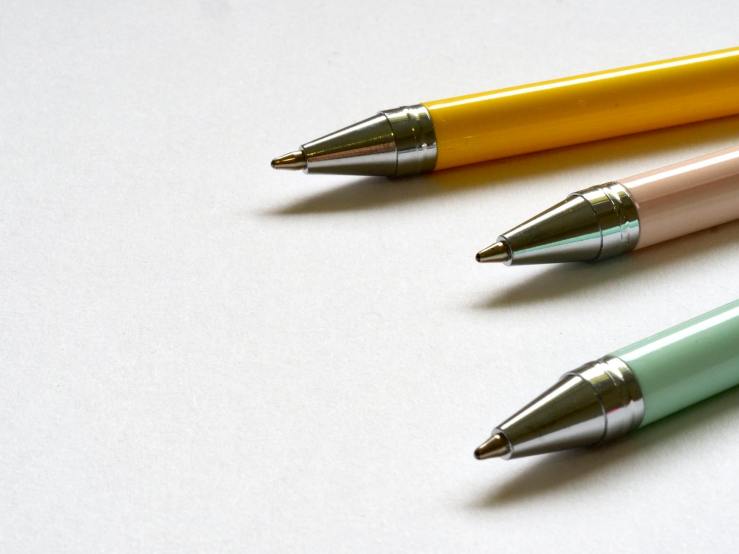
They both serve different purposes, and leave a different impression on the paper. I prefer pen when I am editing or marking up a document, and prefer a pencil when I am jotting down a list, writing down ideas, or simply drawing.

A pen leaves a permanent mark on paper, whereas a pencil allows for soft and faint lines that can be erased. The latter can even lend itself to smudging and light shading for drawings and sketches; although it’s possible to do so with a pen, it cannot be done typically with the same ease.

But if an artist masters the pen, they can create stunning works using different colored pens, pen-tips, boldnesses, and use cross hatching to create vivid and crisp and detailed images. On the flip side, an artist with a pencil can use a variety of graphite to achieve stark contrasts and a wide range of tones, and make as many mistakes as they need to, since they can erase them or simply draw over the line before the final draft.

Using a pencil is also more preferable for doing math work, since it would be a waste to write down a ton of steps using a pen, only to realize that one mistake negated it all, and then be stuck with all these symbols and numbers that are un-erasebale. Setting everything aside, there are countless examples in which one or the other would be better (or preferable) in certain circumstances. But whichever one prefers, it depends on what it’s for, such as editing, drawing, doing math, etc., and knowing how to leverage their strengths.

Silence

Photo by Pixabay on Pexels.com

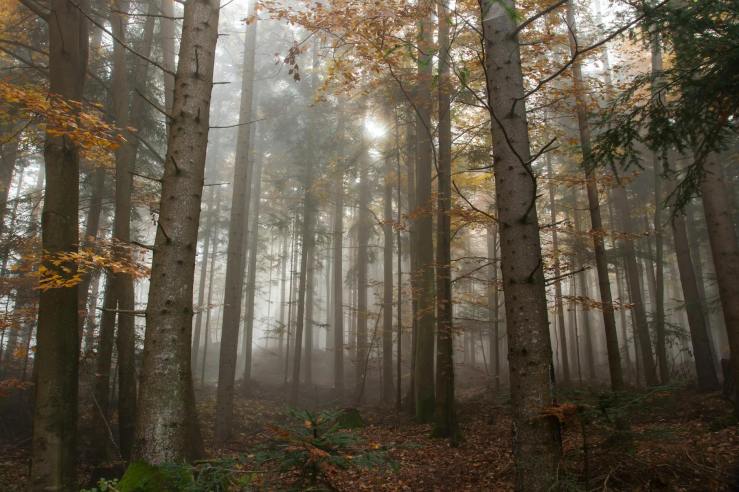
To think, there needs to be silence, or something akin to it that creates silence in the mind, such as a chore that allows us to daydream, or a kind of white noise that is going on in the background, such as the sound of wind and leaves rustling when we take a stroll through the park, or when we listen to music that creates a mood in our thoughts.

The same could be said of creativity, since it requires the active use of our imagination in which sights and sounds and space and time appear to us as natural products of a dream. Any audible distractions can disrupt the flow of their output, disengage us from the mental experience.

When there is so much noise around us that it draws our attention, then thinking and imagining cannot occur. Of course there are things that can inspire us from without, such as a movie or a conversation, and we can think as a result of their influence (the same goes for imagining as well). But to think in terms of meditating on an idea, or imagining worlds or scenes and characters from a story, then silence is the key ingredient for which we can employ the full power of our mind.

Details

What makes a story engaging are the details that are weaved in between the sentences and paragraphs. They could be some random facts about some obscure topic, or insights into a character’s past, giving us more information as to who they are or how they became who they are.

When I write the first draft of a story, it’s often written without embellishment, like a painter sketching the composition on a canvas to decide where the objects will be before painting in the details of color and tone and light. Besides, if the composition doesn’t work, how much time would they have wasted to start over again?

Even in the paintings of Van Gogh, it’s fascinating to see the brush strokes and the angles at which he painted on the canvases. Likewise, in a story, the details sprinkled in throughout help the reader to visualize and form a picture of the characters and the world. In fact, in all fields and endeavors, it is the details that give clarity and brilliance to the things that would be otherwise cooke-cutter.

Starting

To start a story, you simply have to write. Even though it sounds simple enough, one of the many things that can get in the way is overthinking it or over planning. With each day we push writing aside from our schedule, the idea starts to lose momentum. We can tell ourselves we’ll write when we feel ready to, or when we’re in the mood. But all that does is delay it from happening. If we do that for long enough, we’ll start to lose interest, and it will end up being a forgotten idea.

We can talk about starting from morning to evening, but until we start, it simply remain an idea, like a world of what ifs and what’s next and maybes that are waiting to see the light of day.

Evolving Idea

Photo by Kathy Jones on Pexels.com

Most of the ideas I’ve had for the novels I’ve written started off as short stories, something I could type in a day or two. But for some ideas, they evolved and grew beyond the confines of a short story, branching out to layers of detail that require hours, weeks, and months of dedication to rummage through and explore.

It begins as a seed that soon grows into a tree that encompasses a universe of imaginative events, bringing forth twists and turns and character arcs and pivotal moments where more mysteries lie. It blooms into something we couldn’t have imagined unless we tended to it overtime with care and passion.

Although we can have dozens of ideas for stories, a small portion will catch our attention, won’t leave our thoughts until we tend them again and again, watering them with our time and research and labor until they stand tall in a field of finished works while others bask in its shadow.

Faster Thoughts

Photo by meo on Pexels.com

When we write, our thoughts can get ahead of us like we’re trying to catch up with them in a relay race. They sprint ahead while we struggle to hand off the baton and keep up from behind. Sometimes our thoughts will leave us in the dust, speeding blindly forward as if the baton was in its hand when it’s actually empty.

When thoughts get so far ahead that we can’t catch up with them, we do our best to remember what our mind told us, typing from working memory rather than following it side-by-side, which is what we prefer. It’s like our hands, no matter how fast we type, can’t catch up with the voice inside our head that dictates to us at an unrelenting pace.

But instead of lamenting about it, this dilemma presents itself as an opportunity. Writing no longer is a sprint after our thoughts, but a chance to write in broad strokes. Instead of trying to create a masterpiece, it’s a chance to see what secrets the subconscious has to bare.

If we give it a chance, thoughts will begin to spring out in its raw and purest form, unfiltered and organic like a tree branch that extends and twists about openly in the air, unguided by some preconfigured pattern or design. It’s unique and personal without the impression that it’s been borrowed or copied from elsewhere.

It’s ours and of our own making–writing at is finest. So when thoughts start to leap ahead as we write, shrinking far away in the distance, we can at least be free to express the deepest layers of thought that have been dormant in the recesses of our mind.

Routines

Photo by Pixabay on Pexels.com

What’s so important about routines is that they get you into a rhythm, a way of living and operating that is dependable and consistent. It’s similar to having a schedule, such as waking up early, making coffee at a certain hour, going to work, or creating art. When you have a routine, you’re reinforcing a process that will help you meet your goals, since goals often require an outline, which, when broken down, is essentially a series of discrete steps that must be carried out in a specific order.

But we might break from a routine if we feel that it is dull or stifling to creativity. When this happens, we either avoid the routine, abandon it, or change it up with slight adjustments, such as starting it at a different time, or adding new steps along the way.

And it wouldn’t be a routine if we didn’t carry it out regularly, because we all know that it’s not a routine if it’s done once, kind of like a short-lived experiment, or a spontaneous act. But if a routine becomes so ingrained that we do it subconsciously (such as typing one space after each word, or capitalizing the first letter of a new sentence), then it becomes what we call natural or second nature.

Typewriter

Photo by Suzy Hazelwood on Pexels.com

Typing on a typewriter takes some getting used to if you’ve been typing on a computer a lot. The great thing about typing on a typewriter is the immediacy of the printed word, since they show up on the page the instant you type them.

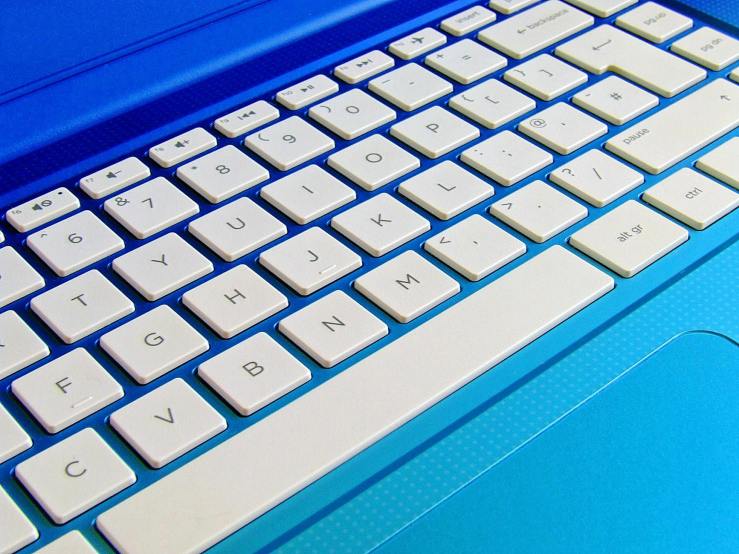
But what takes some getting used to is the fact that the keys must be pressed more forcefully, like you have to put more effort into pressing the keys instead of letting them roll off your finger tips, as is the case on a computer keyboard. And unlike a keyboard, you can’t fix your mistakes immediately after they’re made, nor can you delete a word if you accidentally typed the wrong one. Whatever mistakes you make are permanent; you have to live with them and move on despite wanting to fix them. And for me, since I’m used to typing fast on the keyboard, typing in a sprint on a typewriter will often leave a trail of light impressions on the page (i.e. uneven darkness in the words).

I’ve seen people type with just one finger on each hand, kind of like they were fishing or hunting for the letters. But I’m the kind of writer that was taught to type with both hands and not look down at my fingers, since it was kind of like cheating.

I do like the sound that the typewriter makes when the keys clack, which creates a strange mechanical rhythm, almost like a beat. Even when I make mistakes, I let them go, since it’s part of the writing process (not trying to make things perfect anyway). And the faster the keys clack, and the more dings I hear after each return, the more that’s being written, like hearing my thoughts come to life.

Research

Photo by Suzy Hazelwood on Pexels.com

Sometimes when I write a story, I get so caught up in research that I lose focus on what I was actually writing about. I’ll go down a rabbit hole, becoming more immersed and intrigued in the research itself than the actual story. When this happens, I have to tell myself to pause and get back to writing, or else I’ll get so sidetracked that I’ll stop writing altogether.

It’s similar to going back and editing a draft while you’re in the middle of writing it. Instead of moving forward, adding lines and pages to the story, you spend more time trying to polish it as if it were the final draft. And like research, it can bog you down, take up precious time, spoil the momentum of the writing session.

What I like to do to counteract this is to tell myself to keep writing as if I am on a time crunch. Doing so encourages me to jot everything down onto the page, putting me in the moment of the dialogue and visuals. This urgency to get every thought and idea out before time runs out is like an act of recording their transitory and ephemeral existence before they disappear for good.