Decisions

Photo by Pixabay on Pexels.com

Some decisions are easy to make, natural even, while others are hard. With the hard ones, there’s always a compromise that has to be made, a give and take. In economic terms, there’s an opportunity cost for every decision. For example, by not eating out, we’re saving money by making food at home. But by eating at home, we’re missing out on the convenience of having a meal cooked for us, and of not having to clean it up afterwards.

Another dilemma arises when we’re always trying to make the right decision. In one sense, the right decision can mean trying to make one that will always yield a positive result–one that will guarantee us being happy. In another sense, it can mean a decision that has more pros than cons–one that seems logically right or that seems right at the moment at least. The problem is that we don’t always know the consequences of that decision further down the road–the chain reaction of events that follow, which can lead to complications or even harder decisions. It’s similar in movies when they describe the consequences of time travel, how one change in the past can lead to a butterfly effect, resulting in unpredictable or even catastrophic outcomes in the future. For example, by fixing something in the past that in hindsight is negative, will that fix the future, or merely change it?

We can struggle with small decisions, like not eating out, or big ones, like whether a particular job or career path is right for us. Accepting one job or another can be based on factors such as wage/salary, the commute to and from work, the workload, our personal fulfillment, etc. We might choose a job that sounds right for us, but in a month or two, things can change, and maybe the way things are run can change as well. Or it might be that even though the wage/salary is high, the hours are long, which can lead to tiredness, stress, etc. Or it might be that the job isn’t what we expected it to be . . .

If we had a crystal ball and could see the future of each decision we could make, could we settle on one decision–one path to take? Isn’t there always one decision that is better than the next? Or would it be a matter of choosing the one that will make our lives easier, the one that will make us the happiest? But when everything gets easier, it takes more to make us happy. And if it takes more to make us happy, then the happiness we thought we had will slowly slip away since we’re never content with what we have.

Every hard decision we make is a step toward trying to make progress, whether that is progress in happiness, achievement, or wealth. But the more progress we make, the higher and more challenging the next the goal has to be. And with that, comes harder decisions that don’t always pan out the way we expect them to. In fact, some decisions might even set us back, and we have to work our way back up from where we slipped down.

Since all of our decisions cannot be perfect (or right one hundred percent of the time), it comes down to accepting the fact that each decision we make has no guarantees, and because we’re human with a finite understanding of the world, we can only make approximations (or educated guesses) to get where we want to be. But sometimes, when our reason seems doubtful, we follow our intuition or instinct (our sixth sense).

Collectibles

In my last post, I wrote about collecting things as a hobby. In this post, I want to dive into the sentimental value that collectibles can have for us. Of course, what is a collectible for one person might not be a collectible for another. It falls into a niche where only the collector values that object, an object that on the face of it, is just an ordinary object to the average person.

For the collector, that object can be valued in two ways: its monetary potential in the market, or its aesthetic/sentimental value. A collectible can have monetary value because of its rarity and because of its history. Based on its current condition, who owned it (or who its owners were), and what function it had, its market value will vary depending on these factors. But collectibles can also have value that transcends its monetary potential, since it is moreover a keepsake.

What do I mean by that? What I mean is that it could be an object that was a gift or an inheritance, passed down from our grandparents or a family member or a friend. It’s an item that we don’t want to part with because if we do, it would be like parting with the memory of that person. The item could also have value to us because it’s something that we return to, such as a favorite book, or a painting or sculpture that we admire. Because if we do give it away or sell it, it’s gone completely, and we won’t be able to get it back.

For some, having collectibles is a business, whether that’s selling the items on eBay or through a pawn shop. But for others, it’s about preserving the memories associated with those objects, of knowing that they’ll be safe with us.

Collection

Photo by Pixabay on Pexels.com

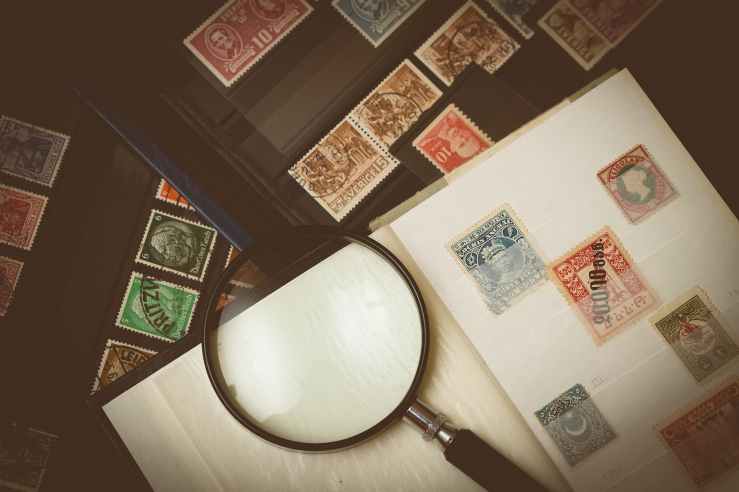
Collecting things as a hobby can be a lifelong pursuit. It can take on a life of its own, and take us down a road where we’re searching everywhere for that one item (or two or three . . .) that belongs in our collection.

Although it might be just a hobby to collect, it can easily become more. Those collectibles can fill up bookshelves, walls, or entire rooms. The time that we invest into collecting can span years–decades even. In the process, we become experts in the field as if we’ve earned a Phd in it, knowing every nuance of the items we collect, and where to get the best deals on them.

This hobby of collecting can range anywhere from video games, cards, stamps, coins, memorabilia, books, artwork, comics, etc. It begins with having an item or two–an object that piques our interests, one that sparks our curiosity. As we collect more, we uncover a world that has a life of its own, including a history with its own origin story, and how those objects evolved into what they are today.

As we dive deeper into this world, collecting things like there’s no tomorrow, filling up our bookshelves until there’s no space left, we start to realize that no matter how much we collect, there’s always more to collect, and in some cases, there’ll be something new that will come out in the future.

Errors

Photo by Suzy Hazelwood on Pexels.com

Whenever I catch errors as I’m reading a book, I’ll be taken aback in surprise. At first, I’ll be in disbelief, and I’ll reread the passage to make sure that I hadn’t misread it or that it was supposed to be a mistake (i.e. if it was part of a character’s dialogue). Once I realize that the error I caught was indeed an error, I’ll start to wonder how many more there are–if I had missed any prior.

I won’t feel disappointed by the error, however. On the contrary, it reinforces the fact that no matter how thoroughly a book has been checked for spelling and grammar, there are errors that are hidden–errors that seem to blend in one with the page, and could only be caught by someone who isn’t familiar with the book–someone who is reading it for the first time.

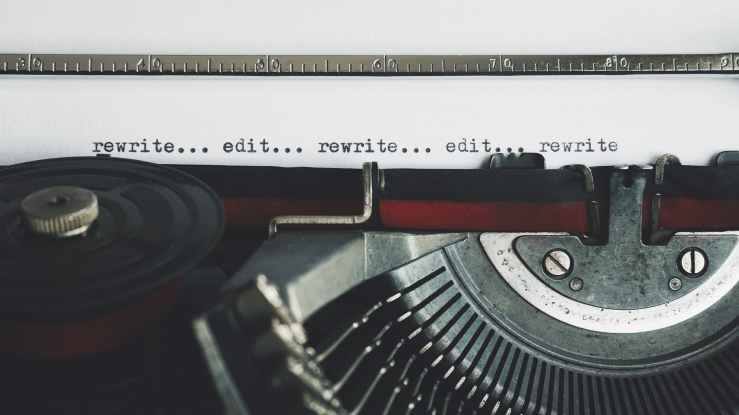
There’s a saying that during the editing process, we should get another pair of eyes on our draft. For one, the reader can catch the errors we missed due to our blindspots, since we’re so familiar with our work that we don’t see the errors that would stand out for someone else. Also, even if we’ve proofread our work a dozen times, that doesn’t mean that there aren’t errors we had skimmed over or missed. Besides, our knowledge and application of grammar rules, punctuation, and word usage could have flaws.

Short Chapters

When chapters are short (i.e. 2 – 5 pages), it’s easy to breeze through them, get to the next chapter without taking a break. On the other hand, when chapters are long, it can get tiring and exhausting to reach the end. For me, I’ll close the book once I start yawning or my eyes get heavy. If I don’t make it to the end of the chapter on the second reading session, I’ll be less inclined to pick up the book for a third session.

And each time I read it and don’t finish a chapter, I’ll read less each time I pick up the book. It’s like I’m not making any headway in the book. When I read a book, I want to feel rewarded by the experience, to learn something new or at least make it to the next check point. And if I’m not at least making it to the next “check points” (i.e. chapters), and it becomes more of a chore to read the book than a rewarding experience, I’ll stop reading the book altogether.

If I’m reading a book with short chapters, even if the chapters are uneventful and slow, they won’t strain my attention nor my concentration. They’re short enough where I can get through the pages without feeling bogged down by the pace or the lack of action or dialogue. I can make progress through the book much more efficiently, since each one presents something new without overextending itself with filler. Besides, short chapters enhance the pace of the book, and they can have as much or more impact than a chapter that’s lengthy and tedious, which can put me to sleep.

Humor

Photo by Ilargian Faus on Pexels.com

A story that has humor gives it that extra value of entertainment and engagement that uplifts the experience from one that is simply read to one that we can laugh out loud with.

Humor can come in the form of irony, satire, or even straightforward jokes. When it is in the form of irony, it can give character and a playfulness to the dialogue or the events that unfold. For example, they can give insight into the way the characters think, or in the way the events unfold in relation to what we expect (perhaps, defying our expectations to great surprise).

When the humor is satirical, it reveals the ridiculousness or absurdity of a situation with an effect that can be more powerful than just plainly saying it is. And with humor that is straightforward (i.e. when characters tell jokes), it shows us a side of the characters that we wouldn’t otherwise know unless we were told that they had a whimsical side to them.

Due Dates

Photo by Pixabay on Pexels.com

Due dates give us an incentive to finish, to wrap up whatever we’re doing before we proceed further. Even though there can be pressure and anxiety associated with due dates, they push us to work harder, to focus on the task at hand until the work is completed.

But due dates can have a negative effect as well. Depending on the amount of work there is in proportion to the due date, that due date can add undue stress and fatigue, especially if the work far exceeds what can be accomplished by the due date. This can make the work/project unbearable, unenjoyable, and make us want to never return to that kind of work or project again.

On the flip side, without due dates, the initiative isn’t there to finish a project. We can take as much time as we need, but on the assumption that we’ll be working on it consistently, and that we’re not pulled away by other things that distract us or demand our attention. But how often are we distracted, and how often do new things come up that demand our attention? Daily, of course.

Thus, there must be a middle ground between the two extremes of unreasonable due dates and no due dates at all. That middle ground exists where experience shows what can be achieved given what is humanly possible. Exceeding that limit can cause us to sacrifice quality for completion, or to sacrifice completion for quality. But the question is how far can that limit be pushed?

Not Correcting Errors

When writing, I try not to look back. I try to forge ahead despite the typos and wrong words that are typed in the sentences. There’s an urge to go back and correct things, to add a comma or period here there, or to fill in the missing words that will complete the sentences. But I ignore the errors for the sake of putting all of my thoughts down, to keep the flow going.

The flow is the important part. Writing requires quantity of words, and without them, there’s little to edit. To increase the word count, I have to keep writing no matter what, because if I stop to correct things, I’ll lose the momentum, lose the flow that allowed my brain to crank out ideas in quick succession.

It’s tough though. There are times when I want to go back to the last sentence to add more. Go back to the last paragraph and tidy things up. But that can be done later. That can be done after everything’s been written down, and it’s time to edit.

Fixing Things

Photo by Pixabay on Pexels.com

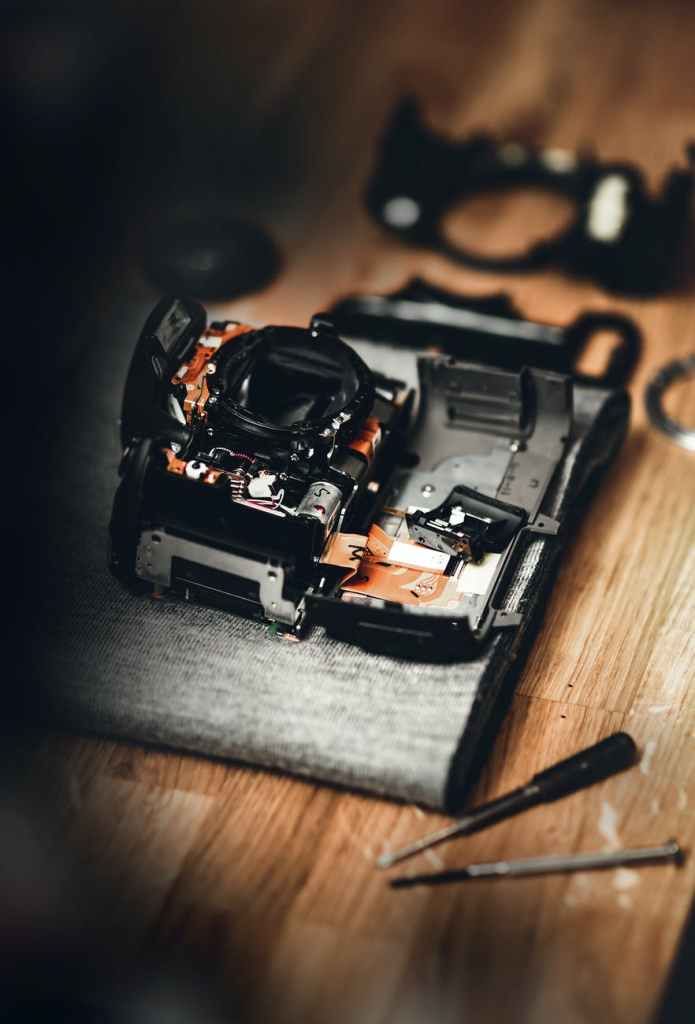
Without something to fix, our day would seem fruitless. Whether if it’s an intellectual question, a practical situation, a mechanical/engineering problem, or a work of art, we need something to fix, something to invest our energy and labor in to repair or rebuild what was imperfect and flawed. If we don’t have something to fix, it’s as if our talents would go wasted and untapped.

When a problem presents itself to us, we’re engaged in the process of solving it, of bringing a resolution to it. This process activates our minds, taps into the creative parts of our being, and brings about a chain reaction of events that can go on for days or weeks or months until we’ve fixed the problem.

Sometimes that problem could be as simple as changing a flat tire on a car. It requires us knowing what tire to replace it with and how to replace it efficiently according to the correct steps. We have to carefully consider how we’re going about it, and apply our knowledge to complete the task. When it’s done, we feel satisfied, relieved. But that will be short lived when the next problem arises. Solving problems and fixing things seems to be an innate part of who we are. It’s as if without problems to solve or fix, we’d languish in inertia.

Roadblock

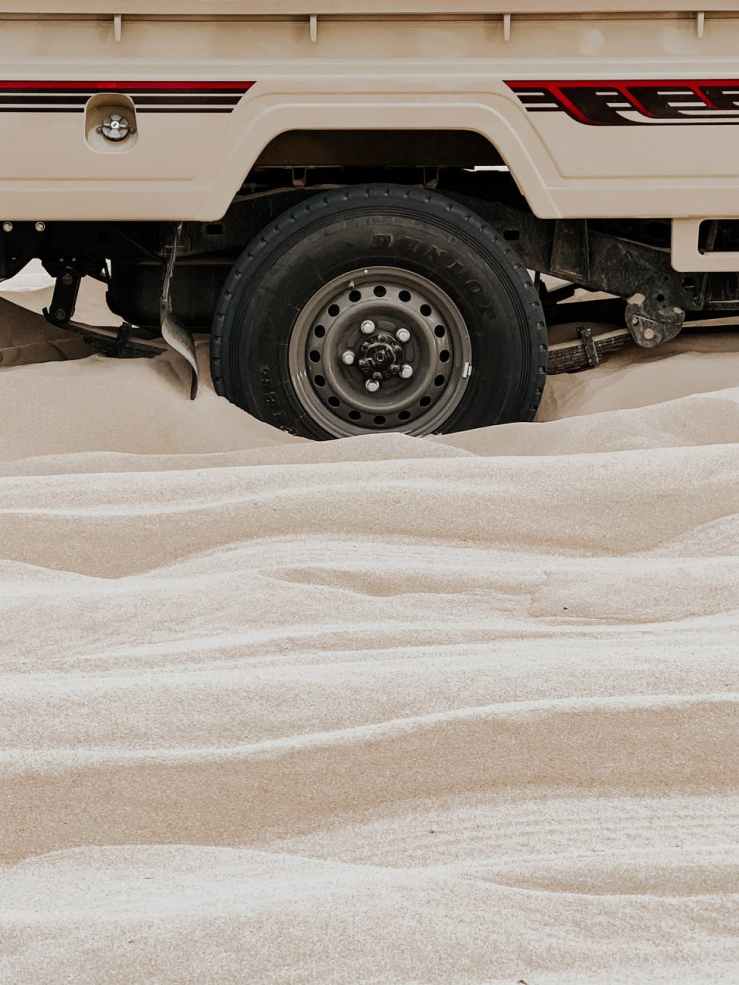
When I can’t make progress on a story for one reason or another, it’s like I’ve run into a roadblock. Despite having a lot of great ideas for it and that I’ve planned it out, I can’t make progress on it. It’s as if writing the story has been hindered by an unseeable force, causing me to struggle each time I try to add a sentence to it.

Sometimes that roadblock can happen a day after a great writing session. It’s like the story has just decided to quit, and I don’t know how to keep the story going. The roadblock happened out of nowhere, and now I’m completely baffled by the situation.

To overcome this, I usually have to wait–give it time for the roadblock to disappear. At other times, I’ll try taking the story in a new direction–a direction that offers new twists and turns to keep my interest piqued in the story. Or I might put the story aside and work on a new story altogether.

Surprisingly enough, after a few weeks or months, that story that I had put aside will read like new to me, and I’ll be excited to work on it again.