Plan B

I find that when I plan things out, I have to have a plan B “just in case.” There’s always a curve ball that comes our way that disrupts plan A or makes me question it. Especially when I’m writing, I’ll start to deviate from plan A due to new ideas that come along. Or I might realize that the ideas I originally started with became less interesting as time went on.

This could apply to other things too, such as event planning, room decoration, or a wish-list of the things we want to buy. When planning an event, everything could go as planned until the weather brings an unexpected storm, or if the temperature becomes unbearable during the summer or winter seasons. With room decoration, it could be the fact that a piece of furniture is too small or too big compared to what we originally planned, since it always looks different in person, especially in the room that it’s in. And with the things on our to-buy wishlist, when we’re about to add it to our cart online or go to the store to get it, it could be sold out or the sale could unexpectedly be over.

That’s when plan B has to be put into motion. Sometimes it could be better than our original plan, since it was the one that was less expensive or more practical than plan A. Our first plan is usually the one that we become attached to, the one we don’t want to change or modify since we put so much thought and time into it. Plan B winds up in the back of our mind as a result, something that isn’t our first choice because it doesn’t have everything we want. But sometimes what we want can wind up backfiring, since it’s chosen for sentimental or aesthetic reasons than for what fits our budget or the needs of our goal, whether that’s an event, room decoration, or the things we want to buy.

In terms of writing, it’s usually the case that plan B is just one of many plans that happen to show up during the creative process. There’s a plan C that makes a surprise entrance, and a plan D, a plan E, etc. When making art, it’s a process that is continuously evolving and ever-changing beyond what we imagined or originally intended. The plans we make for them are more like rough sketches that can be erased and changed rather than a fixed blueprint that we must stick to no matter what.

Persistence

Persistence is most effective when we’re making progress towards our goals, regardless of how minute or small it is. But when we hit a road block, persistence can wind up being counterproductive. In fact, it can wear us down, discourage us when we can’t see any progress being made after exhaustive attempts.

In my last post, I wrote about taking a step back. Some might believe that doing so is equivalent to quitting or failing when it actually isn’t. Taking a step back is only a temporary pause, not a permanent one. This can give us the time we need to revitalize our energy, to get into the frame of mind we need to succeed (or to look at a dilemma from a different angle).

In this sense, persistence and taking a step back are part of the same process. It’s part of the journey of ups and downs and roadblocks and successes. And as long as we don’t give up, we will continue to reach our goals.

Taking a Step Back

When we take a step back, it’s because we’ve reached a point where what we’ve been trying hasn’t been working. We’re stuck, unable to find a solution, unsure of what steps to take. Even when we’ve exhausted every resource and idea at our disposable, it’s still not enough.

When we’re at our wits’ end, the only option left is to take a step back. When we take a step back, we’re distancing ourselves from the dilemma, giving ourselves space to focus and work on other things. It may seem counterproductive, but it’s a step in the right direction. Our minds need a reset, a reframing of the situation. It needs a fresh perspective, one that we can’t get if we continue to look at the problem in the same way.

It’s like focusing on one aspect of a dilemma that we think is the problem when it’s actually a different area. If we don’t give ourselves a break and take a step back, we’ll continue to look at the wrong area until we’re drained.

So why is it that it’s hard for us to take a step back? Is it because we think we’re going in the right direction, or is it because of the pressure to finish something (i.e. to finish it on time)? Perhaps a combination of the two. We’re so fixated on the time aspect that we forget that time doesn’t always allow for the creative freedom we need to explore what’s outside of the box.

That’s what taking a step back allows us to do. Sometimes we can be walking down the street and an idea will strike us, one that is the missing jigsaw piece to the conundrum we were trying to solve. Or it might be that while doing something mundane like driving, eating, taking out the trash, etc., we come up with a brilliant idea, ones that we couldn’t come up with by our own will.

It’s ironic that when we try to come up with great ideas, it’s harder to generate them at will than when we’re doing something mundane or while we’re relaxing. The thing about it though is that we have to be diligent about jotting them down, not letting the ideas linger too long before they vanish. Some of our best ideas can come when we’re not looking for them, so there must be something true about giving ourselves a break, letting our minds wander.

Discovering a Talent

Photo by Simon Berger on Pexels.com

There are times when we feel like our skills and abilities aren’t as good as we thought it was or once was. These skills and abilities can be in regards to sports, hobbies, academic subjects like history and science, or occupations. Not succeeding or reaching a roadblock can feel discouraging, and at times, it can seem as if we’re not making any progress in achieving our goals.

We might wonder where are strengths lie, what gifts or talents we have. It can be a long journey towards knowing with many twists and turns that take us to dead ends or unexpected surprises. It might be a lifelong pursuit, but in the meantime, we’re trying to survive, trying to make it by. 

We take on occupations or careers that might not be what we’re passionate about, but we do it because it puts a roof over our heads, meets our practical needs. It’s not like we expect to do anything groundbreaking in our line of work, but it does fill a role, a need that is required in the grand scheme of things. 

Amidst our day-to-day jobs, we’re searching for that one thing that defines us, that awakens what is extraordinary in us. It’s that remarkable gift that gives us superpower-like abilities, which makes what we do look easy when it’s actually difficult and rare. 

Some will go through great lengths to discover this gift from within, studying many fields, investing time, energy, and money in pursuit of it, while others are content to let it be dormant. But ultimately, it’s up to us to find it, to know what it is. No one else can tell us, since it’s something we have to discover. 

What to Focus On

It can be hard to focus on one discipline when so many appeal to us. It’s like an artist trying to specialize in two or three mediums of art and realizing that there isn’t enough time to become an expert in all of them. Each one requires time and dedication, mastery and practice. It’s not enough to try it for a month or two or take on a project on the weekend. It takes years of continuous work to really develop the skills for it, to understand the principles, to become good at it.

When we limit ourselves to one discipline, however, it can be monotonous after awhile. We need variation, new challenges and ideas to explore. Each discipline and field offers that, but the hard part is in selecting which one to focus on, which one to put most (or all) of our time in. We don’t want to be in a position where we look back ten or twenty years later and wonder why we didn’t try something else, why we didn’t pursue plan B instead. Besides, our choices are limited by time, and whatever we choose will set us on a path that is marked by twists and turns and unexpected surprises.

Posted in Art

Wide Awake

Photo by Micah Boerma on Pexels.com

Have you ever woken up earlier than usual and you’re wide awake? It’s like you already had one or two cups of coffee, and you’re fully alert, ready to start the day. When you normally wake up, you’re tired, yawning, reflexively hitting the snooze button when the alarm sounds, but this time, it’s as if you’ve been awake the whole time.

Mornings like this are great, since it takes half the time to get ready for work, to pack lunch, and leave. On mornings like this, I can get to work half an hour or an hour early if I wanted to. It feels like I’ve woken up before everyone else has, since it’s still dark outside, and knowing that I have extra time to write or read or organize if I wanted to.

But it makes me wonder if this will catch up with me later on in the week. Will I wake up the next morning feeling tired and listless, having no energy left from the day before?

These wide awake mornings are random, unpredictable. Even if I’ve barely gotten any sleep that evening, I’d be completely alert that morning, and won’t even need breakfast or coffee to boost my energy. On these kinds of mornings, which are few and far between, I don’t want to go back to sleep, because if I do, I’ll lose the chance of getting ahead on the day. And on most days, it’s like I’m just going with the rhythm, going with the flow, rather than defining them on my own terms.

Close Call

Photo by Harry Cooke on Pexels.com

I was filling up my car when an SUV pulled up in front of me to use the adjacent gas pump. It’s one of those gas stations where there are lanes with gas pumps on each side. I began to feel anxious once I noticed that they parked at least two or three feet away from the nozzle (why people do this, it completely baffles me). This meant that when it was time for me to leave, I’d have to squeeze by their SUV and the SUV across from them, which was about five or six feet apart.

This was around rush hour, mind you, so the place was really busy. When my gas pump clicked, I replaced the nozzle and got in my car. I turned it on and noticed that there was barely enough room for me to squeeze pass them, but I didn’t want to wait another four or five minutes until the person in front of me left. The optimist in me believed that I could make it, so I pulled out of my spot and steered right to go between them.

As I inched closer toward their vehicles, I realized that I was was almost door to door with them, trapped in a sort of bottleneck. I started to panic, and when I realize I might not be able to squeeze by, I craned my head around to back up.

Suddenly, a car pulled up to the gas pump that I was at. And then another car pulled up behind me (a smaller one) that wanted to squeeze by the narrow pass I was right in the middle of.

I was somewhat shocked by the situation I found myself in. I had to make a decision to either take a chance and drive between the two SUVs without brushing against their doors, or to wait until one of them left. It was one of those moments where I felt like everything wrong that could happen happened. A frustrating moment where I felt like I should’ve been more patient and waited until the SUV in front of me left rather than to take this risk.

In the seconds that past, I decided to drive passed the two SUVs, moving at a snail’s pace, carefully eyeing how close my side mirrors were to theirs. As soon as the nose of my car passed theirs with just inches (or centimeters) between our doors, I started to pick up the pace, darting out from the bottleneck. I started to shake my head in frustration as I did so, knowing that this was too close of a call, that things could’ve went awry if I had scraped both of their SUVS.

As soon as the tail end of my car exited the narrow pass, which was barely the width of a parking spot, I turned sharply and left the gas station in relief. On the way home, however, I couldn’t help but think how close of a call that was, and criticized my decision to drive between the SUVs. The fact that someone pulled into my spot, preventing me from backing up, and that a car pulled up behind me, made the situation only worse. A perfect storm, the saying goes.

During the drive home, I realized that the way we visualize (or imagine) a situation in our minds can go astray in reality. My decision to pass the SUVs was based on the assumption that it was possible when in fact, it was, but extremely risky. Perhaps I thought that there was more than enough room between the vehicles than there really was. But the opposite can be true, where we imagine a situation to be risky or impossible when it really isn’t.

I think the close calls that our minds see and our eyes see are two different things. We make judgments and decisions based on them, and they’re not always perfect, and we’re continually trying to make better decisions based on what worked or didn’t work in the past. We’d like for our minds and senses to be in congruence, but whereas the former can imagine the extraordinary and the impossible, the senses is grounded in the ordinary and the possible. In my case, it was like my mind had to catch up with my senses, realizing, too late, that it had miscalculated (or overlooked) the risk.

Symmetry

Photo by Patricia Lazaro on Pexels.com

Symmetry is essential in math, since it is requisite in equations, graphs, and the laws of logic. Mathematicians can build an entire universe with them, a gigantic pyramid of formulas and equations and knowledge that is certain and unequivocal. But the way this world is viewed doesn’t always correspond to the world we live in, especially since the latter can seem so chaotic and unpredictable at times.

When we look at a building or artwork that is hung in a gallery, they need to be leveled, symmetrical, and centered. We’d prefer things to be that way because it makes sense in our minds, and because of real world applications. If one picture is slightly lower than another, we notice it right away. If a building is not perfectly flat (leveled), we know that things will start to roll on the floor.

When we see something that is off centered or uneven, we want to fix it, since it gives us the impression that there is a tad bit of disorder and uncertainty about it. This way of looking at things can have application in our everyday lives, such as the lines on the road, the way a tree is planted, or the piles of papers and office supplies that are on our desk.

Perhaps the idea that everything needs to be symmetrical has to do with the way we see an ideal world, a world which is geometric and orderly. But the world we live in isn’t exactly that, and in some cases, the imperfections we notice might be the way things are supposed to be, since nature’s rules aren’t always in accord with our own.

Always Something More

No matter how much we have, there is always something more that we can get. The things we’ve obtained start to lose their magic after awhile, and we yearn for something else to replace them, or at least, to keep the magic alive.

Even if we have everything we need, it’s easy to make a list of what we don’t have. It’s as if there’s always empty space on our shelves, space that’s waiting to be filled by something new, something unique. Even if we’ve acquired everything on our checklist, we can find other areas of our lives that we can have more of, whether that be clothes, extra supplies, collectibles, etc.

It can ever occur once we’ve reached capacity. We’ll figure out ways to make more space, rearrange things, fit them somewhere. At some point, our want of something new will convince us to get rid of our old things. Or we might grow bored with them, and start to reorganize or downsize our stuff. But even so, that call for something more continues to linger in our thoughts, and we must choose whether to listen to it or not.

Time to Read

Photo by Pixabay on Pexels.com

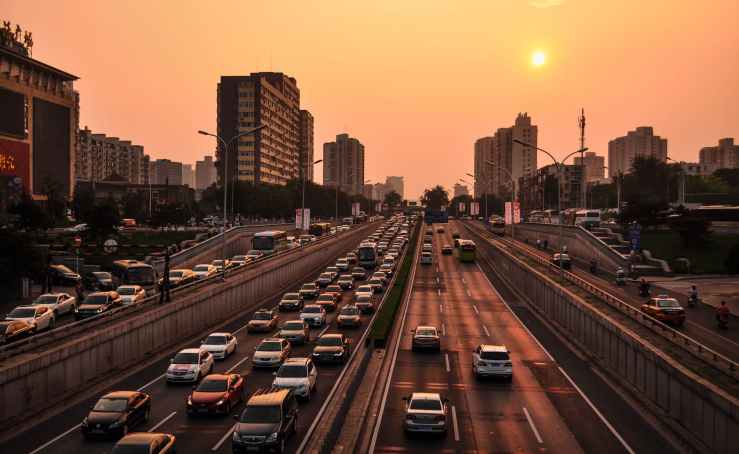
After spending a full day at work, the remaining time we have left is divided up by tasks and chores. A trip to the grocery store, the bank, the gas station, or any other place that we need to go to before we drive home. It always takes longer than we expect. Not to mention the time it takes to drive to those places, and the time added on to the commute because of traffic. And once we get home, it takes time to make dinner, time to eat it, time to clean it up, and then time to relax, exercise or watch TV.

After all is said and done, is there still time left to read? It takes energy and focus to read. Reading requires having enough time to immerse ourselves into the story, for our imagination to bring the sentences on the pages to life. It can’t be rushed, can’t be skimmed over as if we’re trying to finish up a book report for a literature class. We need to take our time with a book–let the book take shape in our minds.

Busyness can consume us, and make us focus on finishing things rather than enjoying the time we have left before going to bed. Reading, on the other hand, is more about the experience, of letting our imagination take us to another place, another world. When we don’t give ourselves enough time to read, we can lose ourselves in every day tasks and chores, forgetting that there is a world out there beyond every day things.