Lordins of Fire

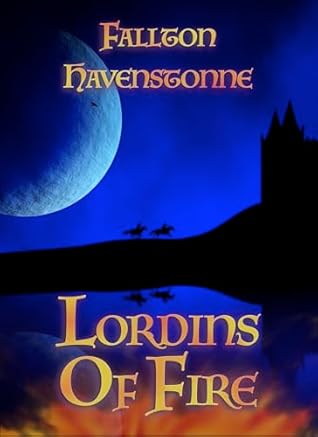
On August 13th, 2025, my newest novel, Lordins of Fire, will be released on Amazon. It will be available on both Kindle and paperback.

Lordins of Fire is a fantasy novel set in a world in which sorcerers, called Lordins, have conquered most of the lands, and the sapients (humans), are trying to stop them from seizing the last two kingdoms. The story begins with a knight named Ryder, and his team of allies, who are part of the Royal Guard. Their mission is to protect the royal family, but soon, things take a turn for the worse, and Ryder must venture off into treacherous territory to survive.

Lordins of Fire is filled with adventure where the characters are faced with various obstacles to overcome, including powerful enemies and harsh landscapes.

I had a lot of fun writing Lordins of Fire, especially with the world-building aspect, and developing the characters and kingdoms. It was also exciting to see how the characters would handle certain situations, and how they evolved throughout the course of the story.

I have also created a Goodreads Giveaway for the book, and have included the link below.

Goodreads Book Giveaway

Lordins of Fire by Fallton Havenstonne

Lordins of Fire

by Fallton Havenstonne

Giveaway ends August 13, 2025.

Enter Giveaway

I hope you enjoy the novel. Happy Reading!

Finishing Books

Photo by Heather McKeen on Pexels.com

One of the challenges with reading a book is finishing it. When starting a book, it’s fun and exciting to explore the world brought to life by the pages. But as the days pass and we try to progress, things can get in the way. Chores, obligations, work, tiredness, etc. Then when we return to that book, it’s all that more challenging to finish.

I try to stick to a rule where I read a certain number of pages/chapter(s) a day. If I find myself unable to meet the goal, I will adjust the page/chapter count to make it more manageable. Using a book app that measures your reading progress can be helpful, as well. After you’ve reached your goal, you can either keep reading or stop. I find this helpful as a way not just to measure my progress, but to encourage me to read each day.

Recommended Books

When someone recommends a book to me, I’m more inclined to read it than if I came across the book in a digital catalogue. It’s different than reading a book review, too, since there is more conviction when someone says you you ought to read a book. Or if they personally give me a book to read, it carries more weight, like they want to pass it along where it can inspire a new reader.

At times, that book might sit around for years on the shelf until it finds its way into my “to read” list. Sitting on the shelf, collecting dust, until finally, the pages come to life.

But if the book ends up sitting on my shelf again (after reading it), I might explore the works of that writer, who might even become one of my favorite authors to read.

1 Chapter

Photo by Pixabay on Pexels.com

I’ve made it a goal to read at least one chapter a day. I’ll read more if I can, but on days where I’m busy or am too tired to read, this goal has kept me on track with finishing books that I would otherwise not finish.

This would assume that the number of chapters determines the number of days it’d take to complete a book. 20 chapters means 20 days. 40 chapters means 40 days, etc. To the contrary, I often finish books much sooner. Why, you might ask?

I’ll challenge myself to read further ahead, reading 2 or more chapters if I’m really immersed in the story. Once I’m near the end, I’ll read the last 30-40 pages or so without taking a break, even if there are more chapters ahead. It’s a great feeling to finish a book early, since there’s more time to read other books.

I made this rule for myself because, so often, I wouldn’t read from time to time, and that would stretch out to weeks or months, resulting in me not finishing books (only completing them halfway, for example). By following this simple rule, it has helped me to finish books, regardless of how long they are, or how long it would take to read them.

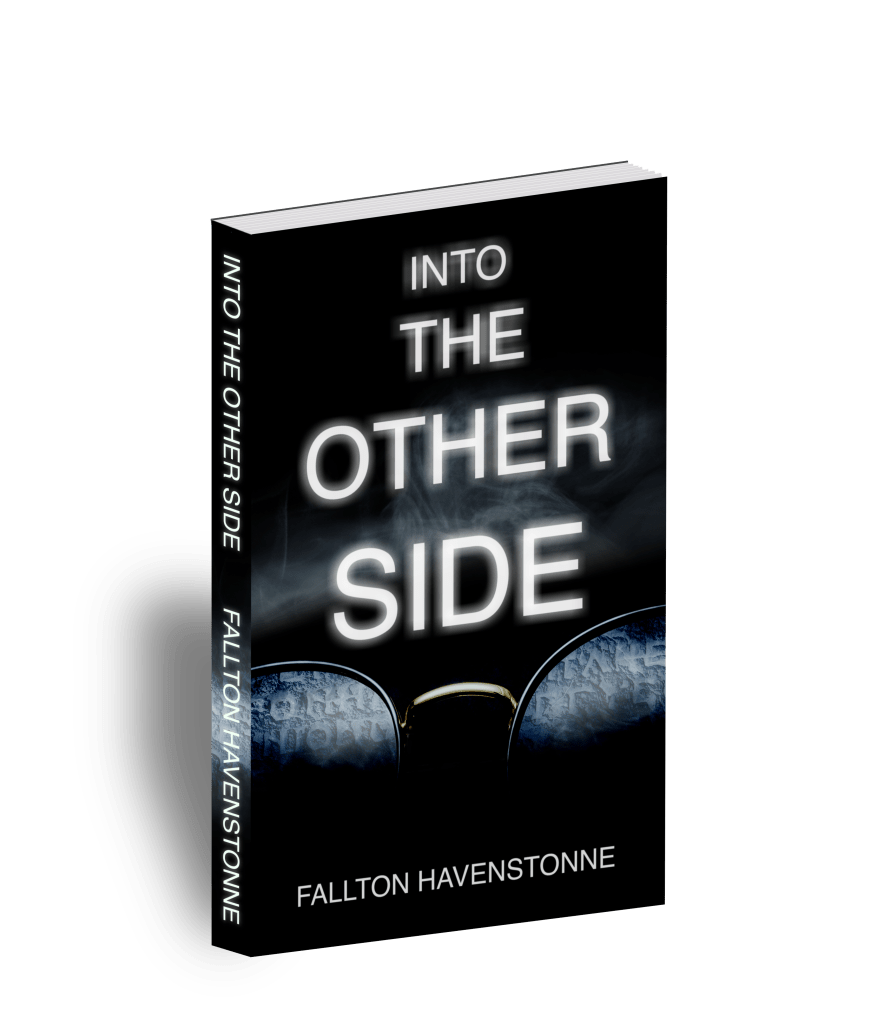
Into The Other Side

My newest novel, Into The Other Side, will be available on Amazon on March 1st, 2025.

What would happen if there was a world hidden within our own, holding back creatures that want to invade our reality?

That’s what Into The Other Side explores. It is a novel that follows a drama professor named Phaedra, who finds a pair of sunglasses that allows her to see strange, monstrous creatures whenever she removes them from her eyes. Nobody else can see the creatures except her, leaving her to face them on her own. As the creatures wreak havoc, she must find a way to stop them, or else break the curse affecting her eyes!

I wrote Into The Other Side last year on a typewriter, which was my first time completing a novel on one. It was a lengthy process, and it took some getting used to, especially the clacky sounds that echoed off the walls, not to mention that I could type much faster on the computer. But the patience required to type on a typewriter allowed me to think about every sentence and word I wrote, since it required effort/force to press the keys firmly enough for the ink show up on the page.

Below you can find the link to the Goodreads Book Giveaway for the book. The print and ebook versions of Into The Other Side will be available on March 1st, 2025 if you want to get a copy before or after the giveaway ends (March 4th).

Thank you for visiting, and I hope you enjoy the story!

Happy reading!

Goodreads Book Giveaway

Into The Other Side by Fallton Havenstonne

Into The Other Side

by Fallton Havenstonne

Giveaway ends March 04, 2025.

See the giveaway details at Goodreads.

Enter Giveaway

The Sea Rescuers – Reflections

I’m excited for the Kindle release of The Sea Rescuers tomorrow. The paperback version for it will be available on September 16th.

The novel started off as a short story, but as I wrote it, the story grew, and it soon expanded to different locations with new characters and world-building elements that took on a life of its own. It was one of those stories where each time I worked on it, I saw something new that I didn’t see before. It was a story I had a lot of fun with, since I imagined it very much like a movie, and I wanted to capture each scene emotionally and visually with words.

There is also humor sprinkled throughout the story, and a lot of research went into the sea creatures, as well as the technology of ships and vessels. I find that with each story I write, I learn a lot in my research as if I were working on a nonfiction book. It makes you appreciate the different fields that are out there, and how much there is to learn about the world.

What I learned the most while writing The Sea Rescuers was to stay true to your vision and to be persistent in completing a story you’ve started. There were times when I was exhausted, times when I wasn’t sure if I would finish the novel. But then it occurred to me that a story won’t finish by itself, and I have to put the time in to complete it, or else, it’ll remain an unfinished work.

I wrote The Sea Rescuers in the spirit of an adventure story, and so it has many suspenseful moments, and includes twists and turns that keeps the characters on their toes. In addition to these aspects, the story explores themes about the environment and biotechnology. One of the great things about literature is that it not only entertain us and gets us turning to the next page, but it can make us think long after we’ve finished reading a book.

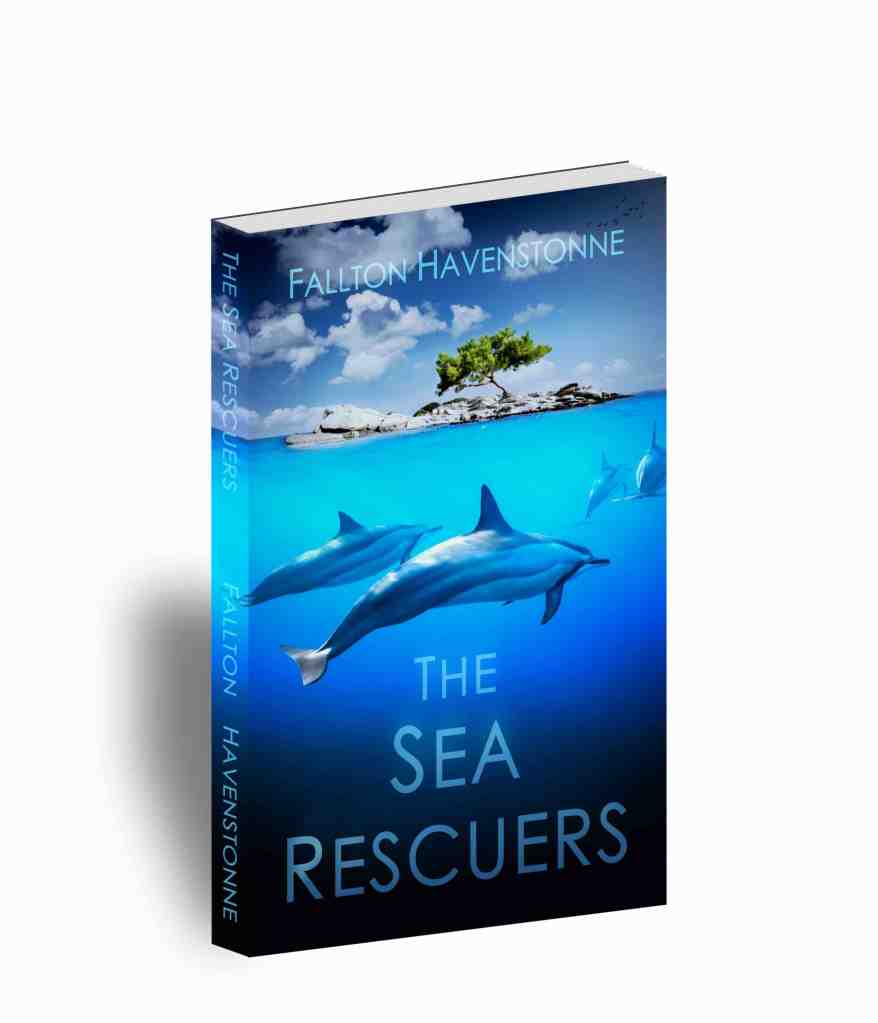
The Sea Rescuers

My newest novel, The Sea Rescuers, will be available on September 10th, 2024 on Amazon. Sometime after that, the print version will be available for sale.

The Sea Rescuers is a science fiction story that begins with a shipwreck on a deserted island, leaving two people stranded. For the next several days, they explore the island to find food and resources while salvaging supplies from the shipwreck. Day by day, they become more adept at survival, making use of the sea and jungle to acquire food. But the island is rife with danger, and they must find a way off after a close-call encounter, or else, figure out how to survive until help arrives.

As the story progresses, the twists and turns lead to new adventures for the characters, where they face off against vicious creatures. In the process, the story explores themes such as biotechnology, and humanity’s relationship with the environment, marine animals, and so on.

I had a lot of fun writing this novel, and with each draft, I felt like I was uncovering new facets of the world, story, and characters. It’s probably my most optimistic and hopeful story of all the ones I’ve written. In the end, it’s a story about choice, and how making better choices will make the world a better place.

I hope you enjoy The Sea Rescuers and have a lot of fun reading it!

Miscalculation

Photo by Pixabay on Pexels.com

When our plans go awry, we know we totally miscalculated. We could’ve spent hours or days planning each step of the way, or each event from minute to minute, hour to hour, such as the iteanrry of a vacation, or the roads to take on our way to a restaurant or movie theater, only for something unexpected to happen.

It could be a traffic jam, a roadblock, roadside construction, something we forgot at home when we left, or even the weather. In our mind, each step was logically planned out, exact, working out perfectly within the stratosphere of our thoughts. But in reality, a thousand missteps could happen, making our plans seem trivial or not as thorough as we initially thought.

The same could be said of many things, such as the game of chess, a DIY project, or when we’re creating art (i.e. technology not working, or the scenes in a story we’re writing contradicting each other). Human error, we call it. But when they happen, we just have to learn from it.

Save As

Photo by Pixabay on Pexels.com

It’s disastrous when your document is lost because it wasn’t saved. All that work, all that time flushed down the toilet because the “save as” command wasn’t clicked.

Even though I learned in school to always save your work every few minutes, there’s a part of me that wants to keep typing without having to pause and click “save as” when I start a document. It’s like pausing for even a second would be slamming down on the brakes, and to resume and pick up where I left off at would be almost impossible.

Being in the zone is where I want to be when I write. But when I am in the zone, I forget to save the work, and like all unfortunate events that can happen on the computer, something awful can happen out of nowhere: the computer freezes, the power can go out, or the program itself crashes. You’re left staring at a blank screen, realizing that all that hard work has been lost, like it had been written in the sand and the wind blew it away.

Keyboard

Photo by Pixabay on Pexels.com

In my last post, I wrote about the differences between pencils and pens, but is it fair to say that they’ve been supplanted by the keyboard? Besides, a person can write (type, to be accurate) much faster on a keyboard than with a pen or pencil, and to draw on the computer has limitless possibilities–depending on the software and tools, of course.

For example, when writing with a pencil or pen, it takes time to write each letter and word, and editing can be laborious, tedious. But on a word processor, the words can zip by depending on how fast one types. Formatting and spellchecking take just a couple clicks on the mouse, and the same could be said of changing the font, text size, and spacing. Even words, names, and phrases can be replaced throughout the entire document without having to leaf through dozens of pages to find the exact words or phrases.

And when editing, comments and changes can be saved onto the document in real time and shared with other people through email or if they have access to the same document. In fact, digital writing, editing and graphic design has made all the laborious work of the past, which took hours and even days to finish, streamlined to the point where a few clicks can get the job done.

Despite all the advantages that computers and electronic devices have to offer, many people still return to doing work on paper with either a pencil or pen. Even though the final product can be done on the computer, there is something about the experience with writing/drawing on paper that is unique and personal, since it is direct and tactile.

It’s something that digital technology cannot replace, since it resonates with that part of our human experience where we need to be directly connected with the creative process, of fashioning and making things with our hands in the same way a sculptor or a painter directly applies paint to a canvas with a brush. It’s as if the pixels on a screen that represent our art or story is subpar compared to it being held in our hand on a canvas, or when it’s in a physical format, such as a hardcover or paperback book. In a way, it’s not enough for it to be 2D, but 3D.