

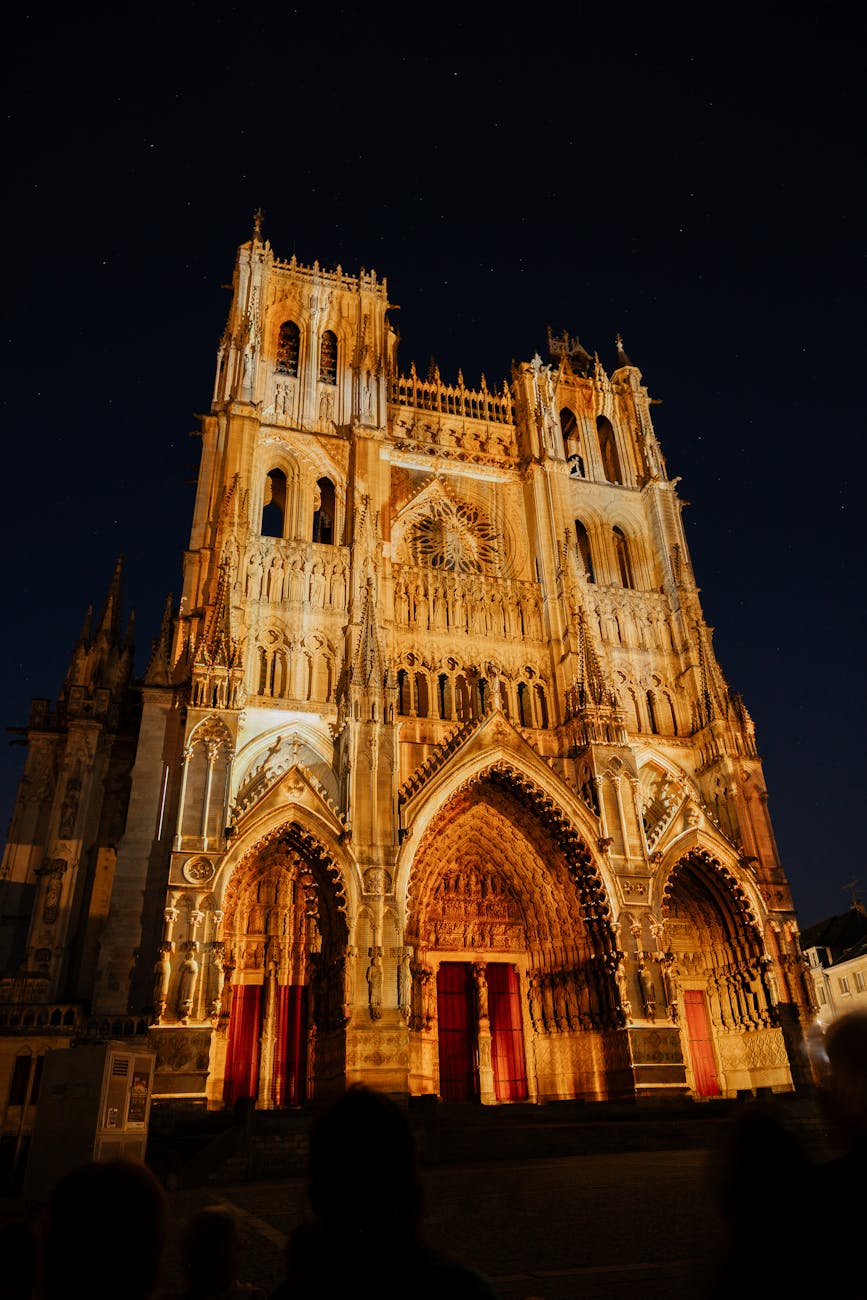
The Hunchback of Notre Dame, by Victor Hugo, published in 1830, is a tragedy of epic proportions. Set during the late 15th century in Paris, its narrative follows a cast of diverse characters, including the poet Gringoire (who we meet at the beginning), the archdeacon Claude Frollo, the hunchback Quasimodo (his adopted son), a captain of the archers, Phoebus, and the heroine, Esmeralda.
The book is a cross between fiction and nonfiction, as Victor Hugo will digress to describe the history of 15th century Europe (particularly France), gives us insight into the construction of Notre Dame, and even give his take on the history of architecture. In one chapter, he gives a thorough analysis of how the printing press (books) would supplant architecture as the dispenser of art and culture, since before its advent, buildings were not just a place of shelter, but brought together artisans, builders, sculptors, etc., to convey their vision and values. Thus, as you read, you have an understanding of the cultural and geographical climate of that day, which transports you into the time of the story.
The main plot of the novel is that the archdeacon, Claude Frollo, has set his sights on Esmeralda, a street performer who jingles the tambourines, aided by her sidekick, a goat named Djali, who can spell out words with lettered blocks and communicate what day of the month it is (as part of its act). Claude Frollo lives in the cathedral of Notre Dame, along with Quasimodo, who is a bell ringer that is deaf and blind in one eye. Esmeralda, like Quasimodo, is adopted, but has went off on her own way to find her mother, since she was taken away from her at four months old.
One night, Esmeralda is chased by two dark figures who try to take her, but is rescued by Phoebus, the captain of the archers. From there, she’s smitten by him, while he, though betrothed to someone else, is smitten by her as well. Quasimodo, caught by the captain and his guards (though Claude Frollo got away), is sentenced to be flogged (ironically enough, by a deaf judge who bears no sympathy toward him). After the flogging, and after rocks are hurled at him by the crowd, who detest his appearance (i.e., his sunken neck and bowed legs), Esmeralda gives him water to drink–the only moment of kindness he ever experienced in his life.
But Claude Frollo is not done yet, and throughout the story, he plots to take Esmeralda again and again, and at every attempt, tells her he can save her (such as when she’s thrown into prison), or else leave her to the gallows. But because of his selfish and malicious schemes, many of the characters’ lives fall into shambles, leading to a very tragic ending.
But there is a moment, after Esmeralda is rescued by Quasimodo from the executioners, where she is staying in the tower of Notre Dame, that we see Quasimodo almost like a superhero. At night, convinced that they are doing the right thing, truands swarm the streets of Paris trying to break into the cathedral. In this moment, the prowess and larger-than life qualities of Quasimodo come to life (perhaps for readers at that time, it would be like reading the marvel character Hulk).
The book is a powerhouse of visuals and metaphors, and while reading it, I learned a lot about the history of France, and what the harshness of those times were like (i.e. the merciless sentences and executions, the poor prison conditions, the impoverishment people faced, etc.). Though it is a tragic tale, it is also riveting and emotional, and I found myself engrossed in the characters and plot, often visualizing the scenes as if they were from a movie without wanting to put the book down.
 Fallton Havenstonne