
The Picture of Dorian Gray – Book Review

Photo by Pixabay on Pexels.com

The Picture of Dorian Gray, written by Oscar Wilde, published in 1890, is a fascinating tale about a man who makes a bargain with his soul. The protagonist, Dorian Gray, has his portrait painted by a friend, Basil, who introduces him to Lord Henry, an aristocratic man whose quips and epigrams are enough to fill a book. Dorian ends up keeping the painting for himself, and makes a wish that he will not age in years.

One night he brings his friends with him to see a play at the theatre where his betroth, Sibyl, plays a part in a Shakespearean play. But mid-way through, his friends are disappointed by it and end up leaving early. As a result, Dorian breaks off his engagement with her, and without spoiling what happens next, he discovers subtle changes in his portrait. In fact, each time he falls into wrongdoing, the portrait takes the brunt of it, turning more grim and unsightly overtime.

And with the influence of his friend Lord Henry, Dorian embraces a life where he casts aside all responsibility for the sake of his own happiness. No matter the imprudence or what wrongs he does, he bears none of the consequences, since the portrait is affected instead. But it isn’t long before he goes too far, leading him to look over his shoulder at all times.

The Picture of Dorian Gray is a remarkable novel not only thematically, but in prose, style, and plot. It’s a story that explores the psychological depths of a person who casts aside all responsibility for the sake of his own ego. The novel is a careful character study of an individual who bargains wit his soul, and it contains great suspense and tension throughout as others become affected by his wrongdoings, leading to a dissolution of his world and social circle.

The Secret Garden – Book Review

Photo by Pixabay on Pexels.com

The Secret Garden, by Francis Hodgson Burnett, published in 1911, is a story about a girl named Mary Lennox, who leaves her home in India after an outbreak of cholera (which her parents did not recover from), and is sent to her uncle’s estate in England. There, she explores a mysterious mansion, watched and tended by Mrs. Medlock, and the groundskeeper, Ben Weatherstaff, where rooms are forbidden and shut, and a ‘secret garden’ is closed off, with seemingly no entryway.

It is a story with many twists and turns, as Mary peels away the layers of the mystery of her uncle’s life (Mr. Craven), the mansion, the grounds, the ‘secret garden,’ and why it has been kept hidden. While she explores the estate, she befriends the family neighbors (the Sowerbys) who introduce her to the beauty of nature and gardening, and those other secrets which her uncle has kept hidden inside the mansion (no spoilers in this review).

The first half of the book has the reader exploring the mansion with Mary as she becomes familiar with the grounds, and learns about the other characters, as well as her family’s history. By the second half, as the mystery of her uncle’s past unravels, Mary begins to learn, through the restoring of the secret garden, how life can either be hindered, or it can flourish, when the old schemas of doubt and fear are cast away, and an outlook of hope and aspiration take shape.

When I first began reading The Secret Garden, I wasn’t sure how the story would unfold, but as a I read, it was like piecing together clues to a mystery that revealed why the characters in the mansion were so gloomy and despondent. By the end, it became clear how powerful certain beliefs can sour pessimism in our outlook, and that the only way to move forward is to face the sorrow and grief with courage and hope of the future.

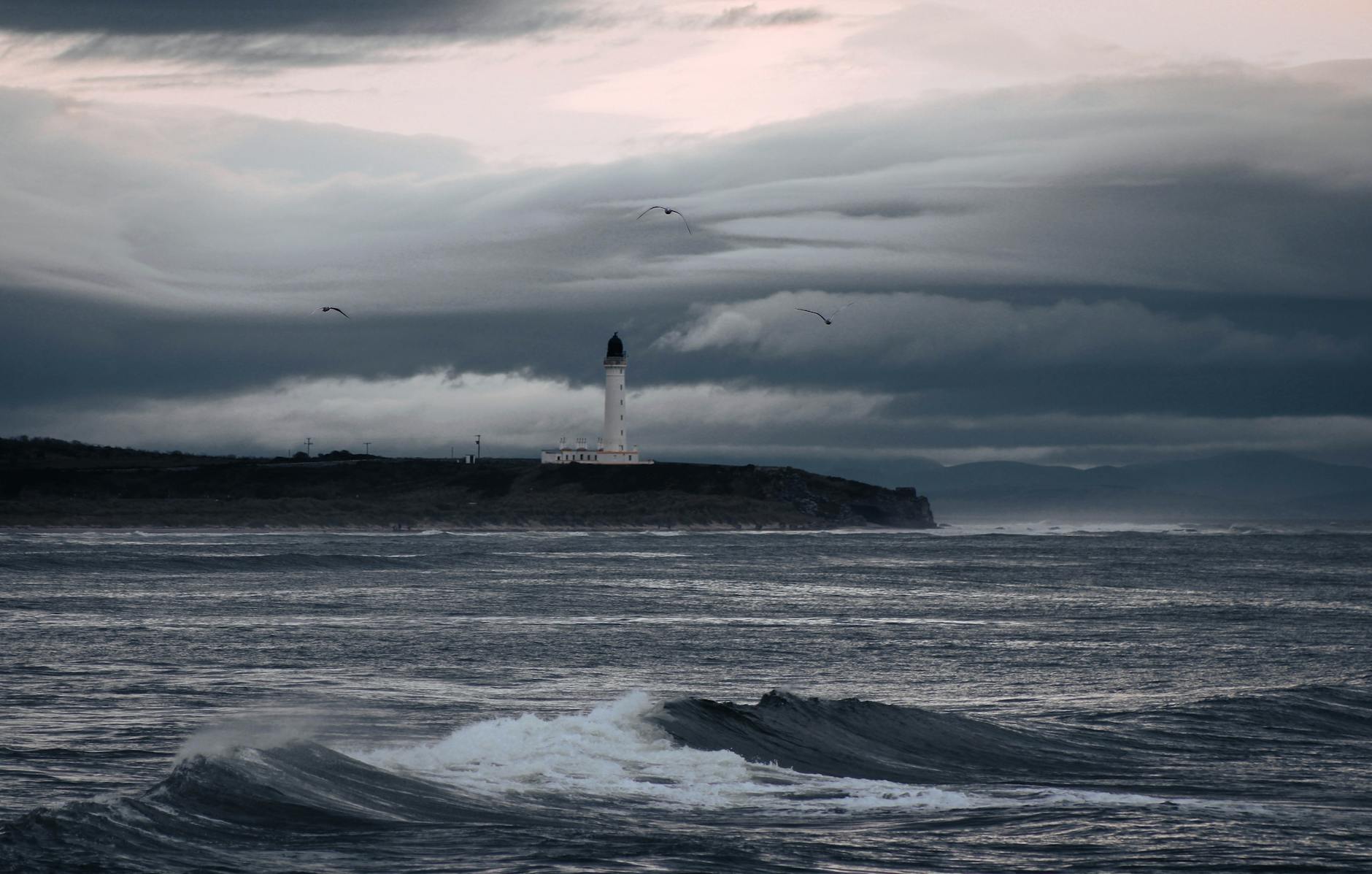
To the Lighthouse – Book Review

Photo by Timothy Reid on Pexels.com

To the Lighthouse, written by Virginia Wolfe, published in 1927, is a story that explores the family dynamics within the Ramsey household at their residence on an island in Scotland. A book that explores the thoughts and feelings of its characters, including Mr. and Mrs. Ramsey, their eight children, the guests of their house: Mr. Bankes, Ms. Briscoe, Mr. Tansley, Mr. Carmichael, Paul, etc., and the tensions that stir quietly in their minds.

For example, Mr. Ramsey is always pondering whether his books will be remembered, and Mrs. Ramsey wanting to go to the lighthouse despite opposition from her husband, and their guests view of them and everything else. It’s a novel that seems fleeting in the way it passes from one character’s thoughts to another. It upends that writer’s rule where authors are told to restrict a point of view to one character. Instead, the author leaps from one to the next as, for example, a scene during a meal where Minta mentions losing her grandmother’s brooch at the beach, and while she’s preoccupied with wanting to find it with Paul, Mr. Ramsey is fixated on himself, and the others on one thing or another.

The second part of the book is my favorite where it shows the passing of time through the personification of the house. How after it is abandoned, time erodes its walls and floors, and we discover what had become of the characters (especially with the onset of World War 1). The final act has some of the main characters returning to the house with a scene that juxtaposes Ms. Briscoe working on a painting, while Mr. Ramsey and two of his children make their way to the lighthouse by rowboat, with a dynamic that is far tenser than the first act.

If one is expecting to read this novel hoping for a plot-driven narrative with something dire at stake, this is not it. Rather, it is a novel that is introspective in fascinating ways, and through poetic prose, explores thoughts as if they were like paint on canvas moving through rivers of emotions and dreams.