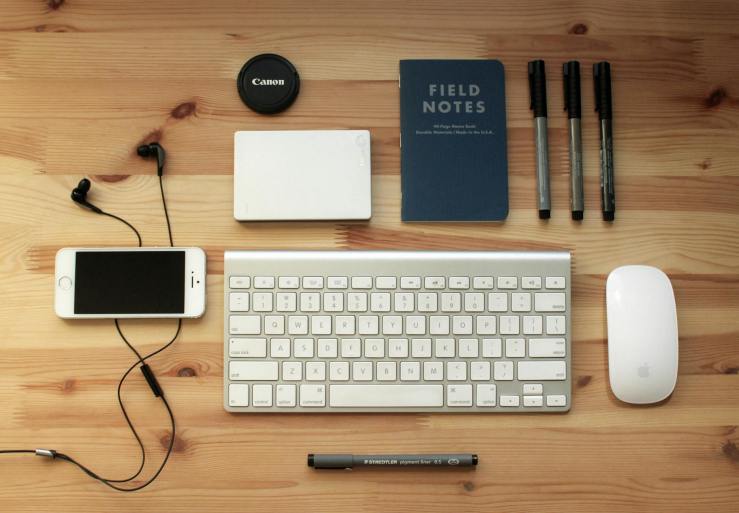
In my last post, I wrote about the differences between pencils and pens, but is it fair to say that they’ve been supplanted by the keyboard? Besides, a person can write (type, to be accurate) much faster on a keyboard than with a pen or pencil, and to draw on the computer has limitless possibilities–depending on the software and tools, of course.
For example, when writing with a pencil or pen, it takes time to write each letter and word, and editing can be laborious, tedious. But on a word processor, the words can zip by depending on how fast one types. Formatting and spellchecking take just a couple clicks on the mouse, and the same could be said of changing the font, text size, and spacing. Even words, names, and phrases can be replaced throughout the entire document without having to leaf through dozens of pages to find the exact words or phrases.
And when editing, comments and changes can be saved onto the document in real time and shared with other people through email or if they have access to the same document. In fact, digital writing, editing and graphic design has made all the laborious work of the past, which took hours and even days to finish, streamlined to the point where a few clicks can get the job done.
Despite all the advantages that computers and electronic devices have to offer, many people still return to doing work on paper with either a pencil or pen. Even though the final product can be done on the computer, there is something about the experience with writing/drawing on paper that is unique and personal, since it is direct and tactile.
It’s something that digital technology cannot replace, since it resonates with that part of our human experience where we need to be directly connected with the creative process, of fashioning and making things with our hands in the same way a sculptor or a painter directly applies paint to a canvas with a brush. It’s as if the pixels on a screen that represent our art or story is subpar compared to it being held in our hand on a canvas, or when it’s in a physical format, such as a hardcover or paperback book. In a way, it’s not enough for it to be 2D, but 3D.

 Fallton Havenstonne