What to Focus On

It can be hard to focus on one discipline when so many appeal to us. It’s like an artist trying to specialize in two or three mediums of art and realizing that there isn’t enough time to become an expert in all of them. Each one requires time and dedication, mastery and practice. It’s not enough to try it for a month or two or take on a project on the weekend. It takes years of continuous work to really develop the skills for it, to understand the principles, to become good at it.

When we limit ourselves to one discipline, however, it can be monotonous after awhile. We need variation, new challenges and ideas to explore. Each discipline and field offers that, but the hard part is in selecting which one to focus on, which one to put most (or all) of our time in. We don’t want to be in a position where we look back ten or twenty years later and wonder why we didn’t try something else, why we didn’t pursue plan B instead. Besides, our choices are limited by time, and whatever we choose will set us on a path that is marked by twists and turns and unexpected surprises.

Posted in Art

Wide Awake

Photo by Micah Boerma on Pexels.com

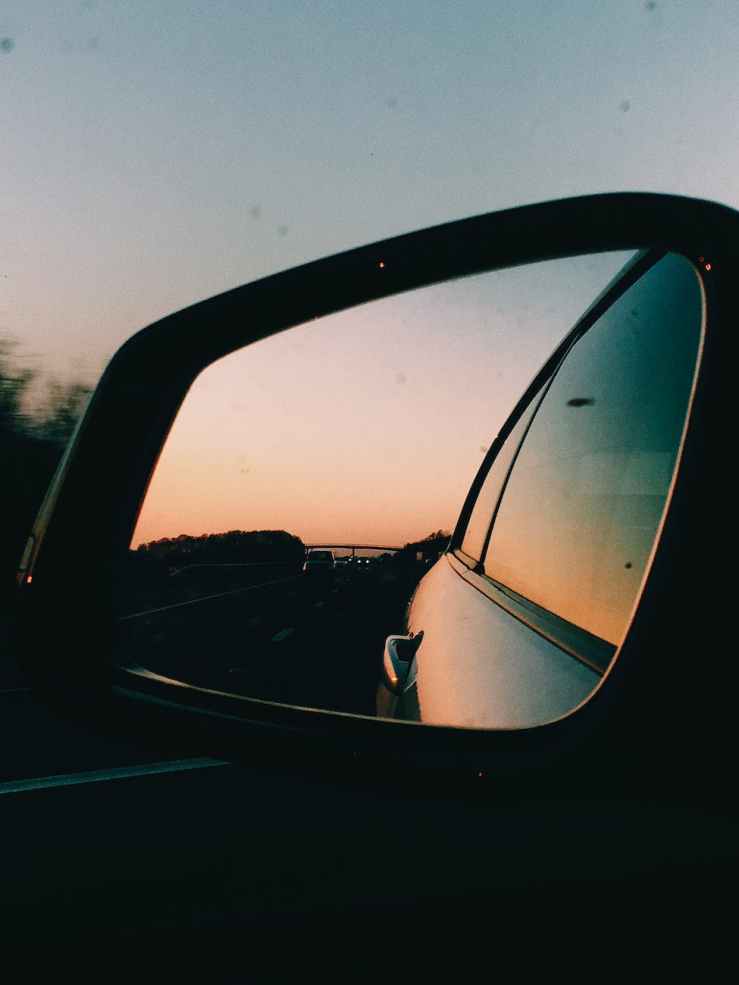
Have you ever woken up earlier than usual and you’re wide awake? It’s like you already had one or two cups of coffee, and you’re fully alert, ready to start the day. When you normally wake up, you’re tired, yawning, reflexively hitting the snooze button when the alarm sounds, but this time, it’s as if you’ve been awake the whole time.

Mornings like this are great, since it takes half the time to get ready for work, to pack lunch, and leave. On mornings like this, I can get to work half an hour or an hour early if I wanted to. It feels like I’ve woken up before everyone else has, since it’s still dark outside, and knowing that I have extra time to write or read or organize if I wanted to.

But it makes me wonder if this will catch up with me later on in the week. Will I wake up the next morning feeling tired and listless, having no energy left from the day before?

These wide awake mornings are random, unpredictable. Even if I’ve barely gotten any sleep that evening, I’d be completely alert that morning, and won’t even need breakfast or coffee to boost my energy. On these kinds of mornings, which are few and far between, I don’t want to go back to sleep, because if I do, I’ll lose the chance of getting ahead on the day. And on most days, it’s like I’m just going with the rhythm, going with the flow, rather than defining them on my own terms.

Close Call

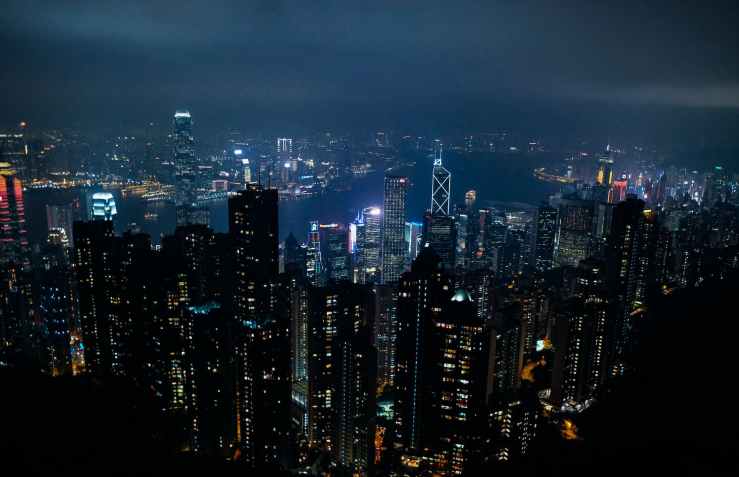
Photo by Harry Cooke on Pexels.com

I was filling up my car when an SUV pulled up in front of me to use the adjacent gas pump. It’s one of those gas stations where there are lanes with gas pumps on each side. I began to feel anxious once I noticed that they parked at least two or three feet away from the nozzle (why people do this, it completely baffles me). This meant that when it was time for me to leave, I’d have to squeeze by their SUV and the SUV across from them, which was about five or six feet apart.

This was around rush hour, mind you, so the place was really busy. When my gas pump clicked, I replaced the nozzle and got in my car. I turned it on and noticed that there was barely enough room for me to squeeze pass them, but I didn’t want to wait another four or five minutes until the person in front of me left. The optimist in me believed that I could make it, so I pulled out of my spot and steered right to go between them.

As I inched closer toward their vehicles, I realized that I was was almost door to door with them, trapped in a sort of bottleneck. I started to panic, and when I realize I might not be able to squeeze by, I craned my head around to back up.

Suddenly, a car pulled up to the gas pump that I was at. And then another car pulled up behind me (a smaller one) that wanted to squeeze by the narrow pass I was right in the middle of.

I was somewhat shocked by the situation I found myself in. I had to make a decision to either take a chance and drive between the two SUVs without brushing against their doors, or to wait until one of them left. It was one of those moments where I felt like everything wrong that could happen happened. A frustrating moment where I felt like I should’ve been more patient and waited until the SUV in front of me left rather than to take this risk.

In the seconds that past, I decided to drive passed the two SUVs, moving at a snail’s pace, carefully eyeing how close my side mirrors were to theirs. As soon as the nose of my car passed theirs with just inches (or centimeters) between our doors, I started to pick up the pace, darting out from the bottleneck. I started to shake my head in frustration as I did so, knowing that this was too close of a call, that things could’ve went awry if I had scraped both of their SUVS.

As soon as the tail end of my car exited the narrow pass, which was barely the width of a parking spot, I turned sharply and left the gas station in relief. On the way home, however, I couldn’t help but think how close of a call that was, and criticized my decision to drive between the SUVs. The fact that someone pulled into my spot, preventing me from backing up, and that a car pulled up behind me, made the situation only worse. A perfect storm, the saying goes.

During the drive home, I realized that the way we visualize (or imagine) a situation in our minds can go astray in reality. My decision to pass the SUVs was based on the assumption that it was possible when in fact, it was, but extremely risky. Perhaps I thought that there was more than enough room between the vehicles than there really was. But the opposite can be true, where we imagine a situation to be risky or impossible when it really isn’t.

I think the close calls that our minds see and our eyes see are two different things. We make judgments and decisions based on them, and they’re not always perfect, and we’re continually trying to make better decisions based on what worked or didn’t work in the past. We’d like for our minds and senses to be in congruence, but whereas the former can imagine the extraordinary and the impossible, the senses is grounded in the ordinary and the possible. In my case, it was like my mind had to catch up with my senses, realizing, too late, that it had miscalculated (or overlooked) the risk.
Symmetry

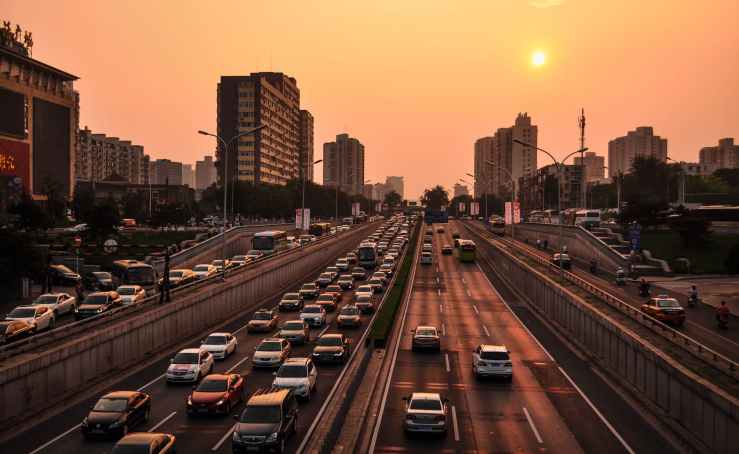
Photo by Patricia Lazaro on Pexels.com

Symmetry is essential in math, since it is requisite in equations, graphs, and the laws of logic. Mathematicians can build an entire universe with them, a gigantic pyramid of formulas and equations and knowledge that is certain and unequivocal. But the way this world is viewed doesn’t always correspond to the world we live in, especially since the latter can seem so chaotic and unpredictable at times.

When we look at a building or artwork that is hung in a gallery, they need to be leveled, symmetrical, and centered. We’d prefer things to be that way because it makes sense in our minds, and because of real world applications. If one picture is slightly lower than another, we notice it right away. If a building is not perfectly flat (leveled), we know that things will start to roll on the floor.

When we see something that is off centered or uneven, we want to fix it, since it gives us the impression that there is a tad bit of disorder and uncertainty about it. This way of looking at things can have application in our everyday lives, such as the lines on the road, the way a tree is planted, or the piles of papers and office supplies that are on our desk.

Perhaps the idea that everything needs to be symmetrical has to do with the way we see an ideal world, a world which is geometric and orderly. But the world we live in isn’t exactly that, and in some cases, the imperfections we notice might be the way things are supposed to be, since nature’s rules aren’t always in accord with our own.

Always Something More

No matter how much we have, there is always something more that we can get. The things we’ve obtained start to lose their magic after awhile, and we yearn for something else to replace them, or at least, to keep the magic alive.

Even if we have everything we need, it’s easy to make a list of what we don’t have. It’s as if there’s always empty space on our shelves, space that’s waiting to be filled by something new, something unique. Even if we’ve acquired everything on our checklist, we can find other areas of our lives that we can have more of, whether that be clothes, extra supplies, collectibles, etc.

It can ever occur once we’ve reached capacity. We’ll figure out ways to make more space, rearrange things, fit them somewhere. At some point, our want of something new will convince us to get rid of our old things. Or we might grow bored with them, and start to reorganize or downsize our stuff. But even so, that call for something more continues to linger in our thoughts, and we must choose whether to listen to it or not.

Time to Read

Photo by Pixabay on Pexels.com

After spending a full day at work, the remaining time we have left is divided up by tasks and chores. A trip to the grocery store, the bank, the gas station, or any other place that we need to go to before we drive home. It always takes longer than we expect. Not to mention the time it takes to drive to those places, and the time added on to the commute because of traffic. And once we get home, it takes time to make dinner, time to eat it, time to clean it up, and then time to relax, exercise or watch TV.

After all is said and done, is there still time left to read? It takes energy and focus to read. Reading requires having enough time to immerse ourselves into the story, for our imagination to bring the sentences on the pages to life. It can’t be rushed, can’t be skimmed over as if we’re trying to finish up a book report for a literature class. We need to take our time with a book–let the book take shape in our minds.

Busyness can consume us, and make us focus on finishing things rather than enjoying the time we have left before going to bed. Reading, on the other hand, is more about the experience, of letting our imagination take us to another place, another world. When we don’t give ourselves enough time to read, we can lose ourselves in every day tasks and chores, forgetting that there is a world out there beyond every day things.

Forget

Has there been a time when you’ve forgotten basic information about yourself? Basic information like your phone number, address, birthdate, or email? It’s strange when it happens. It’s as if you don’t know who you are anymore, and that you’ve been living a life that you thought was yours.

I was at the store and when I went to the checkout line, the cashier asked me what my phone number was to pull up my membership . As soon as I tried to enter it on the keypad, I completely forgot it. I stood there for a moment, sifting through numbers in my mind, looking like I was doing mental math for a ten-step equation, but all I could come up with was other people’s phone numbers. It was like my brain had lost my own number, and the only way to retrieve it was to ask someone else who knew it.

Sometimes I think it’s the pressure that comes from having to recall something on the spot. I would’ve been able to type it if I was relaxed and could enter it at my own pace. But under pressure, everything locks up, and my brain is stuck, unable to function properly. I couldn’t remember my number no matter how hard I tried to think of it. Obviously, I know my number by heart, and I’ve written it down countless times on forms and documents. I’ve even told it to people time and time again, saying it without even thinking of it, so I should know it without hesitation.

But for whatever reason at that moment, I failed to recall it. The cashier might as well ask me the latitude and longitude of my address. I would’ve looked as perplexed as when I couldn’t remember my number.

And then moments later, after I had left the store and entered my car, I looked up my number on my phone and felt silly for not knowing it earlier. Why did my brain have a lapse when my number was so obvious to me? Was I aloof? Was I tired? Was my brain unable to make the synaptic connections to retrieve the data because of some misfire or it not working at all?

It could be a number of reasons. But one thing is clear: when we forget something that’s so basic and obvious to us, it’s like being a character in a movie that has forgotten their identity, forgotten where they live at and what their name is, and everyone’s expecting them to be themselves.

After The Fact

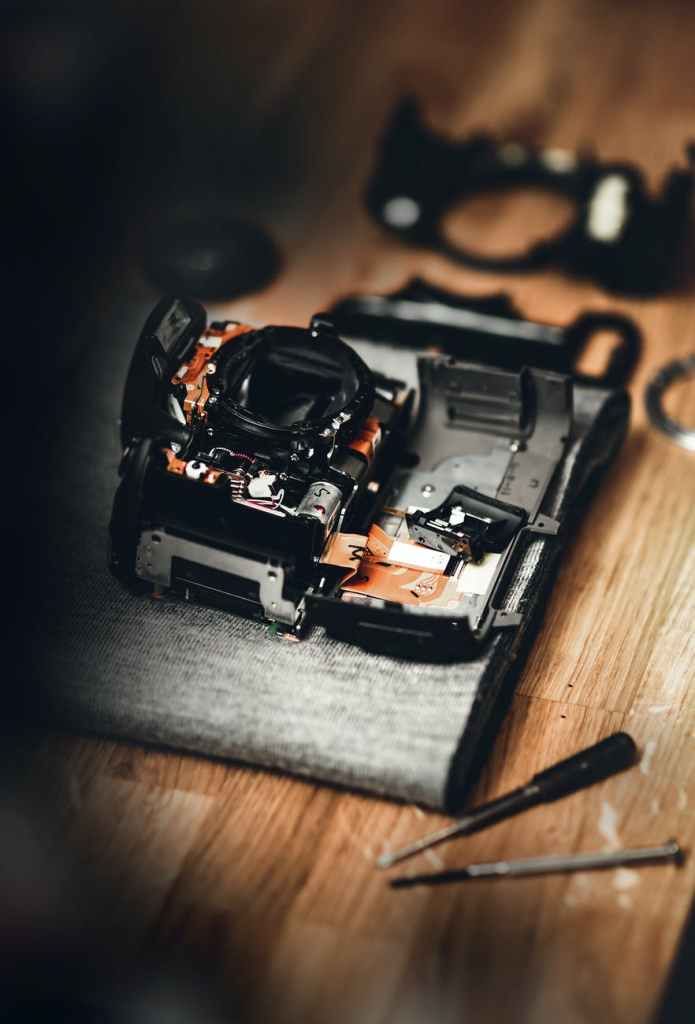
Photo by Alex Andrews on Pexels.com

It is only after the fact do we realize what the right answer was, the decision we should’ve made. There is a lesson to be learned after the fact. It’s different from someone telling us that we’re wrong, or seeing an X beside a question that we got incorrect on a test or a quiz. It’s the type of learning experience where we have to admit to ourselves that we were wrong, because if we didn’t, we would go about our lives with something that can’t be used or that would cause problems later down the road.

For example, if we build or install something that isn’t leveled, could we live with it knowing that it’s crooked? If something is assembled incorrectly or in the wrong way, how could it be functional or of use to us? In order to fix it, we’d have to start over or find where the mistake was. What we thought was correct was actually incongruent to the outcome we expected–something we could only spot after the fact.

Sometimes we look at our mistakes as something we should’ve already known rather than something that is to be learned after the fact. But we should keep in mind that the right answers to the things we were taught might’ve been learned after the fact by someone else.