Late Sleep

Photo by Pixabay on Pexels.com

I thought it would make sense to write a post on late sleep after a post on early sleep. Late sleep is obviously sleeping late rather than sleeping on time, or the time we need to sleep at in order to wake early for the next day.

A late sleep can have a myriad of effects on us such as tiredness, trouble waking up, exhaustion, etc. But if it causes all these effects that can negatively impact us the next day, why do we sleep late? Why don’t we sleep on time instead?

Unlike an early sleep, which can be caused by fatigue or tiredness, we might stay up late because we still have a lot of things to finish up–things that we need to do. It can be work related, chore related, or project related. It’s as if we didn’t have enough time during the day to finish what we started. Or maybe it’s that we’re overextended in what we need to accomplish that day, or maybe we just needed more time to finish everything.

In the end, it’s really about time, and trying to beat time to finishing everything in a day. Is 24 hours really enough to finish everything on our to-do list, or is it that we’re just busier more than ever?


Early Sleep

Photo by Lisa Fotios on Pexels.com

When we haven’t gotten enough sleep or if we’re exhausted from a long day of work, we’ll sleep early, breaking the pattern of our sleep cycle. Our goal is to make up for the hours of sleep we lost, to restore our energy for the next day.

But what if we end up getting the same amount of sleep as before? What if sleeping early didn’t work as we intended, but only worked in getting us to wake up earlier than before?

When this happens, and I’m awake before dawn, I use that time as an opportunity to do something productive, to get an early start on the day. Maybe to get some writing or reading done, or to make some breakfast before the sun comes up.

Doodling

There’s something about doodling that gives our minds something to do while we’re sitting still and doing nothing. I used to doodle in college and in high school when the professors/teachers would give their lectures. Doodling helped me to listen to what they were saying, even though I wasn’t writing it down (I was doodling, of course). Even though it didn’t look like I was paying attention, I was, since doodling gave my mind something to do.

I’d draw tessellated patterns or landscapes that were cartoonish and had random objects in them like a surrealist image. Even though they had nothing to do with what the lecture was about, I could still grasp what was being said, even though my imagination was elsewhere.

I doodled because it was a way of keeping my mind from completely drifting off or daydreaming. I knew I had to pay attention, but it was hard to if my mind wasn’t stimulated by the lecture. There’s something about sitting still for long periods of time and listening to a speaker that just causes me to feel restless after awhile. I have to stay engaged somehow, and doodling was just a way for me to do so.

Notebook

Photo by Negative Space on Pexels.com

For the past year, I’ve been putting many of my thoughts in a notebook. I use to write them down on a sheet of paper or type them in my phone. The problem with paper is that it can get really cluttered and disorganized. If the papers aren’t numbered or if they’re scattered about on a desk, it can take a long time to sort through them. And while the phone is convenient to type one’s thoughts in, since it’s quickly accessible, it can take a lot of sifting through to get to the idea someone wanted to reread.

In a notebook, however, I can see the progression of ideas, see how it built up to what it is now. Plus, there’s something about writing an idea down that makes it stand out. It’s as if writing something down etches the idea in my mind, and when I’m typing it, it’s moreover like I’m recording it.

I’m less likely to reread my notes on my phone than when it’s on paper. The reason is that when it’s on paper, I can add things to it in the margin or on the side, whereas on the phone, I have to keep adding things to it on the bottom of the document (or type next to what I already typed).

Idleness

Photo by Pixabay on Pexels.com

When we’re idle, it feels like we’re lost, like we don’t know what to do. It’s not that we’re incapable of accomplishing anything, but that we don’t know what to put our time and energy into.

As a result, we do things to pass time, things that aren’t productive or don’t help to organize our space or our thoughts. Things like shopping for items we already have or don’t need, or watching tons of TV (channeling surfing), or looking up news articles for hours when we’ve learned everything we need to know in just a matter of minutes.

I’ve gone through periods of idleness after completing a book or finishing a project. It’s great to get some downtime after months of non-stop work, but at some point, we have to get back to working on something again, or else, we’ll just remain idle, and it’ll be hard to get out of it.

Starting Point

Photo by Janson K. on Pexels.com

When I don’t know where to start on a writing project, I’ll begin to put some ideas down like I’m brainstorming or just listing things out. Even though it’s not intended to be part of the first draft, it will get me thinking about the ideas that I currently have for the project and how I want to include them.

If I write long enough, I’ll start exploring ideas that I hadn’t originally thought of. I’ll get into specifics of those ideas, and clarify concepts that were more like rough sketches at first than the blueprint of what I wanted to create.

At some point, the writing process will take on a life of its own, and it will direct itself as if it knows where to go. Sometimes, we just need to start writing to get a project started rather than to endlessly think about it until it’s perfect in our minds. Even if we don’t know the entire blueprint for an idea, writing helps us to discover it, and to bring it to life.

Spring Forward

Photo by DS stories on Pexels.com

I’ve often wondered what it would be like if we didn’t have spring forward and fall backward. Since yesterday was spring forward, the time was turned 1 hour ahead, meaning, 1 hour of sleep/rest was lost. Just when all of us had adjusted to the time schedule with last year’s fall backward, we must adjust again to losing one hour of sleep.

But with the days being longer, it would seem to have little effect, given how much daylight we have until sundown. Organisms such as birds and insects adapt quickly to the seasons, and with our technology to forecast the weather, we can prepare for it as well even if we didn’t adjust our clocks.

So do we need daylight savings if we can forecast the weather in advance? If we didn’t have spring forward or fall backward, would our days go on like normal? Wouldn’t we adapt to longer days or shorter days regardless if we set our clocks one hour ahead or behind? Or have we grown accustomed to this practice, such that we need to gain an hour of sleep in November, and lose an hour in March?

Night And Daylight

Photo by Pixabay on Pexels.com

At night, there’s a sense of quietness and peace that we don’t get during the daylight hours. At night, we’re not consumed by all the things we’re busy with during the daytime. Things such as work, chores, or projects that we need to finish. At night, it’s a time when we get to relax–when all the worries of the day come to an end.

But at night, there’s a feeling that something could be lurking in the darkness, something that keeps us on our toes and vigilant when we drive or go outside and walk in the streets. Although it might be quiet and peaceful when it’s dark, there’s never a sense that we should be outside for very long. We naturally seek light, and we always return to it so that we can see what’s around us and to know where we’re going.

I can only imagine what it must’ve been like hundreds of years ago before the advent of electricity, street lamps, and flashlights. To walk in the forest or on a path and not know what was around me or if I was going in the right direction would bring a sense of uneasiness. But when we’re inundated with light, it brings to mind that we should be busy, that there’s something to do . . . and we shouldn’t sleep.

Each Day

Photo by Max Ravier on Pexels.com

Each day comes with its own rewards and challenges. When we focus too much on what’s ahead, it’s easy to dismiss it like it’s any other day. If we see it as nothing special, we can miss those moments that are unexpected and rare, moments that are meant for us to grow and to learn something new. We can miss how unique that day was–forget that we can never experience it again.

Each day comes with new choices, new thoughts, and new opportunities. Even though the day might seem like any other day, that’s just how we look at it when we’re focused on what’s ahead, rather than in the present–in the now.

And once a day passes, it’s gone forever, becoming another memory amongst many. But if we appreciate it, learn from it, the next day will seem like an invitation to something new and wonderful.

Is Seeing Believing?

Photo by Pixabay on Pexels.com

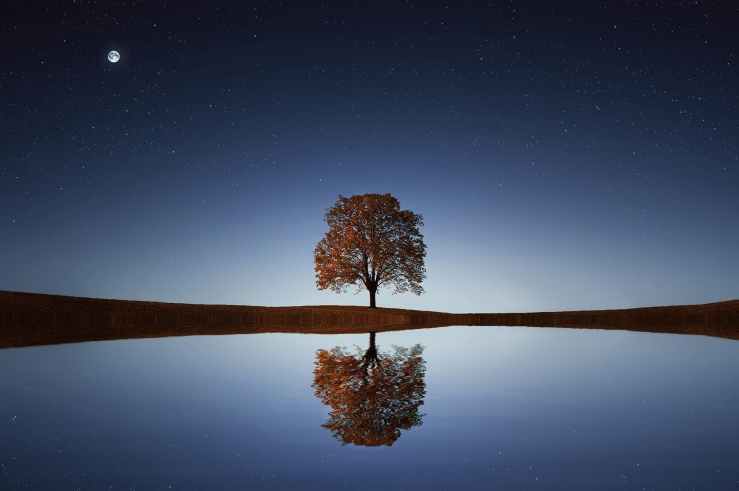
There’s a saying that “seeing is believing,” but is this really so? There are instances when we question what we see, especially how something is presented or the context it’s presented in. For example, a magician can pull off a trick which looks “real,” when in fact, we know that there was a method behind it. Videos and images can be digitally alternated, and a reflection in a mirror or in a body of water can distort what we see.

We cannot ignore that we often believe what we hear, read, or deduce from our intellect. Why? Because we can only see so much in a day, and we are dependent on receiving information secondhand because of the limitations of our sight and our location in the world.

Seeing is only believing if we are there, or if we see something via video or images. But what if we can’t be there or if there are no videos or images of an event? For example, the events that took place hundreds or thousands of years ago. Or something which could only be told or written about because the technology wasn’t available to record it.

If we only believed what we saw, what about the things that are invisible, abstract and transcendent? Things that only the mind’s eye can see, things only the intellect can grasp, and things that we can’t see but experience, such as feelings and emotions?