
Spontaneous

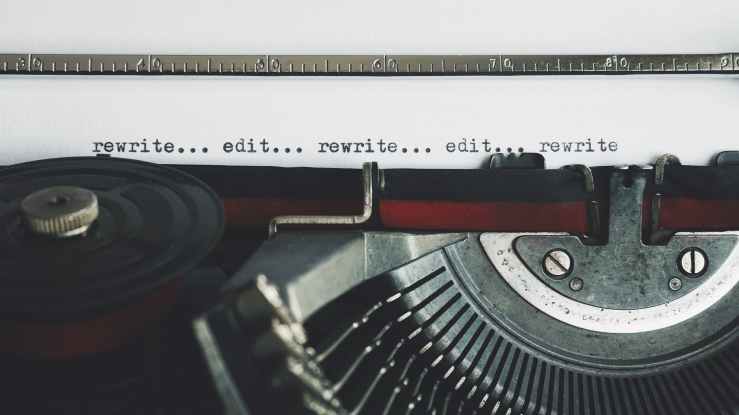
Photo by Anni Roenkae on Pexels.com

When writing a story or making a work of art, spontaneity can bring excitement to the creative process. When we’re spontaneous, it’s like taking a sudden turn on a familiar path, which invites a host of new ideas and possibilities. It’s as if we’ve gotten access to a new set of creative resources–ones that we wouldn’t have considered if we hadn’t been spontaneous.

But being spontaneous has its drawbacks. If we decided to be spontaneous on something we’ve already planned out and designed, that spontaneous decision can ruin it if it doesn’t work out. It’s like applying a new layer of paint over an old painting–hoping that it’ll improve it. But if we mess up, well, there goes our painting.

Spontaneity is a double-edged sword. When it works, it works really well–elevating our work to a higher plane of creativity. When it fails, it can pull our work down–or ruin it–as mentioned before. We can be spontaneous when we’re trying out new ideas for the first time, since we can always start over if it falls flat. But when it comes to applying it to something we’ve already planned out, such as a story, a painting, or any project for that matter, we can only guess how it’ll pan out.

Posted in Art

When Things Are Off

Photo by Pixabay on Pexels.com

There are days when things just seem like they’ve gone haywire. It’s like a perfect storm has arrived, and there’s a succession of delays and setbacks that complicate our lives and prevent us from getting anything done.

On those type of days, it’s as if order and logic have gone out the window. Even if we had everything planned, it’ll all get disrupted by things we had overlooked, miscalculated, or hadn’t foreseen.

When things are off, the only viable solution is to adapt, or to have a plan B. But a plan B can only exist if we had been in this snafu before. And if we hadn’t, well . . .

Once the day is over, we might ask ourselves: how did this happen? Why did things go wrong? Sometimes there’s no explanation for it, because everything was too random and unpredictable to make sense of. Or maybe there is an explanation, but we can’t understand it now, since it was one of those things that will make sense to us later in life.

There are things we can take away from a day that’s off. It can be seen as a test of our character–how well we respond under pressure or when things get tough. Some people might look at the bright side–find the humor and absurdity in it. Or it can be that when things are off, that’s just part of life, and we must face it head on.

Obscurity

Photo by Pixabay on Pexels.com

When we can’t think clearly, it can be frustrating and stagnating, since it’s like being lost somewhere in a foggy forest, not knowing where to go. We can’t see ahead–can’t see the path that will take us to where we want to go. With the path obscured by the fog, we can’t make progress–can’t see our way out.

This can be due to exhaustion, tiredness, or simply being overwhelmed. It’s like there’s no clarity in the organization of our ideas and our perceptions. The ideas have been blown by the wind, hidden in clouds of confusion, and our perceptions are going in and out as we try to make sense of our surroundings.

To other people, they might wonder why we can’t focus or function well when we seem fine on the outside. It’s not that we’re functioning inefficiently on purpose, but at the moment, nothing seems to make sense. Our perceptions and ideas have become cluttered and mixed up in a sort of rhythmless and inharmonious song and dance.

Everything is a blur, and all we want, before we can do anything productive or creative, is to clear up the fogginess, get our mental lens cleaned of blemishes so that it can be focused. Without which, we are just adrift–moving about the forest like a leaf in the wind–instead of on a path of our choosing.

No Traction

Photo by Frank Cone on Pexels.com

It can be frustrating to feel like we’ve made no traction toward our goals. It’s as if we’re just spinning our wheels, stuck in the same place. No matter how hard we try, we’re not making any improvements–not inching closer to where we want to be.

Whenever I feel this way, I do one of two things. Either I keep doing what I’m doing, or I’ll try something new. To keep doing what I’m doing, it’s like I’m saying to myself: I’m not going to give up. I’m going to keep trying until I make headway. When I try something new, it’s like I’m stepping outside of what I’m used to doing–thinking outside the box. This will lead me to venture out into the unknown–to experiment with new ideas, concepts, and themes.

The first requires patience, and the second, innovation. Progress seems to be a struggle where we must balance between the two. If we have too much patience and we’re not seeing any progress, it could mean that we’re not challenging ourselves enough with new ideas. If we’re constantly trying to innovate and we’re not seeing any progress, it can mean that we’re not trying something long enough to see how it will pan out (i.e. we’re not giving it enough time to grow).

But when we do finally make traction, we can finally celebrate, since it was a long road to get there. And for a time, things are well . . . until we lose traction again. Then that feeling of frustration will start to fester, and we’ll have to stop and think to ourselves: do we keep doing what we’re doing, or do we try something new?

Short Story: Morning Coffee

Check out my short story, Morning Coffee. Martin is about to head out to work. The problem is, he doesn’t have any more coffee pods to make his morning coffee. He knows that if he makes a trip to the store, he might be late for work. But will he risk getting a cup of coffee knowing that it could jeopardize his job and put him on bad terms with his boss, who has a reputation for firing employees for being late? Read to find out.

Absentminded

Photo by Pixabay on Pexels.com

There were times at school when I’d stare at the board absentmindedly, not cognizant of what was going on, but rather, giving the appearance that I was paying attention. It’s something that has occurred less as I’ve grown older, but it does happen from time to time.

In hindsight, I could attribute it to boredom, or that I was more interested in other subjects like art and P.E. There is a window of time when I can really focus and pay attention, but after that window closes, it becomes a struggle to stay alert. It’s not that I don’t want to pay attention, but everything I’m hearing and seeing isn’t registering in my brain like it used to. In other words, nothing is sinking in, and I’m just a body–sitting there and waiting for the class to be over.

Nowadays, things are different. I’m more intentional with my time, and I use my time purposefully (i.e. to work on projects, to finish chores, to run errands, etc.). I might become absentminded if I’m waiting in a long line at a store, or if I’m extremely tired, but given how fast pace everything is, I’m usually thinking about the next errand I have to do–or the next project I’m working on.

Overall, I think the difference between myself now and when I was young is that in my youth, I felt like I had all the time in the world–like there was an infinite supply of it–whereas now, I know it’s dwindling with each day that passes, and I have to make the best of each day before time runs out.

A Bit of Quiet

Photo by Ekrulila on Pexels.com

The one thing I enjoy about reading is that it gives me a bit of quiet–that solitary experience of being directly engaged with a work where silence is necessary. During the day, we can be busy with a lot of things–things like running errands, talking on the phone, doing chores, etc. And if we spend our time relaxing by watching TV, listening to music, or playing games on our cellphones or on the computer, these activities busy the mind–grab our attention–rather than let our imagination run free.

But reading is something different because it requires silence to focus on the text. It’s an activity that requires continuous and intense concentration–one which can abruptly end if a single distraction or noise intrudes upon our reading session. Thus, it’s hard to read when there’s noise or music playing in the background, or if people are talking nearby. With reading, it’s as if we can only focus on one thing at a time. It’s not just words that we’re reading, but the ideas and scenes that those words generate that we must extrapolate to turn into something meaningful and coherent to us.

In essence, we’re trying to reach a sort of agreement with the author–one in which our interpretation of their words are the same with what we believe their interpretation of them is supposed to be. Even though there is no direct communication between us and the author, we trust that their ideas can be received and understood by us if we can follow what they’ve written: the chain of their logic, the scenes that they’re describing, the emotions that they’re conveying, the sequence of events that they’ve laid out, etc.

This process of interpretation and agreement between the author and the reader is one that is continuous and imperfect, since there can be confusion when something is unclear, or if a bit of information is missing. And because the reader is trying to comprehend, as closely as possible, what the author is saying (without error, of course), it requires intense concentration and imagination. Therefore, it’s an activity where noise and sound can be the difference between understanding the text, and not understanding it at all.

Overanalyze

Photo by Anni Roenkae on Pexels.com

When I overanalyze something, I reach a desert like impasse. Meaning I’ve reached a point where I can go in whichever direction I’d like, although I won’t know where I’m going–or if it’s the right one.

Over analyzing a situation can lead us to question every facet of a topic or a situation. It’s like every road leads to a dead end, because we can see the flaws in every road. Nothing seems viable, so we’re stuck at an impasse.

When I used to take tests in school, there’d be multiple choice questions with a, b, c, d, with the additional choice of a and c, or a, b, and c, or all of the above. There’d be times when I’d reach the conclusion that any of the options could be valid–depending on how each is looked at. Often times, it was the wording that threw me off, or the answer choices being half true or equivocal in meaning. Or it could be that the answer hinged on what was meant by a certain word, or the context it was meant to be in.

Strangely enough, I heard from one of my teachers that your first choice was often the right one, and that when you overanalyze something (or pick your second choice), it was wrong. I’m not sure if I agree with it 100%, but I do understand the rationale behind it. Our first choice is based on our intuition, and our second choice is based more on our analysis of the options. There are merits to both, but our intuition isn’t 100% right, and neither is our analysis of the options.

At some point, we must concede that we’re making a risk by the choice(s) we make (if it’s a question that’s unclear or dubious). There is a probability that we could end up being right or wrong by our choice, and won’t know until we’ve made it. But if we choose to remain at an impasse, we will certainly not know which it was.

Getting In The Habit

Photo by Suzy Hazelwood on Pexels.com

Getting in the habit of something is a challenging step toward achieving our goals. So often, we make up reasons (or excuses) for not doing something routinely when we know we should. For example, I try to make it a habit of either reading or writing daily (mostly reading, since when I edit, I’m not technically writing anything new, but mostly correcting or changing things in the draft). There are days when I’m tired, when I’m not in the mood, but I convince myself to read/write anyway, since I know that if I don’t, I’ll be behind in reaching my goals.

Getting in the habit of something new is especially hard, since it is not the short term habit that is difficult, but the long term. For example, when we first take an interest in something (let’s say painting), it can be exciting and fun. But overtime, we realize that it takes a lot of work and practice, and that we need to continue doing it each day. But there are days where we don’t feel like painting, or days where we doubt ourselves. We might look at our painting and think: am I making any progress? Am I any good?

Thus, if we put off painting day after day, we’ll eventually stop painting altogether. And if we stop, it’s guaranteed that we won’t improve at all.

Any skill or endeavor that we pursue takes practice, and the dividends pay off not in the short term, since we can have our ups and downs, but in the long term–when we can see how far we’ve come from where we began. But to get there, we must get in the habit first.

Reading For Fun

Photo by freestocks.org on Pexels.com

Often times, we read for a pragmatic purpose. We read to learn, to gain information about something, to understand a concept, or when we’re browsing what products to buy.

But when we read for fun, it takes on a completely different meaning. It’s to escape into another world, to be in a different mindset–one that stimulates our imagination and curiosity. For example, when we read novels, comic books or comic strips, it’s to be entertained, wowed, or to be humored. When we play word puzzles or read about a topic we enjoy, it allows us not just to learn, but to take joy in solving problems and in discovering new or fascinating ideas.

This kind of reading is set apart from the kind that feels more like work. When reading is pragmatic, its purpose is to reach a goal (i.e. the acquisition of a piece of information, seeing what’s on the news, etc. ), so that when we’re done reading, we can get on about our business. But when reading is for fun, the purpose isn’t to reach the end, but to enjoy the ride.