Numbers

Photo by Pixabay on Pexels.com

Numbers are a huge part of our lives whether we realize it or not. Numbers play a major role in economics, finances, telling time, the calculations made by computers and machines . . . even our health in terms of our biometrics.

It could be said that numbers are everywhere. We use them because they’re precise compared to saying “many,” “some,” or even “a lot”. They’re used in GPS, in scheduling appointments and meetings, in making transactions online and in stores, and in the appraisals of houses, just to name a few. Without numbers, everything we would be an estimation–a rough guess.

It’s one of those things that we take for granted because it seems like it has always been around–will always be around. But what if we lived a day without numbers? What if we lived a day without knowing what time it was, without knowing what day of the month it was, without knowing anything about mathematical formulas, or even the basics of counting? Perhaps there was a time when this was the case–thousands of years ago–when the development of numbers was still in its infancy. A time when hours would go by and all there was to measure time was the sunrise and sundown.

Types of Goals 2

Photo by Pixabay on Pexels.com

In this post, I will focus on artistic goals. If you want to read my last post on personal and monetary goals, click here.

Artistic goals can be about exploring topics and ideas, using different kinds of materials (i.e. collages), or creating certain types of works. In the latter case, that can be broken down into works in a particular medium (i.e. photography, painting, etc.) or works that explore certain themes and subjects.

In creating any work, we explore different facets of it through various renditions and perspectives. If we’re painting a certain kind of landscape, we might experiment with different styles, colors, and compositions to convey a particular mood or emotion about it. We don’t really know what’s going to hit a home run, but we do know that by trying out different things, we’ll begin to understand what works and what doesn’t (i.e. what techniques, colors, and compositions have the greatest effect).

In the process of creating art, we’re honing our craft and increasing our knowledge of techniques, as well as fine-tuning our intuition and abilities. But the thing about creating art is that it takes continuous practice and resilent dedication. Mastering our artistic abilities is a never-ending process, since there are always new ideas to explore, and our knowledge and techniques can always be improved.

When we create art, it’s a testament to our creative impulse, a testament to the fact that there are different modes of seeing the world and of imagining what lies beyond it. But that creative impulse can only be manifested through a medium, which must have a subject, which conveys a theme by the way we stylize and compose the work.

Thus, our artistic goals are really about us mastering how to illustrate our ideas using all the techniques and knowledge we have at our disposal. But to get to that point, we must understand what we’re capable of, and what medium best suits us, and what styles, themes, and subjects speak to us in a kind of natural and inspirational way.

Posted in Art

Creative Impulse

Photo by Oleg Magni on Pexels.com

Being creative is kind of like having an impulse to make something that doesn’t have any rhyme or reason to it, although it will when it’s finished. It’s like a distinct voice in our minds is telling us to create as if everything else at the moment is irrelevant, and we need to strike while the iron is hot or else we’ll lose the momentum and not create at all.

Once a work is finished, we might know the reasons why we created it through self reflection: to address some issue we’ve thinking about, to convey emotions we’ve been bottling up, to manifest a world that we’ve envisioned, or to share something that we’ve seen in our dreams. Regardless of the reason, the creative impulse is always telling us to create, telling us that there is a world beyond our own–a world of imagination that is calling to be brought into this world.

But the hardest thing about the creative impulse is to act on it when we’re so inundated with the everyday duties and obligations of life. We only have so much time in the day, so much energy and resources that we could put to use in creating something that requires hours, days . . . even years to finish. Not only that, but it takes time to sift through the flux of ideas that will appear in our minds when we can only focus on a few at a time. On top of that, new ideas will begin to emerge during the process of creation, calling for our attention–building up a backlog of ideas on our to-do list. And as we work on our current project(s) while postponing others, we begin to feel overwhelmed by everything, even saddened by the fact that we can’t get to them all.

In our lifetime, only so many creative works can be created out of the countless number of ideas we’ll have. We end up picking the ones that are the most important to us–the ones that reflect our values and vision the most. But if we ignore the creative impulse, refuse to capitalize on the powers of our imagination, we’ll slowly settle in to the everyday world, and all the wondrous and limitless ideas that we’ve collected during our creative journey will soon start to fade away.

Posted in Art

Short Story: Flat Tire

Check out my short story, Flat Tire. Heather is racing off to work after having a late start in the morning. If she’s late to work today, her boss, Curtis, will surely fire her, since she’s on her third strike, having been late two times already.

As she drives to work, the morning rush-hour is only making things worse. Taking a different route, she hopes to make it to the office on time, only to get a flat tire on the way there. With an important business meeting at 8:20 AM, will Heather make it on time, or will she be back on the job hunt?

Types of Goals: Writing

Photo by Suzy Hazelwood on Pexels.com

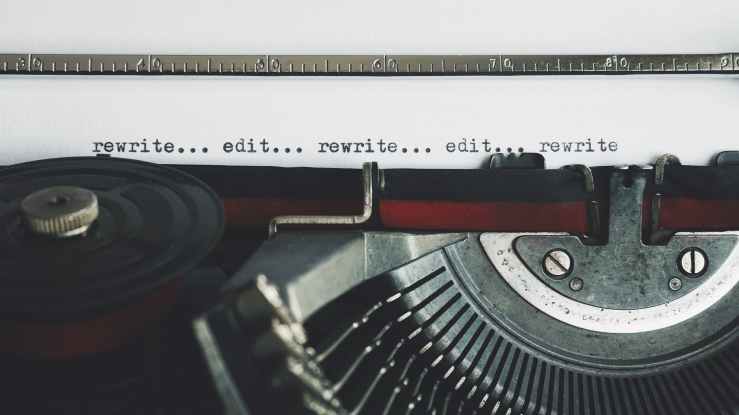
Writing goals can be about creating a certain kind of world or story, writing in a certain genre, or even writing about specific kinds of characters. But writing goals can also be about the craft of writing itself. For example, they can be about writing so many words a day (i.e. a word count goal), or to finish a chapter by a particular date, or to write on a prompt that is intended just to get us writing.

Ultimately, writing goals are a discipline. It’s kind of like an exercise where one must do it regularly to keep one’s skill and strength in peak condition. If writing isn’t done regularly, it can be hard to return to it after a week or a month long absence. When we do return to writing, it’ll be harder to write at the same level of intensity and output as before. To be disciplined about writing, we need to write even when we’re not in the mood to write, or if we’re tired. The bottom line is, we just need to write.

I usually only have a word count goal if I’m writing a novel or a short story, but that goal is tentative, since I’ll go over it if I’m really engaged in the story. But it’s not the word count that matters so much as the act of writing itself. Getting started–putting my thoughts down on paper (or the computer) for a few minutes–that’s the most important thing. Once I get into a routine, it becomes easy to pour my thoughts on to the page. And once I get that going, it becomes easier to write, and all the rest will follow: the word count, writing a story in a genre I want to tell, etc.

Even if I’m tired or I’m not the mood to write, the act of writing will revitalize me with zeal and energy. The ideas will come flowing from my mind to my fingertips, and I’m continuously thinking about the story or the blog post that I’m writing about. It’s like I’m having an inner dialogue with myself, talking back and forth about what my thoughts are on a story or topic. I’m utilizing that chamber of my mind that likes to debate and inquiry and hammer out ideas. It becomes my voice as I write–one that has stayed quiet throughout most of the day until I’ve awakened it from its slumber.

Catching Up

Photo by Josh Hild on Pexels.com

Catching up can feel like an uphill battle. It’s not that we can’t catch up, but the fact that we’ve lost so much time that it has made the road to catching up feel like it’s impossible, or at least, harder to achieve. If only we had been wiser and started on our goals years ago, we wouldn’t have to catch up today.

Catching up can apply to anything: travel, finances, work, even projects that we abandoned for one reason or another. When we’re catching up, it’s like we have to make up for lost time–time which cannot be revisited or added back to our lives.

When we say to ourselves that we’ll eventually get to something, whether that is a place we’ve always wanted to travel to, or a book that we wanted to write, we end up not getting to it unless we make it a priority. If we put it aside, other things will take up our time, and eventually, we’ll end up looking back one day and wonder why we’re so far behind.

At that point, we have to start from the beginning, and even though the road will be long toward catching up, at least we still have some time left. But we must be prudent with our time, because time for us is a finite thing, and it’s easy to squander it if we’re not using it wisely.

Ability And Talent

Photo by meo on Pexels.com

Having an ability for something or a talent for it are two different things, but at which point does an ability become a talent? When we first try something, whether it is playing the guitar, skateboarding, painting, writing, or solving math problems, we struggle as we learn the basics. But once we’ve mastered the foundational concepts, we can proceed to learning more advanced ones. After that, we can take those advanced concepts and apply it in ways that transcend the ability of the average person.

In other words, talent is something that takes time to develop, time to grow. We start off knowing nothing, and as we learn, we slowly grasp the basics. Over time, if we stay committed to practicing and improving a skill, it shows itself as talent once we can do it easily and at a more advanced level than even someone who is already proficient.

But it could be said that all of us have talent for the things that come easy to us–the things that we don’t even use competitively or for show. For example, we might have a talent for reading if we’ve read hundreds of books, for accomplishing the tasks at our job (given all the experience we have), or for cooking or making repairs in our home. But those aren’t things we brag about or share with others. They’re just things we do normally–day-to-day–and we do them sometimes without even thinking about them.

Society regards talent as something that must be on display, such as in a contest or a sports or music competition. Or it might measure talent based on the success someone has in a field, since very few have reached their level of success. But those standards measure talent by accolades and wealth, not by virtue of the talent itself. In essence, we all have talent, but we often use it in ways that are quiet and meaningful to us or those around us than for the world to see.

Grouchy

Photo by Pixabay on Pexels.com

We can be grouchy if we’re having a bad day, haven’t gotten enough sleep, haven’t eaten, or haven’t gotten a break after a long day of work. Even though we’ll try to hide it, it’ll unmask itself in the subtle tics and gestures we’ll make when we’re grouchy. It’s different for each of us. Some people might grind their teeth, stomp as they walk, shake their heads in annoyance at everything, or do things in a careless and hasty way.

And just to add to the list, it could be the bumper-to-bumper traffic–making us late to our time-sensitive destination, or forgetting something at home on our way to work (i.e. lunch, a cup of coffee, important documents, etc.). It’s like the grouchy cloud is hovering over our heads, and as soon as something goes amiss, it’ll rain on us to ruin our day.

To offset the grouchiness, we can put on a happy face, or put aside whatever irritable thing or situation is festering in our minds. But all it takes is one more thing to stoke the grouchy cloud, and then it hovers over us, waiting to erupt into a storm.

Expectations

Photo by Pixabay on Pexels.com

A lot could be said about expectations, but the one aspect I wanted to focus on is when what we imagine is worse than what actually happens. The flip side to that, of course, is when what we imagine is far better than what actually happens.

In both cases, our expectations of an upcoming event are different from reality. Our expectations are not there to change reality, but to prepare our mindset (and choices) for what’s to come. For example, if we imagine that something negative is going to happen, we go into that situation knowing that we have to be ready for how challenging and difficult it might be. And if we imagine that something positive is going to happen, we go into the situation with high hopes (or expecting a good outcome).

But when the opposite occurs, it upsets the balance of our assumptions and beliefs. It’s like when we’re about to take an exam, and it turns out to be easier than we expected, we wonder why we thought it would be hard in the first place. We might ask ourselves: why did we doubt ourselves? What was it that made us think it would be hard? Was it because of the last test (which we did poorly on), or was it because we felt like we didn’t understand the material?

If we’re about to take an exam, thinking that it will be easy, but in fact, it’s much harder than we thought, we would wonder why we thought the opposite. Perhaps the last test was easy, or maybe we were overconfident in our understanding of the material. When such things happen, we begin to question our expectations–if what we imagine can ever truly prepare us for what lies ahead.

It would be apt to say that our expectations are more like approximations–a hypothesis of will happen. From our catalogue of experiences, we can reason the conclusions that will follow given certain conditions and circumstances. But there’s always a margin of error to our approximations, since we don’t know all the variables–all the minute and subtle changes that can occur (i.e. the weather, the choices people make, the conditions of the environment, etc.). More than that, we don’t have a crystal ball, and no matter how hard we try to approximate an event given everything we know, there’s always a chance that we could be wrong. Besides, we’re only human.

Types of Goals

Photo by Tara Winstead on Pexels.com

In this post, I will focus on two types of goals: personal goals, and monetary goals.

Personal goals focus on things we want to work on and accomplish for our own fulfillment. They can be things like learning a new skillset, learning a new language, reading x number of books a year, getting enough sleep a day, trying a new recipe, exercising, etc.

Monetary goals focus on our finances, such as how much we want to save, how much we want to earn, what to cut back on, creating a budget, etc. But there is a clear difference between the two goals, and that is in how they cultivate certain habits in order to achieve the desired goals.

Personal goals develop habits that aren’t necessarily attached to finances, although they can. Personal goals can span a broad range of things, such as our health, to educational and creative pursuits. For example, if we make it a goal to learn a subject, such as history, the purpose isn’t to get a monetary prize or a reward, but to gain knowledge and understanding about the past. And if our goal is to make a painting to hang in the living room, the goal is to decorate our living space, not to earn money from it.

In contrast, monetary goals focus on how to wisely manage our wealth. In having monetary goals, we become disciplined about our spending, as well as in increasing our wealth by earning more or having more income streams. While these goals can certainly increase the size of our wallet, they have little to do with making us well-rounded and creative. Instead, monetary goals are about making sure that we’re financially secure (i.e. have enough to cover an unexpected emergency, have enough saved up for the future, etc.).

Both types of goals have their benefits, but they focus on different aspects of our lives. One focuses on things that are personally valuable to us, whereas the other focuses on our financial wellbeing. But the challenge is in balancing the two. Our personal goals sometimes want to take up more time than our monetary goals allow, and vice versa. When we work day and night, we put our personal goals to the way side. But if the time (or money) we spend on our personal goals negatively affects our monetary goals, then that can affect our budget and our financial future.

In finding the right balance between personal and monetary goals, we can satisfy both. Of course, the right balance is different for everyone, since each person has their own personal and monetary goals. But once we find the right balance, we don’t allow one type of goal to outweigh the other, but rather, we acknowledge that each type is a benefit to us.