

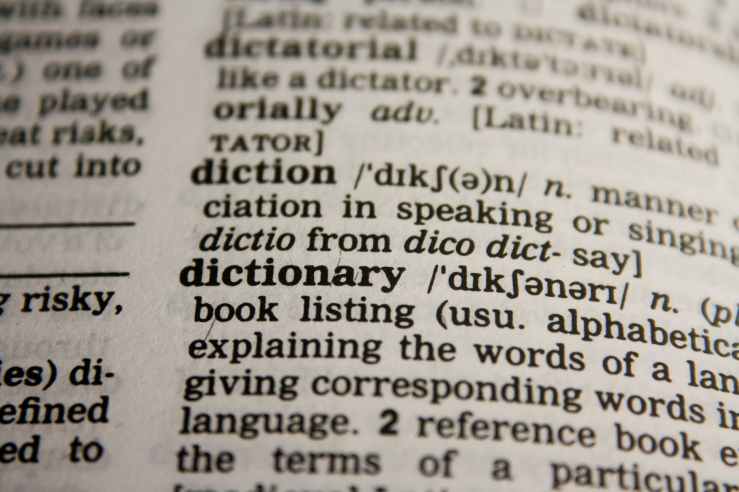
Before I had the internet, I’d have to look up words in a dictionary to know what words meant. I obviously couldn’t just look up the word on Google or use a dictionary app. So after saving my place in a book, I’d open the dictionary, and then leaf through the pages until I found the word I was searching for.
And if I was looking up multiple words, I’d constantly be flipping back and forth in the hefty-sized dictionary while trying to memorize what the words meant (since I couldn’t keep them open on a tab in a web browser). In the process, however, I’d learn the definitions of words I didn’t intend to look up. So instead of learning the definition of one word, I’d learn the definitions of two or three words on the same page.
This laborious process certainly hindered my reading pace, but as a result, I would spend hours reading and learning new words. Overtime, I found myself using the dictionary less, since I had expanded the breadth of my vocabulary. Even though I still use a dictionary (on the web or on an app), I don’t spend as much time looking up the definitions of words like I used to.
Overall, there’s a catch to having the answers at our fingertips. When we can find an answer to our question by just typing it on the computer, we’re less likely to probe further. But when we don’t have that option, we have to keep digging, and in the process, we’ll find hidden treasures.

 Fallton Havenstonne