Goodreads Book Giveaway
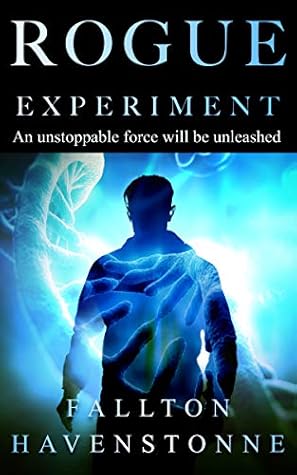
Rogue Experiment
by Fallton Havenstonne
Giveaway ends March 01, 2020.
See the giveaway details at Goodreads. Enter Giveaway
Giveaway ends March 01, 2020.
See the giveaway details at Goodreads. Enter Giveaway
Rogue Experiment will be available on 2-28-20. Make sure you get yourself a copy. Thank you for the support. Enjoy the novel.
Writing is a process that takes multiple revisions to improve the quality of the draft. The first draft often looks basic and rudimentary, but with revisions, it becomes clearer, polished, and solid. But it all begins with the first draft. Sometimes it’s starting that is the most difficult part. But once we put words down, we can revise and elevate our original ideas into something more.
One of the things I love about short stories is that they hook you immediately and take you deep into the premise within a short period of time. Short stories establish the setting and characters quickly, whereas a novel might take you through a couple chapters of exposition before you’re fully immersed in it.
Short stories also have the power of communicating an idea or a conflict in just a single scene or in a few brief pages. As a writer, it takes practice and skill to write them effectively to communicate so much in just a few pages. But a short story can be just as powerful as a novel. The experience of course, is shorter, but the impact can leave you thinking about the story for days.
When I go to the library, I would find a book cover or title that I like, take it from the shelf, read a sentence or two in the first chapter, and if it really grabbed me, continue reading it. If it didn’t grab me, I would put it back, keep browsing, and then flip through another book that caught my attention. The process would repeat until I found something I’d be happy to check out.
It’s kind of finding a treasure chest that’s meant for you. I’m sure there are tons of books I’ve glanced at that didn’t interest me but would interest other people. But when you find a book that speaks to you, it’s like meeting a new friend. You’ve just got to search.
When I revise a story, I’m going line by line and analyzing what should stay or what should go. I’m deciding what I like about what I wrote and what can be worded better. It’s one of those things where I feel like I have so many options of saying a particular thing.
Take for example: “He closed the door.” I could add an adverb such as: “He closed the door abruptly.” Or I could say: “He slammed the door.” It all depends on context, of course, and each has a different effect.
Overall, I’m revising based on flow. I also look at consistency, but if the wording is not causing me to stop or slow down due to being awkward or disjointed, I know I’m going in the right direction.
One of the most intimidating things about starting a story is the first paragraph. It feels like it should be perfect, that every word should be chosen carefully. Besides, it’s the first sentences that someone will read when they start a story.
There’s a lot to be said about the first paragraph. It needs to have a hook. It needs to grab the reader. But I think all of this comes with editing. The first paragraph is just the start of an idea. All the sentences flow from it.
Who knows: It could be that the first paragraph is deleted, and a new paragraph takes its place.
“Start writing, no matter what. The water does not flow until the faucet is turned on.”
—Louis L’Amour.
Years ago, I would spend almost an entire day reading a book, racing to get to the end. For example, I would spend a Sunday afternoon reading a novel and if it really hooked me, I could finish it by evening. I felt like I was immersed in that world, living and breathing with the characters as they struggled with their conflicts, or trying to achieve their goals.
But now I tend to read in brevity. I don’t finish a novel a day. I’ll read it in sections, a couple chapters at a time. It has a different feel to it than finishing a novel in a day. I notice I’m reflecting on the story more, reflecting on the characters’ thoughts, as well as how the narrative worked, not to mention the pacing. It feels like I’m taking a walk with the characters, whereas when I finished a novel fast, I had more of a movie experience.
Neither approaches to reading are right or wrong. It just depends on what kind of reading experience you prefer. Both can be valuable in their own way.
As an author, I really enjoy reading quotes and getting inspired by them. It gives me an insight into what motivates and inspires other people. It’s like a summary of what they believe, a summary of how they view life or how they view their process.
Sometimes, quotes can provoke us to mediate on what they mean. It’s a short blurb, a snapshot of an idea, and we have to understand it from the context of what they meant at the time it was said/written, or maybe we’re supposed to understand it according to our values. I like that they can be equivocal in this respect, because it gives us opportunity to evaluate our own thinking, our beliefs. It can embolden us to look at things differently.
The first draft is just you telling yourself the story.”
Terry Pratchett
You might not write well every day, but you can always edit a bad page. You can’t edit a blank page.”
Jodi Picoult
The creative process of writing is fun and exhilarating. When you get in the zone, everything just flows as if the characters, the plot, the ideas all take on a life of their own. The best part about writing is not looking back. It’s watching a world come to life before your fingertips.
Editing is one of those challenges as a writer that makes you question everything that’s on the page, to stop and rethink all the concepts that exist in the story. It’s about applying the brakes, critiquing what’s there: analyzing what works and doesn’t work. It can be frustrating to rewrite paragraphs and whole sections, to eliminate eloquent sentences and clever lines of dialogue.
But editing is an essential part of the writing process. It’s about looking back, returning to the beginning. To make the reading experience enjoyable and smooth, one has to fine-tune all the parts so that they work as a whole. Sometimes when I edit, I feel like I’m rewriting the entire story. But after that second or third draft, it’s much more enjoyable to read. It just takes patience and time and dedication to finish the job.
 Fallton Havenstonne